Introduction
Can stimulating the body's natural growth hormone production help build muscle?
Growth hormone plays an important role in protein metabolism, skeletal muscle maintenance, and the biological processes associated with muscle development.
This connection has drawn scientific attention to GHRP-6 (Growth Hormone-Releasing Peptide-6), a synthetic peptide studied for its ability to stimulate growth hormone secretion.
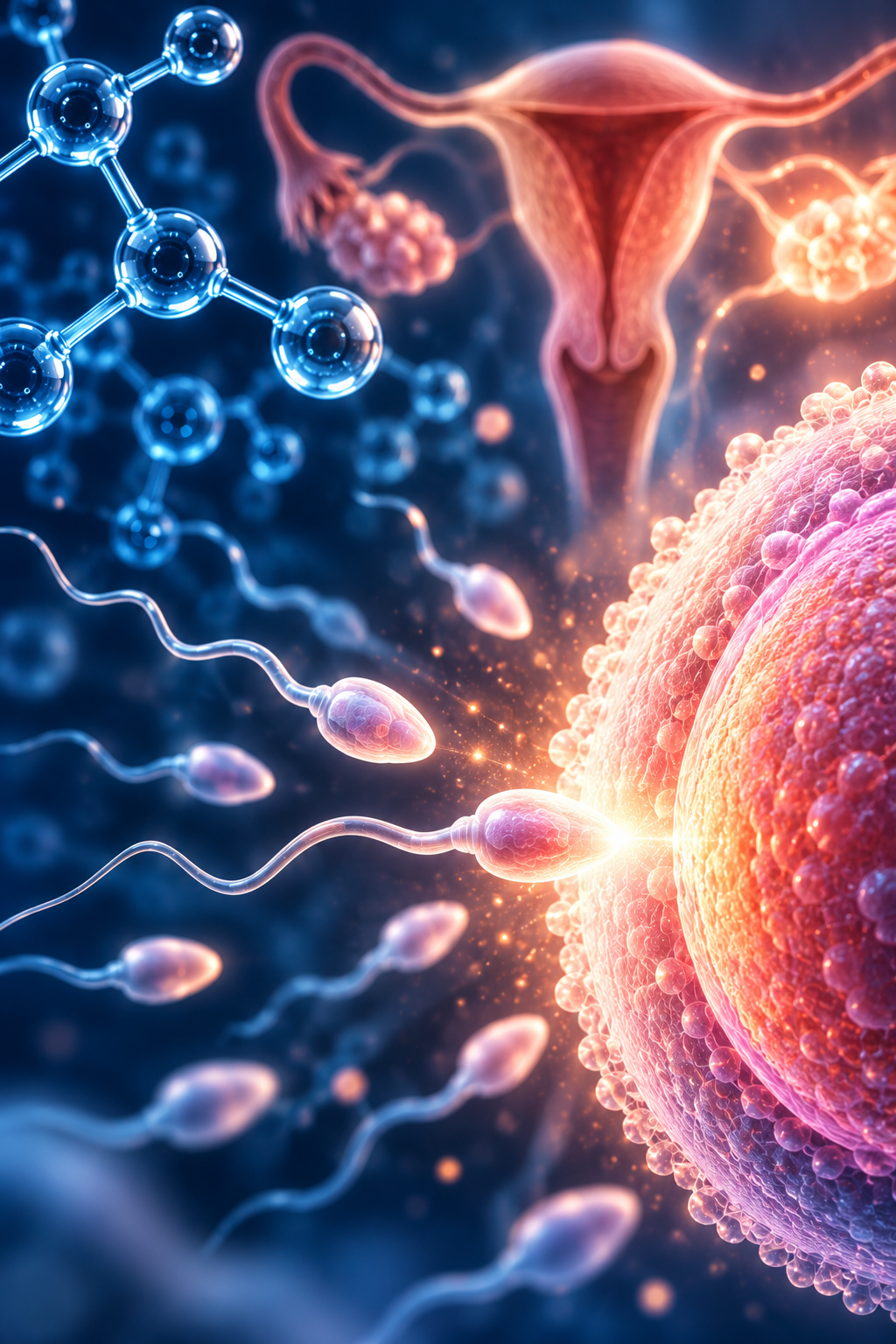
Unlike externally administered HGH, GHRP-6 activates receptors that signal the pituitary gland to release the body's own growth hormone.
But does GHRP-6 actually increase muscle growth, or does it simply raise growth hormone levels?
Human studies confirm that GHRP-6 stimulates growth hormone release, but its direct effects on muscle mass and strength remain uncertain.
This Quick Read examines GHRP-6 for muscle growth, its connection to IGF-1, and what scientific research reveals about its muscle-building potential.
Research Background
What Is GHRP-6 and How Does It Work?
GHRP-6 (Growth Hormone-Releasing Peptide-6) is a synthetic peptide consisting of six amino acids. It belongs to a class of compounds called growth hormone secretagogues, which stimulate the body's natural growth hormone release.
GHRP-6 works primarily by activating the growth hormone secretagogue receptor (GHS-R1a), the same receptor involved in signaling by ghrelin, a hormone associated with appetite and growth hormone regulation.
This activation stimulates the pituitary gland to release growth hormone into the bloodstream.
Human studies have confirmed that GHRP-6 can produce measurable increases in circulating growth hormone levels.
Why Does Growth Hormone Matter for Muscle Growth?
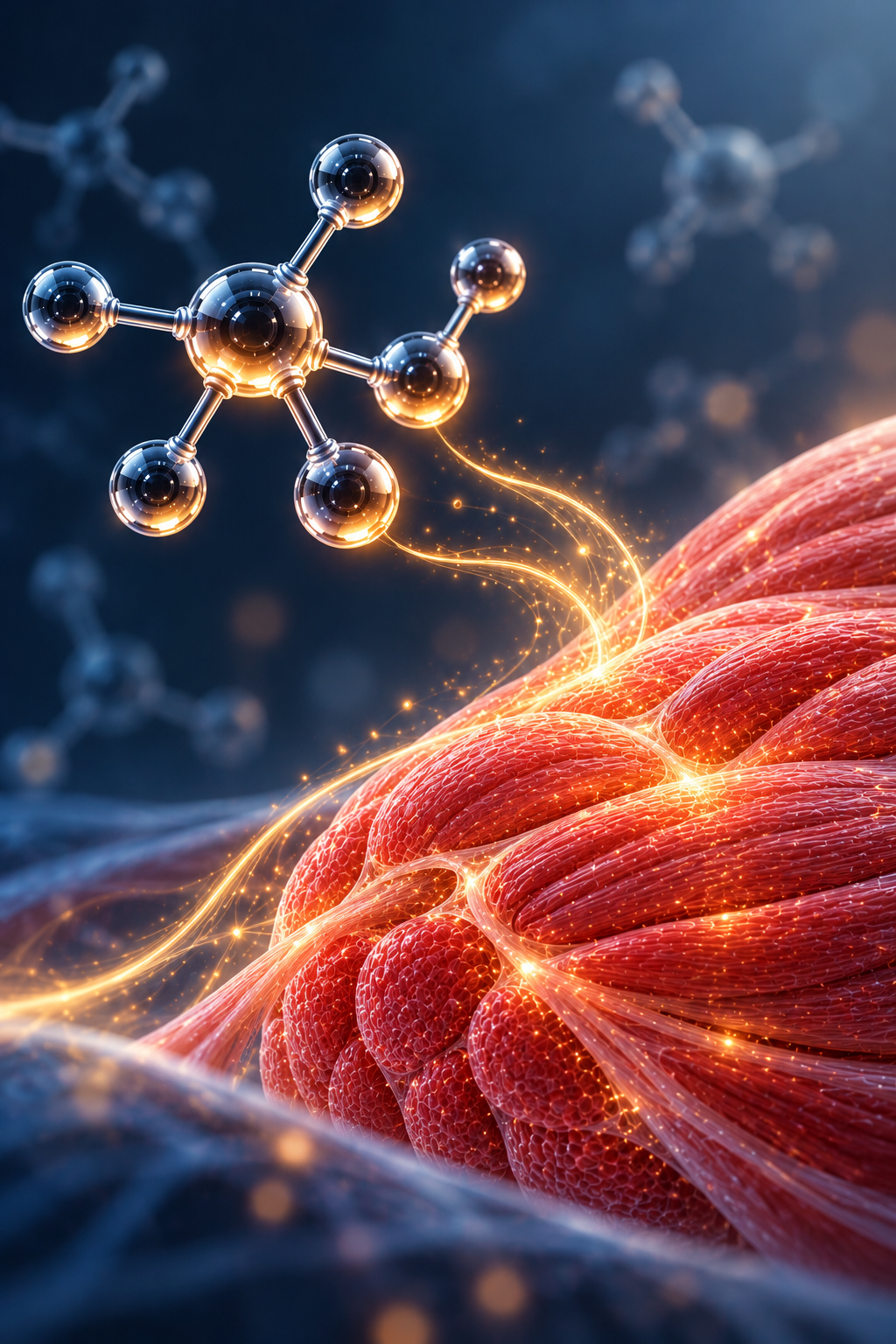
Growth hormone influences protein metabolism and stimulates the production of insulin-like growth factor 1 (IGF-1), a hormone involved in skeletal muscle development.
IGF-1 participates in cellular signaling pathways associated with muscle protein synthesis, including the PI3K–Akt–mTOR pathway, which helps regulate muscle growth.
These connections explain why researchers are interested in GHRP-6 for muscle building.
However, stimulating growth hormone secretion does not necessarily result in greater muscle mass or strength.
Whether GHRP-6's hormonal effects translate into meaningful muscle growth remains an important research question.
Main Research Findings
1. GHRP-6 Stimulates Growth Hormone Secretion
The strongest scientific evidence supporting GHRP-6 involves its ability to increase growth hormone secretion.
Controlled human studies have demonstrated that GHRP-6 produces measurable increases in circulating growth hormone by activating receptors involved in the body's natural hormonal signaling system.
Research has also shown that GHRP-6 can interact with growth hormone-releasing hormone (GHRH), with combined stimulation producing greater growth hormone responses under certain experimental conditions.
These findings establish GHRP-6 as an active growth hormone secretagogue.
However, most studies have measured short-term hormonal changes rather than long-term muscle growth.
2. GHRP-6, IGF-1, and Muscle Development
Growth hormone stimulates the production of insulin-like growth factor 1 (IGF-1), which plays an important role in skeletal muscle biology.
IGF-1 participates in cellular pathways associated with muscle protein synthesis, tissue development, and muscle adaptation.
Because GHRP-6 increases growth hormone secretion, researchers are interested in whether it could influence these muscle-related processes.
However, an increase in growth hormone does not guarantee sustained increases in IGF-1 or greater skeletal muscle growth.
3. Does GHRP-6 Actually Build Muscle?
This is the most important question when evaluating GHRP-6 for muscle growth.
Although GHRP-6 stimulates growth hormone release, high-quality human studies have not established that it directly increases muscle mass, strength, or athletic performance.
Research involving growth hormone itself provides useful context.
Some studies have reported increases in lean body mass following growth hormone administration. However, these changes can partly reflect fluid retention rather than actual muscle tissue growth.
Furthermore, systematic reviews have not consistently demonstrated improvements in muscular strength among healthy adults receiving growth hormone.
The key distinction is that stimulating growth hormone secretion is not the same as demonstrating increased muscle hypertrophy.
GHRP-6's potential role in muscle building therefore remains scientifically interesting but unproven.
Current Research Limitations
Although GHRP-6 has demonstrated growth hormone-releasing activity, several important research gaps remain regarding its potential for muscle building.
The primary limitation is the lack of large, well-controlled human studies directly examining GHRP-6 and skeletal muscle growth.
Most available human research measures short-term hormonal responses rather than changes in muscle size, strength, or physical performance.
Additionally, growth hormone secretion is only one factor involved in muscle development. Nutrition, resistance training, recovery, and other cellular signals all influence muscle hypertrophy.
GHRP-6 can also affect hormonal pathways involving prolactin, cortisol, and ghrelin-related signaling, raising additional questions about its broader endocrine effects.
Long-term safety and the consequences of repeated GHRP-6 exposure remain insufficiently studied in humans.
GHRP-6 is not FDA-approved for muscle building, and current evidence does not establish it as a safe or effective method for increasing muscle mass or strength.
Conclusion
Conclusion
GHRP-6 is a synthetic peptide that has demonstrated the ability to stimulate the body's natural growth hormone secretion in human studies.
This mechanism has attracted interest in muscle-building research because growth hormone and IGF-1 influence protein metabolism, skeletal muscle maintenance, and cellular pathways associated with muscle development.
However, increased growth hormone secretion does not necessarily translate into greater muscle mass or strength.
Although GHRP-6's hormonal activity is well documented, its direct muscle-building benefits remain unproven.
The key takeaway: GHRP-6 for muscle growth remains an area of scientific investigation, not an established method for increasing muscle size or strength.
At Peptide Purity USA, we emphasize research material quality, analytical transparency, and responsible laboratory practices.
Research Use Only: All research materials offered by Peptide Purity USA are intended strictly for laboratory research purposes. Not for human or veterinary consumption. Not intended for diagnostic or therapeutic applications.
References
- 1. Peñalva, A., Carballo, A., Pombo, M., Casanueva, F. F., & Diéguez, C. (1993). Effect of growth hormone (GH)-releasing hormone (GHRH), atropine, pyridostigmine, or hypoglycemia on GHRP-6-induced GH secretion in man. The Journal of Clinical Endocrinology & Metabolism, 76(1), 168–171. https://doi.org/10.1210/jcem.76.1.8421084
- 2. Popovic, V., Damjanovic, S., Micic, D., Petakov, M., Dieguez, C., & Casanueva, F. F. (1994). Growth hormone (GH) secretion in active acromegaly after the combined administration of GH-releasing hormone and GH-releasing peptide-6. The Journal of Clinical Endocrinology & Metabolism, 79(2), 456–460.
- 3. Growth hormone (GH)-releasing peptide-6 requires endogenous hypothalamic GH-releasing hormone for maximal GH stimulation. (1998). The Journal of Clinical Endocrinology & Metabolism, 83(4).
- 4. Yoshida, T., Delafontaine, P. (2020). Mechanisms of IGF-1-mediated regulation of skeletal muscle hypertrophy and atrophy. Cells, 9(9), 1970.
- 5. Liu, H., Bravata, D. M., Olkin, I., Friedlander, A., Liu, V., Roberts, B., et al. (2008). Systematic review: The effects of growth hormone on athletic performance. Annals of Internal Medicine, 148(10), 747–758.
- 6. Meinhardt, U., Nelson, A. E., Hansen, J. L., Birzniece, V., Clifford, D., Leung, K.-C., Graham, K., & Ho, K. K. Y. (2010). The effects of growth hormone on body composition and physical performance in recreational athletes: A randomized trial. Annals of Internal Medicine, 152(9), 568–577.