Introduction
GHRP-6 is best known for its ability to stimulate growth hormone release, but its influence on IGF-1 levels is another reason it has gained attention in muscle growth research.
Does GHRP-6 increase IGF-1 levels? Yes. Human studies have shown that GHRP-6 can increase IGF-1 production by stimulating the body's natural release of growth hormone.
This is important because IGF-1 plays a key role in muscle protein synthesis, muscle cell development, and tissue repair. It is also one of the main ways growth hormone influences muscle development.
While increasing IGF-1 does not guarantee greater muscle mass, the connection between GHRP-6, growth hormone, and IGF-1 provides a promising area of muscle growth and recovery research.
In this quick read, we'll look at how GHRP-6 affects IGF-1 levels, what human studies have found, and why this relationship matters for muscle development.
Research Background
GHRP-6 belongs to a group of peptides known as growth hormone secretagogues. These compounds stimulate the pituitary gland to release the body's own growth hormone (GH).
When growth hormone levels rise, they can signal the liver and other tissues to produce more IGF-1. This creates a direct connection between growth hormone release and IGF-1 production.
How does this process work?
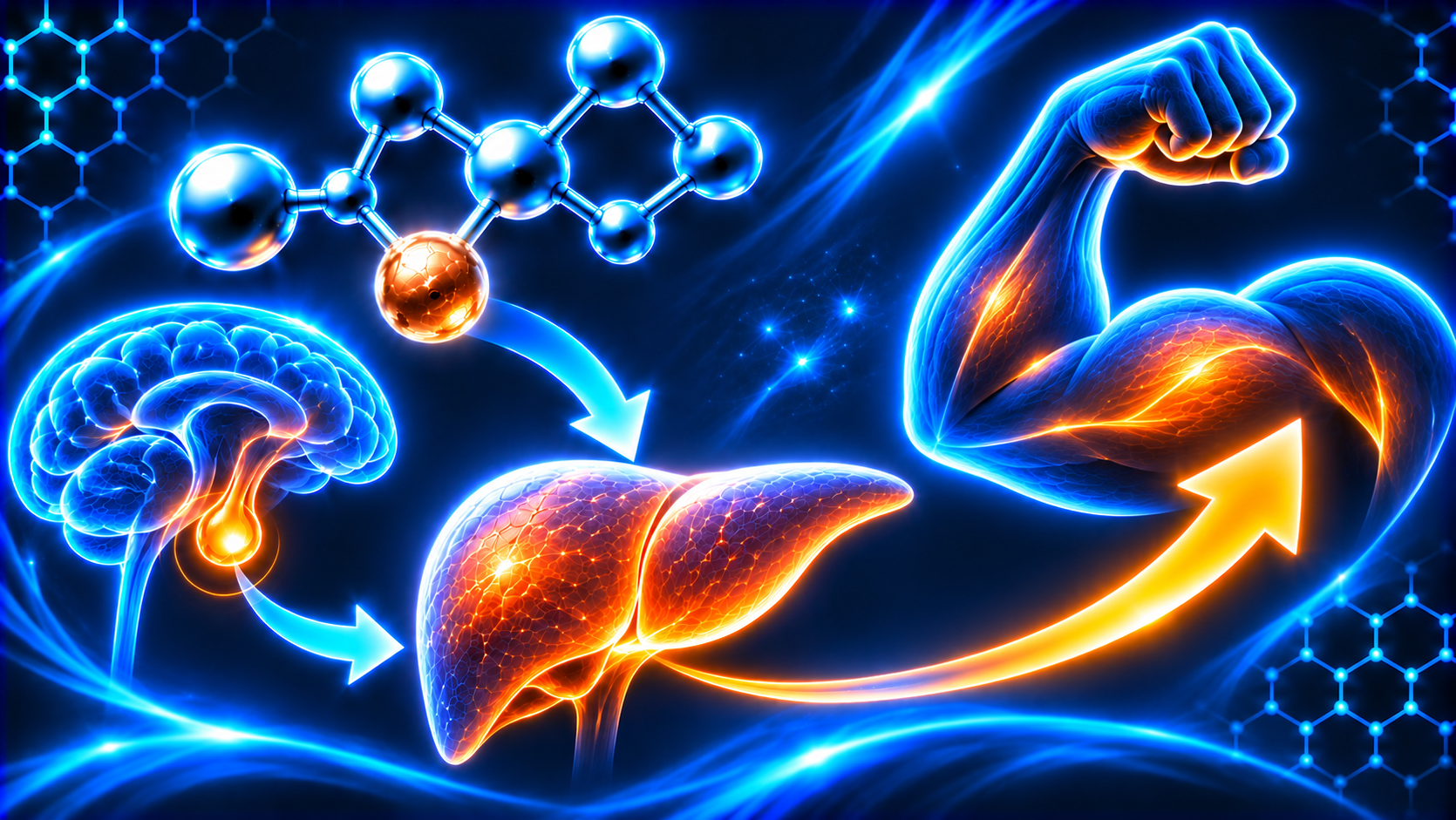
GHRP-6 stimulates growth hormone release.
Growth hormone signals the liver to produce IGF-1.
IGF-1 activates pathways involved in muscle protein synthesis, cellular growth, and tissue repair.
This process is known as the growth hormone–IGF-1 axis, an important part of how the body regulates muscle development and tissue regeneration.
Although GHRP-6 does not directly supply IGF-1, its ability to stimulate growth hormone release can lead to increased IGF-1 levels. This indirect effect is one of the main reasons GHRP-6 is studied in muscle growth research, although its ability to increase muscle mass has not been established.
Main Research Findings
Human research has shown that GHRP-6 can do more than stimulate growth hormone release. Under certain research conditions, it can also lead to measurable increases in circulating IGF-1 levels.
This finding is particularly important because IGF-1 plays an established role in several processes associated with muscle development, including:
Muscle protein synthesis.
Muscle cell growth and development.
Muscle tissue repair and regeneration.
Regulation of muscle protein breakdown.
By stimulating growth hormone release, GHRP-6 can indirectly influence these growth-related signaling pathways through increased IGF-1 production.
The key takeaway is that the connection between GHRP-6 and increased IGF-1 levels is supported by human research, not just theory.
Although the size of the increase varies between studies, these findings provide a scientific foundation for continued research into GHRP-6 and muscle development. Whether these hormonal changes translate into measurable gains in muscle size or strength remains to be established.
Research Methodology / Context
To understand why GHRP-6 is studied in muscle growth research, it helps to understand the role of IGF-1.
IGF-1 is a naturally occurring growth factor that helps regulate muscle development, protein synthesis, and tissue regeneration.
Some of its key functions include:
Muscle protein synthesis: Supports the production of proteins needed to build and maintain muscle tissue.
Muscle cell development: Activates signaling pathways involved in muscle fiber growth.
Muscle recovery: Participates in the repair and regeneration of damaged muscle tissue.
Muscle maintenance: Helps regulate muscle protein breakdown.
Because GHRP-6 can stimulate growth hormone release and increase circulating IGF-1 levels, researchers are interested in its potential influence on these processes.
The connection between GHRP-6 and muscle growth research is largely tied to its ability to influence both growth hormone and IGF-1. While this hormonal response is encouraging, further human research is needed to determine whether it leads to measurable improvements in muscle mass, strength, and recovery.
Current Research Limitations
Human studies have demonstrated that GHRP-6 can increase growth hormone and IGF-1 levels. However, most studies have focused on hormonal changes rather than directly measuring muscle growth.
The extent to which GHRP-6 influences IGF-1 levels may depend on several factors, including:
Age and existing hormone levels.
Nutrition and metabolic health.
Duration of research exposure.
Individual responses to growth hormone stimulation.
While the connection between IGF-1 and muscle development is well established, further research is needed to determine how increases in IGF-1 from GHRP-6 translate into changes in muscle mass, strength, and recovery.
Long-term safety also remains insufficiently established, and GHRP-6 is not FDA-approved for muscle growth.
Nevertheless, its documented ability to stimulate growth hormone release and influence IGF-1 production provides a meaningful foundation for continued muscle development research.
Discussion
What makes GHRP-6 particularly interesting in muscle growth research is its ability to influence two important hormones: growth hormone and IGF-1.
While GHRP-6 initially stimulates growth hormone release, the resulting increase in IGF-1 may influence several processes involved in muscle development, protein synthesis, and tissue repair.
The significance of GHRP-6 extends beyond growth hormone release. Its ability to influence IGF-1 production connects it to one of the body's key pathways for regulating muscle growth and regeneration.
Human studies documenting increases in IGF-1 provide a scientific basis for this connection. Although direct muscle-building benefits have yet to be established, these findings help explain why GHRP-6 remains an interesting compound in muscle development and recovery research.
Conclusion
Yes, GHRP-6 can increase IGF-1 levels by stimulating the body's natural release of growth hormone. Human studies have documented measurable increases in circulating IGF-1 under certain research conditions.
This connection is particularly important because IGF-1 plays a key role in muscle protein synthesis, muscle development, and tissue repair.
The ability of GHRP-6 to influence both growth hormone and IGF-1 provides a scientific foundation for its continued investigation in muscle growth and recovery research.
While further human studies are needed to establish direct improvements in muscle mass and strength, its documented hormonal effects help explain the ongoing research interest in GHRP-6.
At Peptide Purity USA, we emphasize high-quality research materials, analytical transparency, and responsible scientific investigation.
Research Use Only: All research materials offered by Peptide Purity USA are intended strictly for laboratory research purposes. Not for human or veterinary consumption. Not intended for diagnostic or therapeutic applications.
References
- 1. Intranasal administration of His-D-Trp-Ala-Trp-D-Phe-LysNH2 (growth hormone releasing peptide) increased plasma growth hormone and insulin-like growth factor-I levels in normal men. Endocrinologia Japonica. 1991. PMID: 1915110.
- 2. Effects of a prolonged growth hormone (GH)-releasing peptide infusion on pulsatile GH secretion in normal men. Journal of Clinical Endocrinology & Metabolism. 1993. PMID: 7903313.
- 3. Orally active growth hormone secretagogues: State of the art and clinical perspectives. 1998. PMID: 9667794.
- 4. Yoshida T, Delafontaine P. Mechanisms of IGF-1-mediated regulation of skeletal muscle hypertrophy and atrophy. Cells. 2020;9(9):1970. PMID: 32858949.
- 5. Adams GR, Haddad F. The relationships among IGF-1, DNA content, and protein accumulation during skeletal muscle hypertrophy. Journal of Applied Physiology. 1996;81(6):2509–2516. PMID: 9018499.
- 6. Frago LM, Pañeda C, Dickson SL, Hewson AK, Argente J, Chowen JA. Growth hormone (GH) and GH-releasing peptide-6 increase brain insulin-like growth factor-I expression and activate intracellular signaling pathways involved in neuroprotection. Endocrinology. 2002;143(10):4113–4122. PMID: 12239123.