Introduction
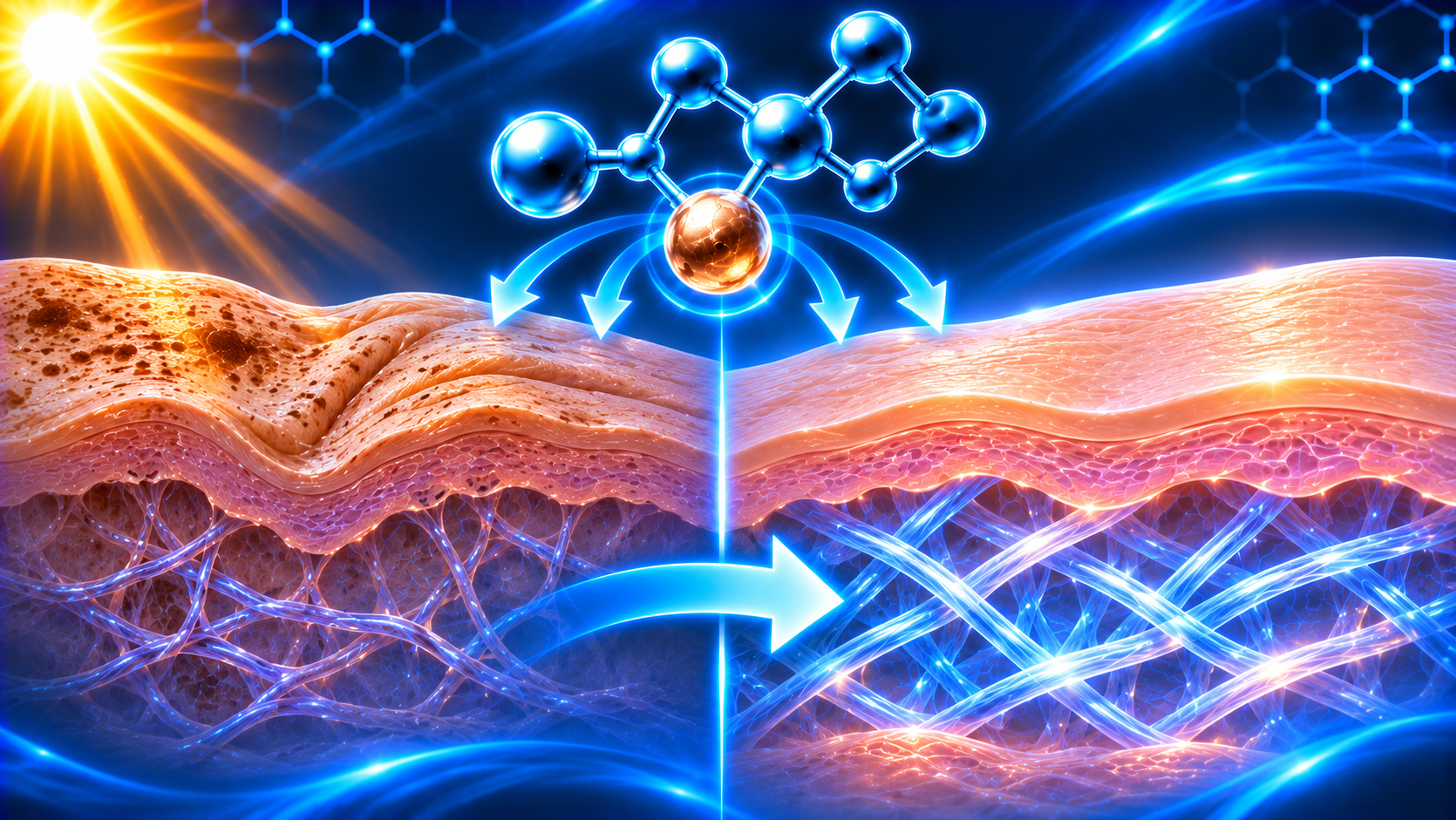
Can copper peptides help with sun-damaged skin? Yes, research suggests they can support skin repair, collagen production, and improvements in the appearance of aging skin. That makes copper peptides, especially GHK-Cu, an interesting option being studied for fine lines, wrinkles, and skin that has lost some of its firmness.
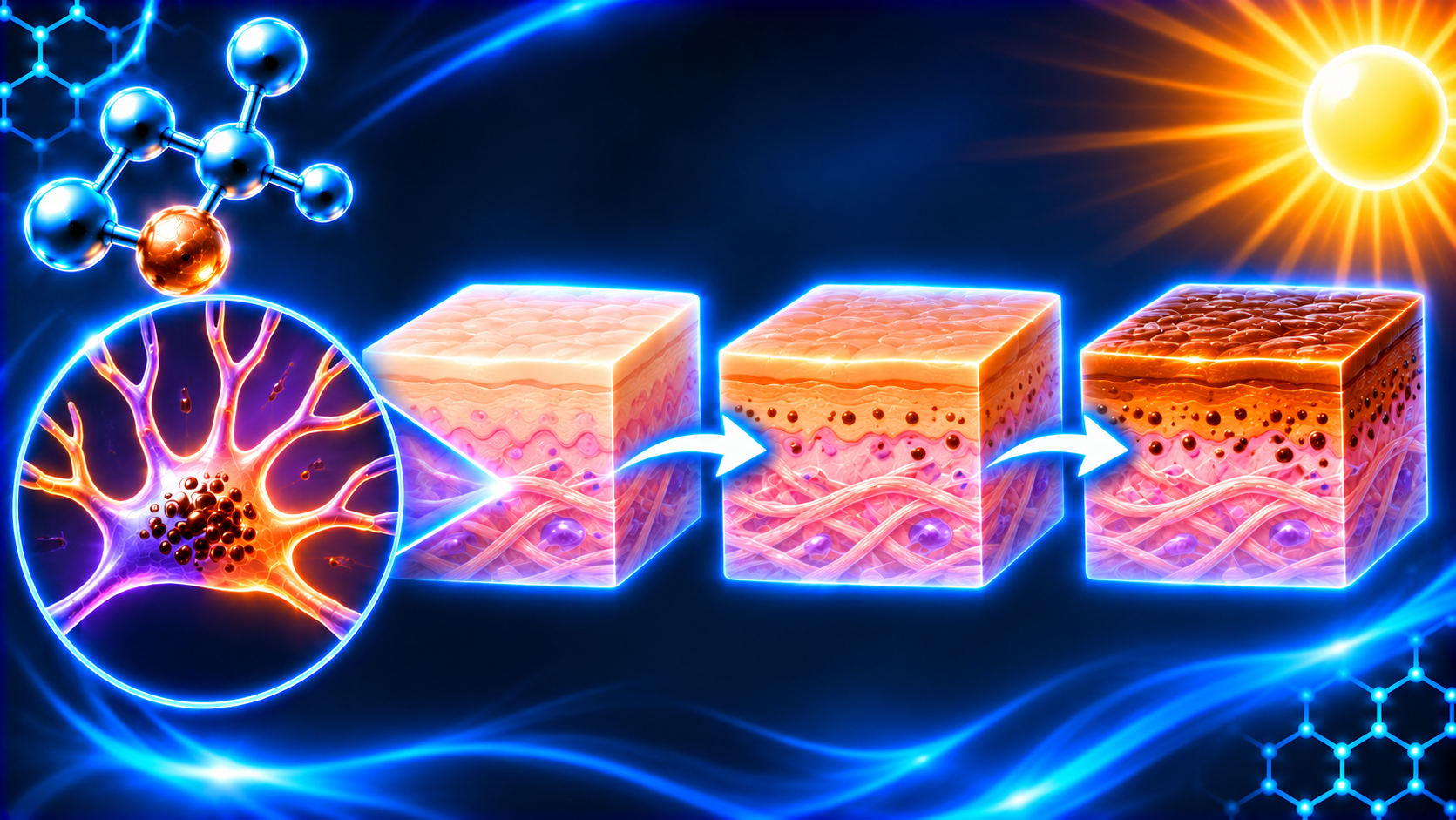
Over time, sun exposure can take a toll on your skin. Wrinkles become more noticeable, skin may lose elasticity, and its texture can become rough or uneven. Much of this happens because ultraviolet (UV) rays damage collagen, the protein that helps keep skin firm and smooth.
GHK-Cu is a copper peptide that researchers have studied for its ability to support collagen production and natural skin-repair processes. These properties may help explain why copper peptides have attracted attention in anti-aging and sun-damaged skin research.
How Can Copper Peptides Help Sun-Damaged Skin?
Research suggests copper peptides may offer several benefits:
Collagen production: Helps support the proteins responsible for firmer, smoother-looking skin.
Fine lines and wrinkles: Early cosmetic research suggests copper peptides may improve certain visible signs of aging.
Skin repair: Supports biological processes involved in tissue renewal and recovery.
Skin firmness and elasticity: May help maintain the structures that give skin its strength and flexibility.
The bottom line: Copper peptides show real promise for improving the appearance of aging skin and supporting the repair processes affected by sun exposure. While they cannot erase all UV damage, research suggests GHK-Cu may help address some of the visible changes that come with years of sun exposure.
Research Background
What Is GHK-Cu, and How Does It Help Sun-Damaged Skin?
GHK-Cu is a naturally occurring copper peptide found in the human body. It plays a role in processes related to skin maintenance, collagen production, and tissue repair. These properties have made it an interesting compound in research involving sun-damaged skin, wrinkles, and anti-aging.
As we age, our skin naturally produces less collagen. Years of sun exposure can speed up this process by breaking down the proteins that keep skin firm and smooth. This can lead to fine lines, deeper wrinkles, uneven texture, and a loss of elasticity.
Copper peptides are interesting because they may help support the very processes that sun exposure weakens.
Research suggests GHK-Cu can influence collagen production, skin cell activity, and tissue remodeling. These are important functions that help skin maintain its structure and recover from damage.
Why Is GHK-Cu Important for Skin Repair?
Unlike ingredients that simply moisturize the skin or temporarily improve its appearance, GHK-Cu is being studied for its effects on the biological processes involved in skin renewal.
Researchers are particularly interested in three areas:
Collagen support: Encouraging processes involved in maintaining stronger, firmer-looking skin.
Skin renewal: Supporting the activity of cells responsible for maintaining and repairing skin tissue.
Visible signs of aging: Potentially improving skin texture, fine lines, and firmness.
These findings help explain why GHK-Cu has become a promising compound in copper peptide research for sun-damaged and aging skin.
Although more human studies are needed, existing research provides encouraging reasons to continue investigating its potential for improving skin appearance and supporting natural repair.
Main Research Findings
What Does Research Show About Copper Peptides and Sun-Damaged Skin?
Research into GHK-Cu has produced encouraging findings, particularly when it comes to collagen production, skin repair, wrinkles, and overall skin appearance. While studies specifically examining sun damage are still limited, several findings help explain why copper peptides have become an area of interest in anti-aging skin research.
1. Copper Peptides May Help Improve Collagen Production
One of the biggest effects of long-term sun exposure is collagen breakdown. As collagen decreases, skin can lose firmness, and fine lines and wrinkles become more noticeable.
GHK-Cu has been shown in laboratory research to influence collagen production and tissue remodeling. These processes are important for maintaining smoother, firmer-looking skin.
This is one of the strongest reasons researchers are investigating copper peptides for aging and sun-damaged skin.
2. GHK-Cu May Help Reduce the Appearance of Fine Lines and Wrinkles
Can copper peptides help with wrinkles caused by sun exposure?
Early research suggests they may help improve the appearance of wrinkles and aging skin.
Small cosmetic studies involving copper peptide formulations have reported improvements in certain measures of skin firmness, texture, and wrinkles.
These findings are promising because sun exposure is a major contributor to premature skin aging. However, larger studies are needed to confirm how much improvement GHK-Cu can provide specifically for sun-related wrinkles.
3. Copper Peptides Support Skin-Repair Processes
Sun exposure does more than cause wrinkles. Over time, UV radiation can affect the skin's ability to maintain and repair its structure.
GHK-Cu has attracted attention because research suggests it can influence processes involved in tissue repair, cell activity, and skin renewal.
This potential to support natural repair processes is one of the main reasons copper peptides are being studied for damaged and aging skin.
4. GHK-Cu May Help Improve Skin Firmness and Texture
Skin that has experienced years of sun exposure can begin to look thinner, rougher, or less elastic.
Copper peptides may help support the collagen and other structural components that give skin its firmness and flexibility.
Although results vary between studies and formulations, early findings suggest GHK-Cu may have a role in improving certain visible signs of skin aging.
Can Copper Peptides Reverse Sun Damage?
Copper peptides may help improve some visible effects associated with sun damage, but they have not been proven to completely reverse UV damage.
Research supports their potential involvement in collagen production, skin renewal, and tissue repair. These are important processes for maintaining healthier-looking skin.
However, improving wrinkles or skin texture is different from reversing UV-related DNA damage or removing sunspots.
The key takeaway: GHK-Cu shows promising potential for improving the appearance of aging skin, especially in areas such as collagen support, fine lines, firmness, and texture. The evidence is encouraging, but direct human research on sun-damaged skin remains limited.
Research Methodology / Context
How Have Researchers Studied Copper Peptides for Skin Repair?
Researchers have studied GHK-Cu and its potential skin benefits through laboratory experiments, skin cell studies, and smaller human cosmetic studies.
Much of this research focuses on how copper peptides influence collagen production, skin renewal, and the body's natural tissue-repair processes.
Some of the most encouraging findings come from studies examining how GHK-Cu interacts with skin cells. Researchers have observed effects on collagen-related activity and tissue remodeling, two processes that are especially important for aging and sun-damaged skin.
Small studies involving topical copper peptide formulations have also reported improvements in certain signs of skin aging, including wrinkles, firmness, and overall skin appearance.
What Do These Findings Mean for Sun-Damaged Skin?
The research suggests copper peptides may help support the same skin-repair processes that become less effective with age and repeated sun exposure.
This is why GHK-Cu continues to attract attention in anti-aging and skin regeneration research.
However, not every study has examined sun-damaged skin directly, and results from topical cosmetic formulations cannot automatically be applied to other forms of GHK-Cu.
The findings are promising, particularly for collagen support and visible skin aging, but more human research is needed to determine how effectively copper peptides can improve sun-related skin damage.
Current Research Limitations
What Do We Still Need to Know About Copper Peptides and Sun Damage?
Research into GHK-Cu and sun-damaged skin has shown promising results, particularly in areas involving collagen production, skin repair, and visible signs of aging. However, there are still some important questions researchers are working to answer.
Most studies have been relatively small, and much of the evidence comes from laboratory research rather than large human clinical trials.
Researchers still need to better understand:
Long-term results: How well do improvements in skin firmness, wrinkles, and texture hold up over time?
Sun damage specifically: How much can GHK-Cu improve skin that has experienced years of UV exposure?
Different formulations: Which copper peptide formulations provide the most consistent results?
Overall effectiveness: How much visible improvement can be expected in larger human studies?
It's also important to recognize that results from topical cosmetic studies do not establish the safety or effectiveness of injectable or research-grade GHK-Cu.
Does This Mean Copper Peptides Don't Work?
No. Limited research does not mean copper peptides are ineffective. It means scientists need more evidence to determine how reliably they improve sun-damaged skin.
Existing findings provide encouraging support for GHK-Cu's involvement in collagen production, tissue remodeling, and skin renewal. Small cosmetic studies have also reported improvements in certain signs of aging.
The takeaway: Copper peptides remain a promising area of skin-repair and anti-aging research. While their ability to reverse sun damage has not been established, their potential to support healthier-looking skin makes GHK-Cu worth continued investigation.
Discussion
Why Are Copper Peptides Getting Attention for Sun-Damaged Skin?
One reason GHK-Cu is gaining attention in skin repair and anti-aging research is that it may influence several processes involved in keeping skin firm, smooth, and healthy-looking.
Sun exposure gradually breaks down collagen and affects the skin's ability to maintain its structure. Over time, this can lead to wrinkles, uneven texture, and reduced elasticity.
Copper peptides are particularly interesting because research suggests they may help support some of these same processes.
Rather than focusing on just one visible sign of aging, GHK-Cu is being studied for its potential effects on collagen production, skin renewal, tissue repair, and skin firmness.
Are Copper Peptides Worth Studying for Sun Damage?
Yes. The existing research provides encouraging reasons to investigate copper peptides for sun-damaged and aging skin.
Laboratory findings suggest GHK-Cu can influence collagen production and tissue remodeling, while small cosmetic studies have reported improvements in certain signs of skin aging.
These findings are especially relevant to photoaging, the premature aging of skin caused by repeated sun exposure.
Although copper peptides have not been proven to reverse UV damage, their potential to improve skin appearance and support natural repair processes makes them a promising area of research.
The bottom line: GHK-Cu offers more than an interesting theory. Early research provides evidence of biological activity relevant to skin repair, along with preliminary improvements in skin appearance. Larger human studies are still needed to confirm how effectively these benefits translate to sun-damaged skin.
Conclusion
Can Copper Peptides Really Help Sun-Damaged Skin?
Yes, research suggests copper peptides may help improve some visible signs of sun-damaged and aging skin. GHK-Cu has shown promising effects on collagen production, skin renewal, and tissue repair, making it an interesting compound in anti-aging research.
Years of sun exposure can leave skin looking less firm, with more noticeable wrinkles, fine lines, and uneven texture. Copper peptides are being studied because they may support some of the natural processes responsible for maintaining smoother, healthier-looking skin.
The most promising benefits of GHK-Cu include:
Collagen support: May help maintain the structure responsible for firmer-looking skin.
Fine lines and wrinkles: Early cosmetic studies suggest potential improvements in visible signs of aging.
Skin repair: Supports biological processes involved in tissue renewal and remodeling.
Skin firmness and texture: May help improve certain changes associated with aging skin.
While copper peptides have not been proven to completely reverse sun damage, the existing research offers encouraging evidence for their potential in skin repair and anti-aging.
The bottom line: GHK-Cu shows real promise for supporting collagen production and improving certain signs of skin aging. More human research is needed to confirm its effectiveness specifically for sun-damaged skin, but the early findings make copper peptides an exciting area of continued research.
At Peptide Purity USA, we emphasize high-quality research materials, analytical transparency, and responsible scientific investigation.
Research Use Only: All research materials offered by Peptide Purity USA are intended strictly for laboratory research purposes. Not for human or veterinary consumption. Not intended for diagnostic or therapeutic applications.
References
- 1. Pickart, L., Vasquez-Soltero, J. M., & Margolina, A. (2015). GHK peptide as a natural modulator of multiple cellular pathways in skin regeneration. *BioMed Research International*, 2015, 648108.
- 2. Maquart, F. X., Pickart, L., Laurent, M., Gillery, P., Monboisse, J. C., & Borel, J. P. (1988). Stimulation of collagen synthesis in fibroblast cultures by the tripeptide-copper complex glycyl-L-histidyl-L-lysine-Cu2+. *FEBS Letters*, 238(2), 343–346.
- 3. Pickart, L., Vasquez-Soltero, J. M., & Margolina, A. (2015). GHK-Cu may prevent oxidative stress in skin by regulating copper and modifying expression of numerous antioxidant genes. *Cosmetics*, 2(3), 236–247.
- 4. Fisher, G. J., Kang, S., Varani, J., et al. (2002). Mechanisms of photoaging and chronological skin aging. *Archives of Dermatology*, 138(11), 1462–1470.
- 5. Quan, T., He, T., Kang, S., Voorhees, J. J., & Fisher, G. J. (2004). Solar ultraviolet irradiation reduces collagen in photoaged human skin by blocking transforming growth factor-beta type II receptor/Smad signaling. *The American Journal of Pathology*, 165(3), 741–751.
- 6. Fisher, G. J., Wang, Z. Q., Datta, S. C., Varani, J., Kang, S., & Voorhees, J. J. (1997). Pathophysiology of premature skin aging induced by ultraviolet light. *The New England Journal of Medicine*, 337(20), 1419–1428.