Introduction
Thinning hair doesn't always mean your hair follicles have stopped working.
In many cases, the follicles are still active, but the hair they produce becomes thinner, shorter, or less noticeable over time.
That's why understanding the hair growth cycle is so important.
Every hair follicle goes through a natural process of growing, resting, and shedding. When this cycle changes, hair may begin to lose its thickness and density.
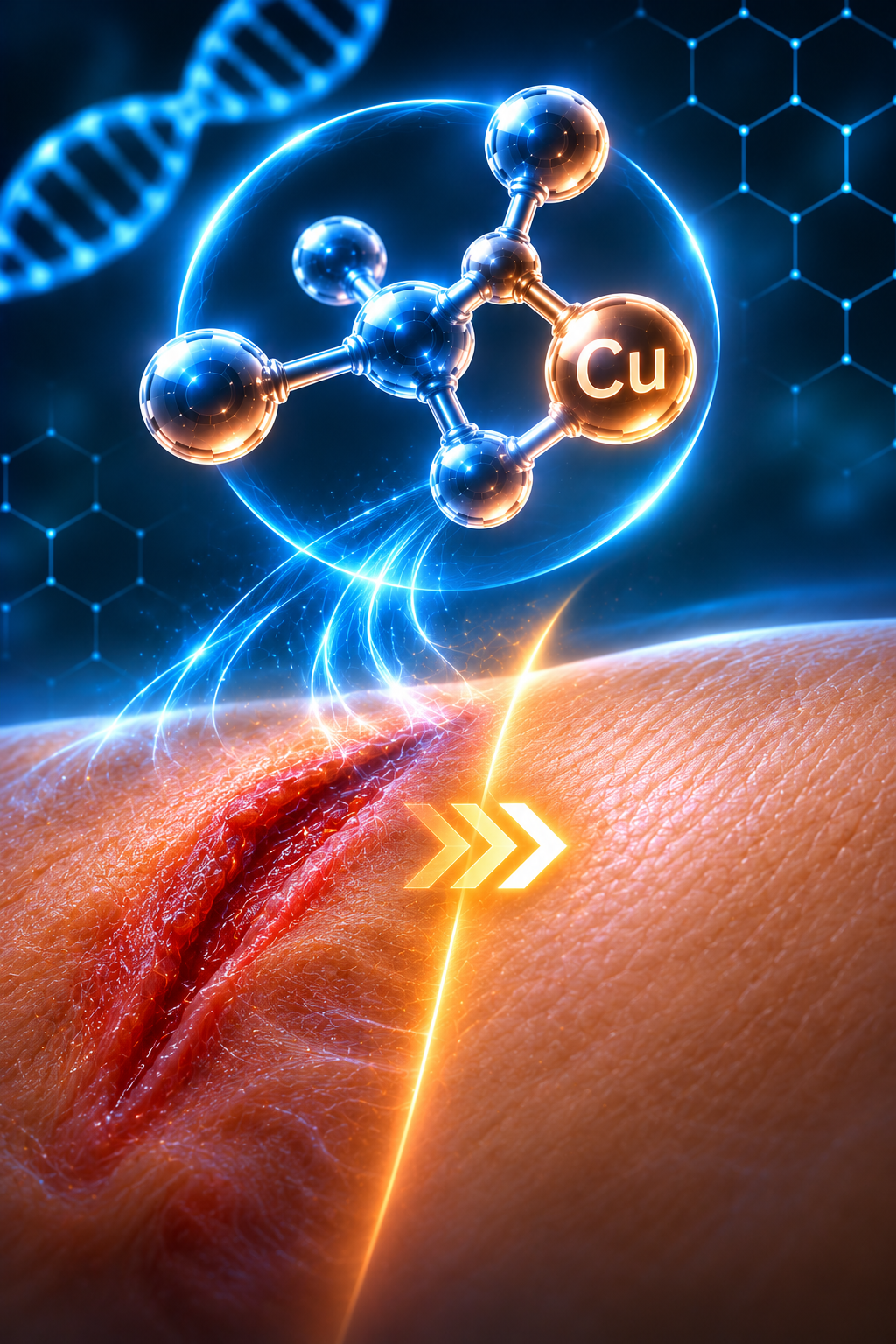
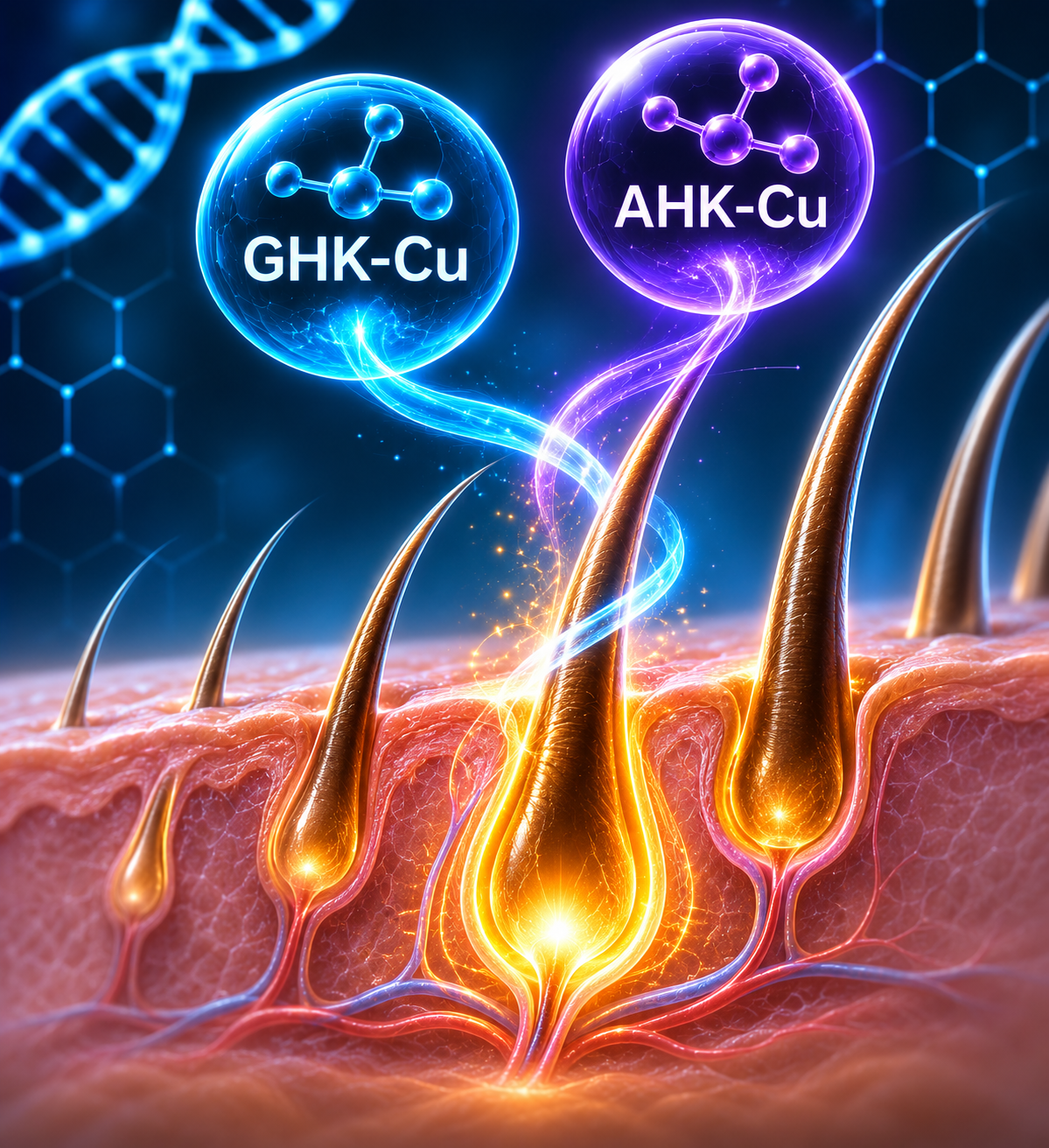
Researchers are now studying whether copper peptides for hair growth, particularly GHK-Cu and AHK-Cu, could help influence the biological processes that keep hair follicles active.
These two peptides have attracted attention for different reasons.
GHK-Cu has been studied for its effects on tissue repair, cellular activity, and the environment surrounding hair follicles.
AHK-Cu has shown promising results in laboratory research involving human hair follicles and the cells responsible for regulating hair growth.
Both compounds offer interesting possibilities for understanding how peptides may support healthier follicle activity.
But there's another important question:
How long does it take to see hair growth results?
Hair grows slowly, and even when follicle activity improves, visible changes in thickness and density can take months.
In this article, we'll break down how the hair growth cycle works, what research tells us about GHK-Cu and AHK-Cu, and the potential hair growth timeline from the first few weeks through six months and beyond.
Research Background
Understanding the Hair Growth Cycle
Hair doesn't grow continuously. Every hair follicle follows a natural cycle that determines when a strand grows, rests, and eventually sheds.
This process is known as the hair growth cycle, and it has four main stages.
Understanding these stages helps explain why hair becomes thinner over time and why researchers are interested in peptides that may influence follicle activity.
1. Anagen: The Growth Phase
Anagen is when your hair actively grows.
During this stage, cells inside the follicle produce the hair shaft, allowing each strand to become longer.
For scalp hair, the anagen phase typically lasts 2–7 years, depending on genetics, age, and other factors.
Around 85–90% of scalp hairs are normally in this stage.
Why it matters: The longer a follicle stays in the growth phase, the more time it has to produce a healthy, growing strand.
This makes anagen an important focus in hair growth research.
2. Catagen: The Transition Phase
Catagen is a short phase lasting approximately 2–3 weeks.
During this stage, active hair growth stops, and the lower portion of the follicle begins to shrink.
Only a small percentage of scalp hairs are in catagen at any given time.
Why it matters: This stage marks the end of active growth before the follicle enters its resting period.
3. Telogen: The Resting Phase
Telogen is when the follicle temporarily stops producing new hair.
This stage typically lasts 2–3 months.
The existing strand remains in place while the follicle prepares for another growth cycle.
Why it matters: Changes in the number of follicles entering or remaining in telogen can contribute to noticeable hair thinning and shedding.
4. Exogen: The Shedding Phase
Exogen is when the older hair strand is released from the follicle.
Losing approximately 50–100 hairs per day is considered normal for many people.
Shedding makes room for the next generation of hair as the follicle continues its natural cycle.
Why it matters: Shedding is a normal part of hair renewal, but excessive shedding may indicate that the growth cycle has been disrupted.
The Four Hair Growth Stages at a Glance
| Stage | Typical Duration | What Happens |
|---|---|---|
| Anagen | 2–7 years | Hair actively grows |
| Catagen | 2–3 weeks | Growth stops |
| Telogen | 2–3 months | Follicle rests |
| Exogen | Varies | Old hair sheds |
Why Hair Follicles Become Thinner
Hair thinning doesn't always mean a follicle has disappeared.
In common pattern hair loss, follicles can gradually shrink through a process called hair follicle miniaturization.
As this happens, the follicle produces shorter, finer strands that provide less scalp coverage.
Changes in the hair growth cycle can also cause more follicles to spend time resting rather than actively growing.
This is where copper peptide research becomes interesting.
GHK-Cu and AHK-Cu are being investigated for their potential effects on the cells and signaling processes involved in hair follicle activity.
Researchers are particularly interested in whether these compounds can influence the biological environment that supports normal follicle function.
Understanding these mechanisms may help scientists identify new approaches to studying hair growth, hair thickness, and follicle health.
Main Research Findings
How GHK-Cu May Support Hair Follicles
GHK-Cu is a copper peptide being studied for its potential to support the biological environment surrounding hair follicles.
It consists of three amino acids bound to copper and has attracted scientific interest for its effects on tissue repair, collagen production, and cellular signaling.
These properties matter because healthy hair growth depends on more than the hair shaft itself.
Each follicle relies on surrounding tissue, specialized cells, and chemical signals to maintain its normal growth cycle.
Research suggests GHK-Cu may influence several processes relevant to follicle health:
Tissue remodeling: GHK-Cu has demonstrated effects on collagen-related activity and the extracellular matrix, which helps support the structure surrounding cells.
Cellular repair: Laboratory studies have identified effects on biological pathways involved in tissue maintenance and repair.
Cell signaling: GHK-Cu may influence signals involved in maintaining healthy tissue function.
These findings make GHK-Cu an interesting candidate for hair follicle research.
Its potential benefit lies in supporting the cellular environment that hair follicles depend on for normal growth.
However, direct human studies demonstrating increased scalp hair density from GHK-Cu remain limited.
How AHK-Cu May Stimulate Hair Growth
AHK-Cu is another copper peptide, but its research has a more direct connection to hair follicles.
One of the most interesting areas of investigation involves dermal papilla cells, specialized cells near the base of each hair follicle.
These cells help control important signals involved in hair growth.
In experimental studies involving human hair follicles, AHK-Cu has demonstrated activity associated with follicular cell growth and survival.
Researchers have investigated several potential benefits:
Follicle activity: AHK-Cu has shown effects on cells involved in regulating hair production.
Cell growth: Laboratory findings suggest it may encourage certain cellular processes associated with follicle development.
Cell survival: Experimental research has identified effects on pathways involved in maintaining follicular cells.
Hair growth signaling: AHK-Cu may influence biological signals relevant to the active growth phase.
These findings suggest AHK-Cu has potential as a hair growth research compound, particularly for understanding how follicle activity can be encouraged.
Although the laboratory results are promising, larger human clinical trials are still needed to determine whether AHK-Cu produces meaningful improvements in hair thickness or density.
GHK-Cu vs. AHK-Cu: Which Is Better for Hair Growth?
Both peptides have attracted attention, but they are not identical.
GHK-Cu has a broader research background involving tissue maintenance and cellular repair.
AHK-Cu has been studied more directly in experimental hair follicle models.
| Feature | GHK-Cu | AHK-Cu |
|---|---|---|
| Main research focus | Tissue repair and remodeling | Hair follicle activity |
| Potential hair benefit | Supporting the follicle environment | Influencing follicle growth signals |
| Hair follicle research | Limited direct evidence | Direct laboratory evidence |
| Human hair regrowth proven? | No | No |
Which Copper Peptide Shows More Promise?
For research specifically focused on hair follicles, AHK-Cu currently has more directly relevant experimental evidence.
Its activity involving dermal papilla cells makes it particularly interesting for investigating the biological processes that regulate hair production.
GHK-Cu remains valuable because of its broader effects on tissue remodeling and cellular signaling.
These different properties give researchers reasons to investigate both compounds.
However, no well-controlled human trial has established that one produces better hair growth results than the other.
The key takeaway: AHK-Cu has a more direct connection to experimental hair growth research, while GHK-Cu offers a broader foundation in tissue and cellular support.
Research Methodology / Context
How Long Does GHK-Cu and AHK-Cu Take to Work for Hair Growth?
One of the biggest questions surrounding copper peptides for hair growth is simple: How long before you can see a difference?
The answer depends on how hair follicles respond and how quickly new hair grows.
Human scalp hair grows approximately 1 centimeter per month on average. Even when a follicle becomes more active, it takes time for new strands to grow long enough to improve visible thickness and coverage.
This is why hair growth research typically measures results over several months rather than a few weeks.
Although GHK-Cu and AHK-Cu have shown promising biological activity, researchers have not established a reliable timeline for visible hair regrowth from either compound.
The following milestones explain what scientists might look for when evaluating a successful hair growth intervention.
Hair Growth Timeline: From Early Follicle Activity to Visible Results
WEEKS 1–4: Early Follicle Activity
During the first month, potential changes would mainly occur beneath the scalp.
Researchers may examine cellular activity, growth signals, and other biological processes involved in hair follicle function.
Visible hair growth would generally be too early to expect.
MONTHS 1–2: Early Growth Changes
If an intervention successfully influences follicle activity, some follicles may begin producing new strands or changing their growth patterns.
However, newly growing hairs may still be too short or fine to notice.
Changes in hair density are often difficult to evaluate this early.
MONTHS 2–3: Possible Early Visible Changes
By this stage, researchers may begin looking for early changes in hair growth.
These can include:
Small new hairs becoming visible.
Changes in the number of actively growing hairs.
Early differences in shedding patterns.
Whether these changes occur depends on the intervention and the underlying cause of hair loss.
MONTHS 3–6: Hair Thickness and Density Become Easier to Measure
This is an important period in many hair growth studies.
With several months of growth, researchers can more reliably evaluate changes in:
Hair density: The number of hairs growing within a measured area.
Hair thickness: The diameter of individual hair strands.
Scalp coverage: How full the hair appears.
If a treatment is effective, improvements may become easier to detect during this period.
MONTHS 6–12: Longer-Term Hair Growth Assessment
Hair follicles don't all grow on the same schedule.
Some remain active while others rest or shed, making longer observation periods valuable.
By six to twelve months, researchers may have a clearer understanding of whether changes in hair density, thickness, and growth are sustained.
Hair Growth Timeline at a Glance
| Timeline | Potential Changes |
|---|---|
| Weeks 1–4 | Early cellular and follicle activity |
| Months 1–2 | Possible changes in growth signaling |
| Months 2–3 | Early visible growth may become detectable |
| Months 3–6 | Hair thickness and density easier to assess |
| Months 6–12 | Longer-term growth and density evaluation |
Important: These are general hair growth research timelines, not proven results from GHK-Cu or AHK-Cu. Neither compound has an established clinical timeline for human hair regrowth.
Why Hair Growth Results Take Several Months
Hair growth depends on more than how quickly individual strands become longer.
For hair to appear fuller, several things may need to happen:
More follicles may need to enter or remain in the active growth phase.
Individual strands may need to become thicker.
New hairs need enough time to grow and contribute to visible scalp coverage.
This is why the three-to-six-month period is often useful for evaluating hair growth changes in clinical research.
For GHK-Cu and AHK-Cu, their potential effects on follicle activity make these outcomes interesting targets for future studies.
The biological research is encouraging, but the amount and timing of visible hair growth in humans remain unknown.
Current Research Limitations
What Research Still Needs to Confirm About GHK-Cu and AHK-Cu
Research into GHK-Cu and AHK-Cu for hair growth has produced encouraging findings, particularly in studies examining hair follicle activity and cellular signaling.
However, much of the available evidence comes from laboratory experiments rather than large human clinical trials.
AHK-Cu has demonstrated promising effects in experimental hair follicle models, while GHK-Cu has been studied more broadly for its influence on tissue repair and cellular activity.
These findings help explain why both peptides are attracting interest, but several important questions remain.
Researchers still need to determine:
Visible hair growth: Whether either peptide reliably increases hair density or thickness in humans.
Hair growth timelines: How long measurable changes might take to appear.
Long-term results: Whether improvements, if demonstrated, can be maintained over time.
Different types of hair loss: Which conditions, if any, might respond to copper peptide activity.
Safety: How different formulations affect the scalp and surrounding tissues over extended periods.
Why Hair Growth Results May Vary
Hair thinning can develop for several reasons, including genetics, hormonal changes, aging, nutritional deficiencies, and scalp conditions.
These factors influence how follicles function and how long they remain in the active growth phase.
Even if a compound successfully influences follicle signaling, it may not address every cause of hair loss.
The encouraging finding is that copper peptides can influence biological processes relevant to hair follicle function. The next step is determining how those effects translate into measurable hair growth in people.
Further clinical research will help establish whether GHK-Cu and AHK-Cu can produce consistent improvements in hair thickness, density, and overall follicle activity.
Discussion
Can Copper Peptides Help Hair Grow Thicker?
One of the most interesting possibilities in copper peptide hair growth research is their potential influence on the biological processes that determine hair thickness and density.
Hair can begin to look thinner when follicles produce smaller strands or spend less time in the active growth phase.
For hair to appear fuller, follicles generally need to produce healthy strands with enough thickness and length to provide visible coverage.
This is why researchers are interested in compounds like GHK-Cu and AHK-Cu, which may influence different aspects of hair follicle biology.
GHK-Cu has demonstrated effects on tissue remodeling and cellular signaling, processes that help maintain the environment surrounding hair follicles.
AHK-Cu has shown more direct activity in experimental hair follicle studies, particularly involving cells that help regulate hair production.
These findings suggest copper peptides may offer useful ways to investigate the cellular mechanisms behind stronger follicle activity and healthier hair growth.
Whether these effects translate into visibly thicker hair in humans remains an important question for future research.
Why the Anagen Phase Matters for Hair Regrowth
The anagen phase is especially important because this is when follicles actively produce hair.
When follicles remain in anagen, they continue generating the hair shaft. When the growth phase becomes shorter, strands may not reach their previous length or thickness.
In common pattern hair loss, repeated cycles of follicle miniaturization can gradually make hair less noticeable.
Researchers investigating hair growth compounds are therefore interested in whether they can influence the signals that regulate active follicle growth.
AHK-Cu is particularly interesting because laboratory research has identified effects on follicular cells involved in hair growth regulation.
GHK-Cu's broader effects on cellular activity and tissue maintenance provide another potential research direction.
However, neither peptide has yet been shown in controlled human trials to reliably extend the anagen phase or reverse follicle miniaturization.
What Makes GHK-Cu and AHK-Cu Worth Studying?
Unlike approaches that focus only on the appearance of the hair shaft, copper peptide research explores biological activity within and around the follicle itself.
That distinction matters.
The follicle is responsible for producing each strand, and its activity determines much of the hair's growth pattern.
GHK-Cu and AHK-Cu have different research strengths, but both provide opportunities to investigate the relationship between cellular signaling and follicle function.
The potential is especially interesting for understanding how hair follicles maintain growth, respond to biological signals, and move through the natural hair growth cycle.
As research advances, scientists may gain a clearer understanding of whether these peptides can help improve measurable outcomes such as hair shaft thickness, follicle activity, and hair density.
For now, their strongest value lies in the promising biological mechanisms researchers are continuing to explore.
Conclusion
GHK-Cu and AHK-Cu are two promising copper peptides being investigated for their potential to support hair follicle activity and the biological processes involved in hair growth.
Although they work through different areas of research, both offer valuable insight into how hair follicles function.
GHK-Cu has demonstrated effects on tissue remodeling, cellular signaling, and processes that help maintain the environment surrounding hair follicles.
AHK-Cu has shown more direct activity in laboratory studies involving human hair follicles, making it particularly interesting for research into hair growth regulation.
The potential benefits of copper peptides for hair growth include influencing follicle signaling, supporting cellular activity, and helping researchers understand the mechanisms behind hair thickness and density.
Understanding the natural hair growth cycle is equally important.
Hair grows slowly, and even when follicle activity improves, visible changes take time.
Three to six months is often a useful period for evaluating changes in hair thickness and density, while longer studies can provide a clearer picture of sustained growth.
However, these are general hair growth research timelines. Clinical studies have not yet established how quickly GHK-Cu or AHK-Cu might produce visible results in humans.
The key takeaway: GHK-Cu and AHK-Cu show encouraging potential in hair follicle research, with AHK-Cu offering particularly interesting experimental findings related to hair growth activity.
As research continues, these copper peptides may help scientists better understand how to influence follicle function, hair growth signaling, and the natural hair growth cycle.
At Peptide Purity USA, we emphasize high-quality research materials, analytical transparency, and scientifically grounded education to support continued peptide research.
Research Use Only: All research materials offered by Peptide Purity USA are intended strictly for laboratory research purposes. Not for human or veterinary consumption. Not intended for diagnostic or therapeutic applications.
References
- 1. Pyo, H. K., Yoo, H. G., Won, C. H., Lee, S. H., Kang, Y. J., Eun, H. C., Cho, K. H., & Kim, K. H. (2007). The effect of tripeptide-copper complex on human hair growth in vitro. Archives of Pharmacal Research, 30(7), 834–839.
- 2. Pickart, L., & Margolina, A. (2018). Regenerative and protective actions of the GHK-Cu peptide in the light of the new gene data. International Journal of Molecular Sciences, 19(7), 1987.
- 3. Pickart, L., Vasquez-Soltero, J. M., & Margolina, A. (2015). GHK peptide as a natural modulator of multiple cellular pathways in skin regeneration. BioMed Research International, 2015, 648108.
- 4. Stenn, K. S., & Paus, R. (2001). Controls of hair follicle cycling. Physiological Reviews, 81(1), 449–494.
- 5. Schneider, M. R., Schmidt-Ullrich, R., & Paus, R. (2009). The hair follicle as a dynamic miniorgan. Current Biology, 19(3), R132–R142.
- 6. Paus, R., & Cotsarelis, G. (1999). The biology of hair follicles. The New England Journal of Medicine, 341(7), 491–497.
- 7. Schmidt-Ullrich, R., & Paus, R. (2005). Molecular principles of hair follicle induction and morphogenesis. BioEssays, 27(3), 247–261.
- 8. Pickart, L., & Margolina, A. (2018). Skin regenerative and anti-cancer actions of copper peptides. Cosmetics, 5(2), 29.