
Introduction
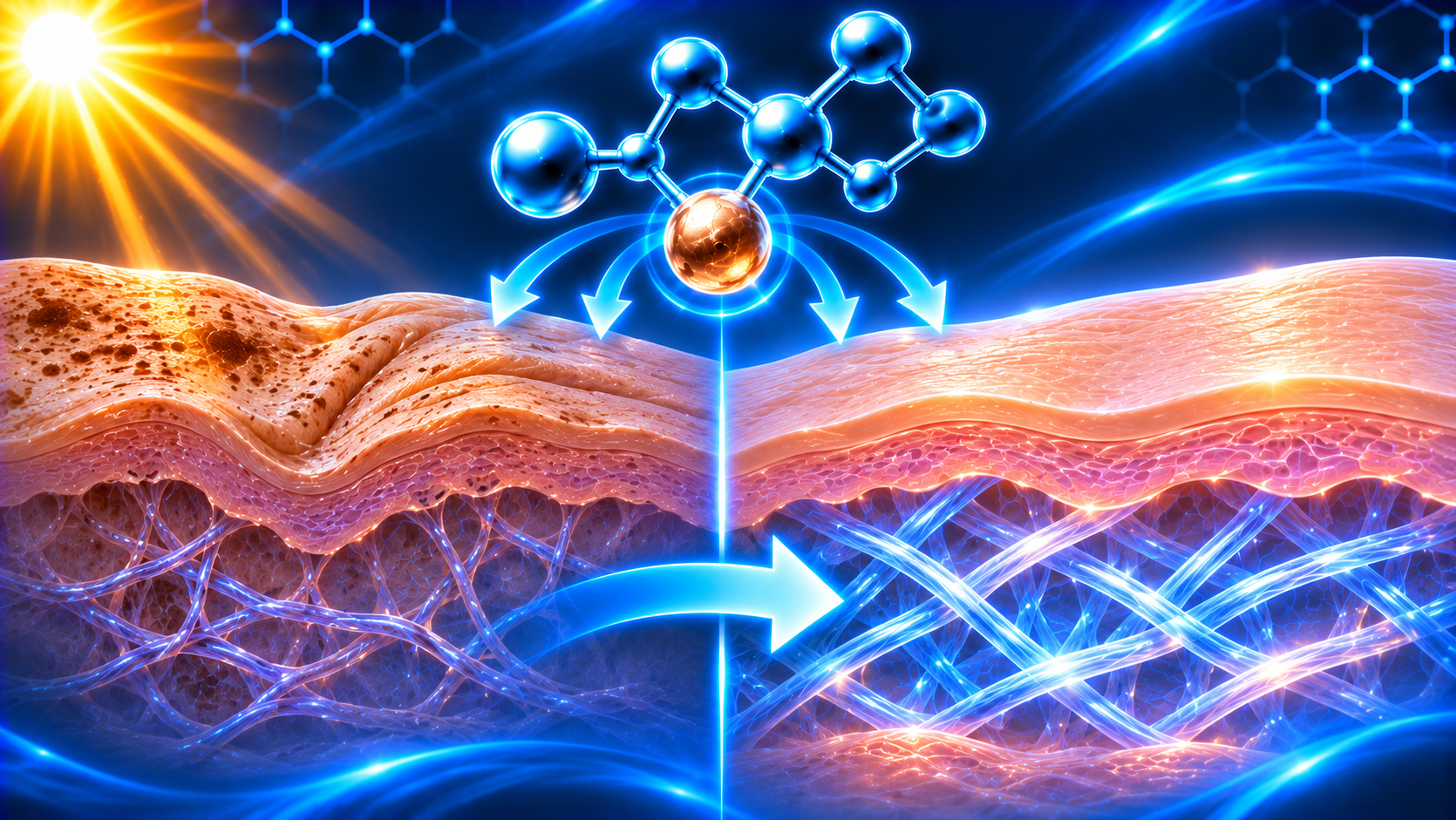
Acne scars can be frustrating because they often remain long after the acne itself has cleared. Even when breakouts stop, uneven skin texture, small indentations, and visible scarring can persist for years.One of the biggest reasons acne scars develop is damage to collagen, the protein responsible for giving skin its structure, firmness, and smooth appearance.
This is where GHK-Cu, commonly known as the copper peptide, has gained attention in skin repair research.
GHK-Cu has been studied for its potential to support collagen production, encourage tissue remodeling, and influence the skin's natural repair processes. These properties have made it an interesting compound for researchers investigating skin regeneration and scar formation.
But can GHK-Cu actually help with acne scars?
Although direct human studies on GHK-Cu for acne scars remain limited, existing research into collagen regulation and wound healing provides a scientific reason to investigate its potential.
Understanding how GHK-Cu interacts with the skin helps explain why copper peptides are attracting interest in acne scar research.
Research Background
What Is GHK-Cu, and How Does It Relate to Acne Scars?
GHK-Cu is a naturally occurring copper-binding peptide made up of three amino acids: glycine, histidine, and lysine. It has attracted attention in skin research because of its potential role in collagen production, tissue repair, and skin regeneration.
To understand why GHK-Cu is being investigated for acne scars, it helps to understand how those scars develop.
When acne causes inflammation deep within the skin, it can damage the surrounding tissue and disrupt normal collagen production.
As the skin heals, two things can happen:
Too little collagen is produced: This can leave behind depressed or indented acne scars.
Too much collagen is produced: This can create raised scars that extend above the surrounding skin.
Because collagen plays such an important role in scar formation, researchers are interested in compounds that may influence how collagen is produced and reorganized during healing.
Why Copper Peptides Are Interesting for Skin Repair
GHK-Cu has been studied for several biological activities that may be relevant to damaged skin:
Collagen production: Influencing the activity of fibroblasts, the cells responsible for producing collagen.
Tissue remodeling: Supporting processes involved in repairing and reorganizing damaged skin tissue.
Skin regeneration: Affecting cellular pathways associated with wound healing and tissue renewal.
Inflammatory regulation: Influencing biological signals involved in the skin's response to injury.
These properties make GHK-Cu an interesting research candidate for understanding how damaged skin repairs itself.
The connection to acne scars is especially important because collagen loss and disorganized tissue repair are major reasons scars remain visible.
While research has not yet established that GHK-Cu can visibly reduce acne scars in humans, its involvement in collagen-related pathways provides a promising foundation for further investigation.
Main Research Findings
1. GHK-Cu and Collagen Production
One of the most interesting areas of GHK-Cu research involves its potential to influence collagen production.
Collagen gives skin its structure, firmness, and smooth appearance. When acne damages the deeper layers of skin, collagen can be lost or become unevenly distributed, leaving behind visible indentations.
Research involving GHK-Cu and related peptides has shown effects on fibroblasts, the cells responsible for producing collagen and maintaining the skin's structural framework.
This is one of the main reasons GHK-Cu is being investigated for its potential role in skin repair and scar remodeling.
Although these findings are encouraging, researchers have not yet established whether GHK-Cu can restore enough collagen to visibly improve established acne scars.
2. GHK-Cu and Skin Remodeling
Improving damaged skin involves more than simply producing new collagen. The existing tissue must also be repaired and reorganized.
This process is called skin remodeling.
GHK-Cu has been studied for its influence on the extracellular matrix, the network of collagen and other proteins that supports the skin.
Research suggests that GHK-Cu can influence biological processes involved in both the formation and breakdown of structural proteins.
For acne scar research, this is particularly interesting because uneven skin texture often develops when damaged tissue heals without restoring its original structure.
GHK-Cu's potential influence on tissue remodeling makes it a promising compound for further research into scar-related skin changes.
3. GHK-Cu and Wound Healing
Acne scars begin with inflammation and damage to the skin. How that damaged tissue heals can determine whether a lasting scar develops.
Preclinical research has investigated GHK-Cu for its potential to support wound repair, cellular activity, and tissue regeneration.
Some studies have reported favorable effects on biological processes involved in healing damaged tissue.
These findings are relevant because successful wound healing depends on coordinated collagen production, cellular repair, and tissue remodeling.
The potential connection between GHK-Cu and wound healing provides another reason researchers are interested in its possible applications to acne scar formation.
However, wound healing and the improvement of existing acne scars are not the same process. More human research is needed to determine whether these biological effects can translate into visible scar improvement.
Research Methodology / Context
Which Types of Acne Scars Could Be Relevant to GHK-Cu Research?
Not all acne scars develop the same way. Some form when the skin loses collagen, while others develop when too much scar tissue is produced during healing.
Understanding these differences helps explain where GHK-Cu and its potential effects on collagen remodeling may be most relevant to future research.
| Acne Scar Type | Characteristics |
|---|---|
| Rolling scars | Wide, shallow depressions that give skin an uneven or wavy appearance. |
| Boxcar scars | Round or oval indentations with more defined edges. |
| Ice pick scars | Small, narrow, deep scars extending into the skin. |
| Raised scars | Elevated areas caused by excessive scar tissue formation. |
Why Depressed Acne Scars Are Particularly Interesting
Rolling, boxcar, and ice pick scars are generally classified as atrophic acne scars, meaning they involve a loss of tissue beneath the skin's surface.
Because GHK-Cu has been studied for its influence on collagen production and tissue remodeling, these types of scars are particularly relevant to investigating its biological mechanisms.
The potential connection is straightforward: acne scars often involve damaged collagen, and GHK-Cu has demonstrated activity in pathways involved in collagen regulation and skin repair.
However, researchers have not yet established whether GHK-Cu can improve the appearance of any specific acne scar type.
Further human studies are needed to determine whether its effects on collagen-related processes can produce measurable improvements in scar depth, texture, or overall appearance.
Current Research Limitations
What Does Research Still Need to Prove?
While GHK-Cu has shown promising activity in collagen production, skin repair, and tissue remodeling research, its potential for improving acne scars is still being investigated.
Most existing research focuses on laboratory experiments, cellular activity, and wound healing rather than directly measuring improvements in acne scars.
Several important questions remain unanswered:
Visible scar improvement: Can GHK-Cu actually reduce the depth or appearance of established acne scars?
Different scar types: Would certain types of acne scars respond differently to its effects on collagen remodeling?
Long-term results: Could changes in skin structure lead to lasting improvements?
Human clinical evidence: Can the encouraging findings from laboratory and preclinical studies be reproduced in controlled human trials?
The biggest limitation is the lack of direct human clinical studies demonstrating that GHK-Cu improves acne scars.
However, the existing research on collagen regulation and tissue repair provides a scientific foundation for continued investigation.
As research advances, scientists may gain a better understanding of whether GHK-Cu's biological properties can translate into measurable improvements in scar-related skin damage.
Discussion
Why GHK-Cu Remains Promising for Acne Scar Research
What makes GHK-Cu particularly interesting is that its potential benefits for skin repair extend beyond a single biological process.
Acne scars often develop because the skin cannot fully restore its original structure after inflammation and tissue damage. Collagen production, cellular repair, and tissue remodeling all play important roles in that process.
GHK-Cu has demonstrated activity in several of these same biological pathways, making it an interesting candidate for continued acne scar research.
Its potential influence on collagen regulation is especially relevant to depressed acne scars, where damaged or missing tissue contributes to uneven skin texture.
Researchers are also interested in how GHK-Cu may influence the organization of collagen and other structural proteins during skin repair.
Rather than simply increasing collagen production, effective scar remodeling requires a balance between building new tissue and reorganizing existing tissue.
This combination of collagen-related activity and tissue remodeling is what makes GHK-Cu a promising subject for future skin regeneration research.
Although clinical studies have not yet confirmed that GHK-Cu visibly improves acne scars, its established biological activity provides a reasonable scientific basis for further investigation.
Conclusion
Can GHK-Cu Help With Acne Scars?
GHK-Cu has gained attention in skin repair research because of its potential to influence collagen production, tissue remodeling, and skin regeneration.
These properties are particularly interesting when studying acne scars, which often develop when inflammation damages collagen and disrupts the skin's natural healing process.
Research suggests that GHK-Cu can influence several biological pathways involved in repairing damaged skin, making it a promising compound for further acne scar research.
Its effects on collagen regulation and tissue remodeling are especially relevant to understanding how depressed acne scars form and whether damaged skin structure can be improved.
However, direct human clinical evidence demonstrating that GHK-Cu visibly reduces acne scars remains limited.
The key takeaway: GHK-Cu has a promising scientific foundation for skin repair and collagen remodeling, but more human research is needed to establish its effectiveness for acne scars.
As interest in copper peptides continues to grow, GHK-Cu remains an important compound for researchers exploring skin regeneration, collagen production, and scar-related tissue repair.
At Peptide Purity USA, we emphasize high-quality research materials, analytical transparency, and responsible scientific investigation.
Research Use Only: All research materials offered by Peptide Purity USA are intended strictly for laboratory research purposes. Not for human or veterinary consumption. Not intended for diagnostic or therapeutic applications.
References
- 1. Maquart, F. X., Pickart, L., Laurent, M., Gillery, P., Monboisse, J. C., & Borel, J. P. (1988). Stimulation of collagen synthesis in fibroblast cultures by the tripeptide-copper complex glycyl-L-histidyl-L-lysine-Cu2+. FEBS Letters, 238(2), 343–346.
- 2. Wegrowski, Y., Maquart, F. X., & Borel, J. P. (1992). Stimulation of sulfated glycosaminoglycan synthesis by the tripeptide-copper complex glycyl-L-histidyl-L-lysine-Cu2+. Life Sciences, 51(13), 1049–1056.
- 3. In vivo stimulation of connective tissue accumulation by the tripeptide-copper complex glycyl-L-histidyl-L-lysine-Cu2+ in rat experimental wounds. (1993). Journal of Clinical Investigation. DOI: 10.1172/JCI116842.
- 4. Pickart, L., & Margolina, A. (2018). Regenerative and protective actions of the GHK-Cu peptide in the light of the new gene data. International Journal of Molecular Sciences, 19(7), 1987.
- 5. Pickart, L., Vasquez-Soltero, J. M., & Margolina, A. (2015). GHK peptide as a natural modulator of multiple cellular pathways in skin regeneration. BioMed Research International, 2015, 648108.
- 6. Fabbrocini, G., Annunziata, M. C., D'Arco, V., De Vita, V., Lodi, G., Mauriello, M. C., Pastore, F., & Monfrecola, G. (2010). Acne scars: Pathogenesis, classification and treatment. Dermatology Research and Practice, 2010, 893080.