Introduction
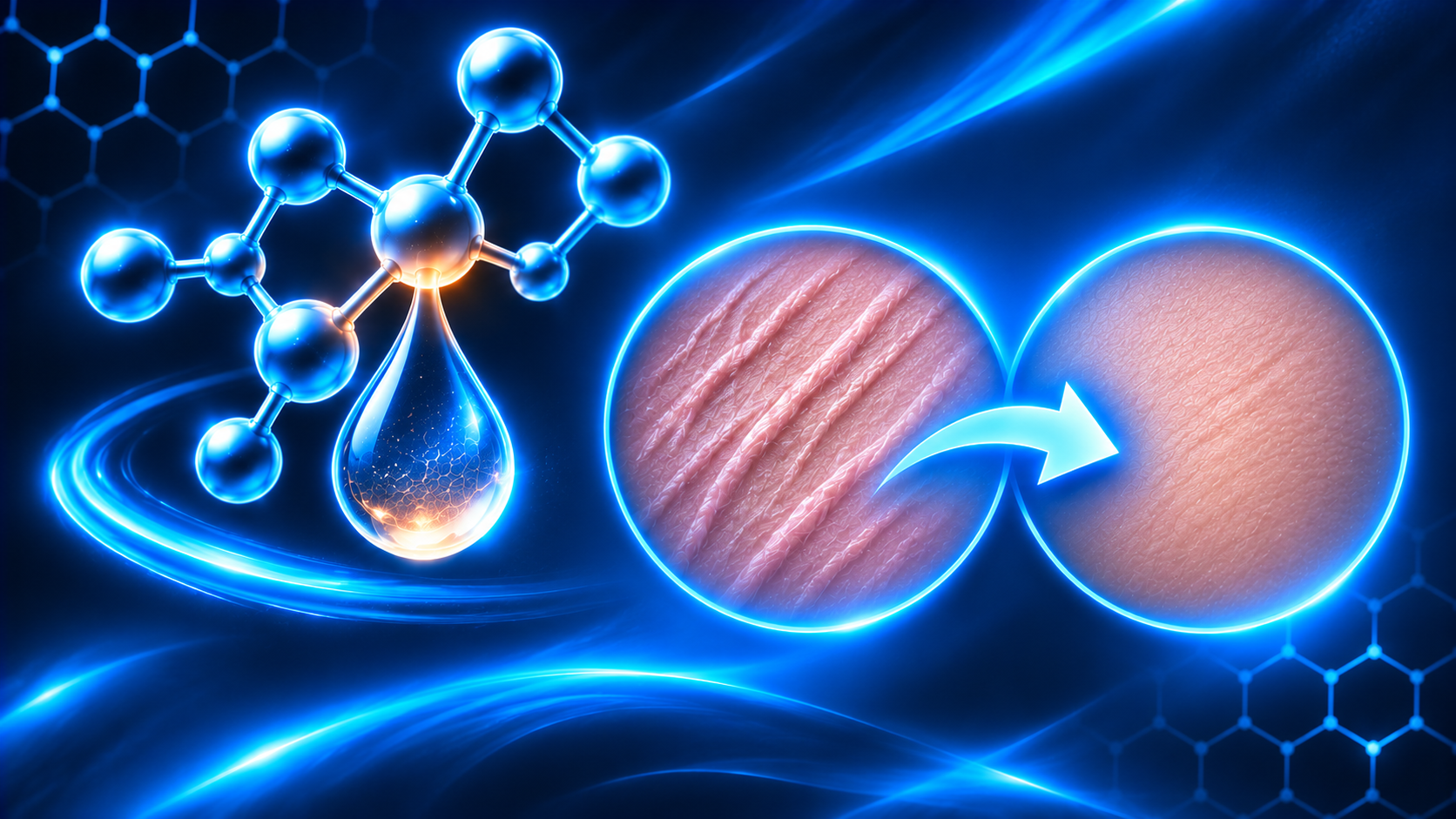
Stretch marks can develop after weight changes, pregnancy, muscle growth, or simply growing too quickly. While they're completely normal, many people look for ways to fade their appearance, smooth uneven skin, and improve overall skin texture.
GHK-Cu, a copper peptide studied for collagen production and skin repair, is gaining attention for its potential to improve the appearance of stretch marks.
What makes GHK-Cu so interesting is how it works with the skin's natural repair processes. Research suggests this copper peptide can influence collagen production, support tissue remodeling, and affect the processes that help maintain firm, healthy-looking skin.
These are especially important when it comes to stretch marks, which form when the skin's underlying collagen and elastin structures become disrupted.
So, can GHK-Cu actually help fade stretch marks?
The science offers an encouraging reason to investigate it. Although researchers haven't yet proven that GHK-Cu reduces stretch marks in humans, its effects on collagen and skin remodeling suggest it could potentially help improve their texture and appearance.
Let's look at why GHK-Cu is attracting attention in stretch mark research and what its skin-related benefits could mean.
Research Background
Why GHK-Cu May Help Improve Stretch Marks
To understand why GHK-Cu is being explored for stretch marks, it helps to understand what causes them in the first place.
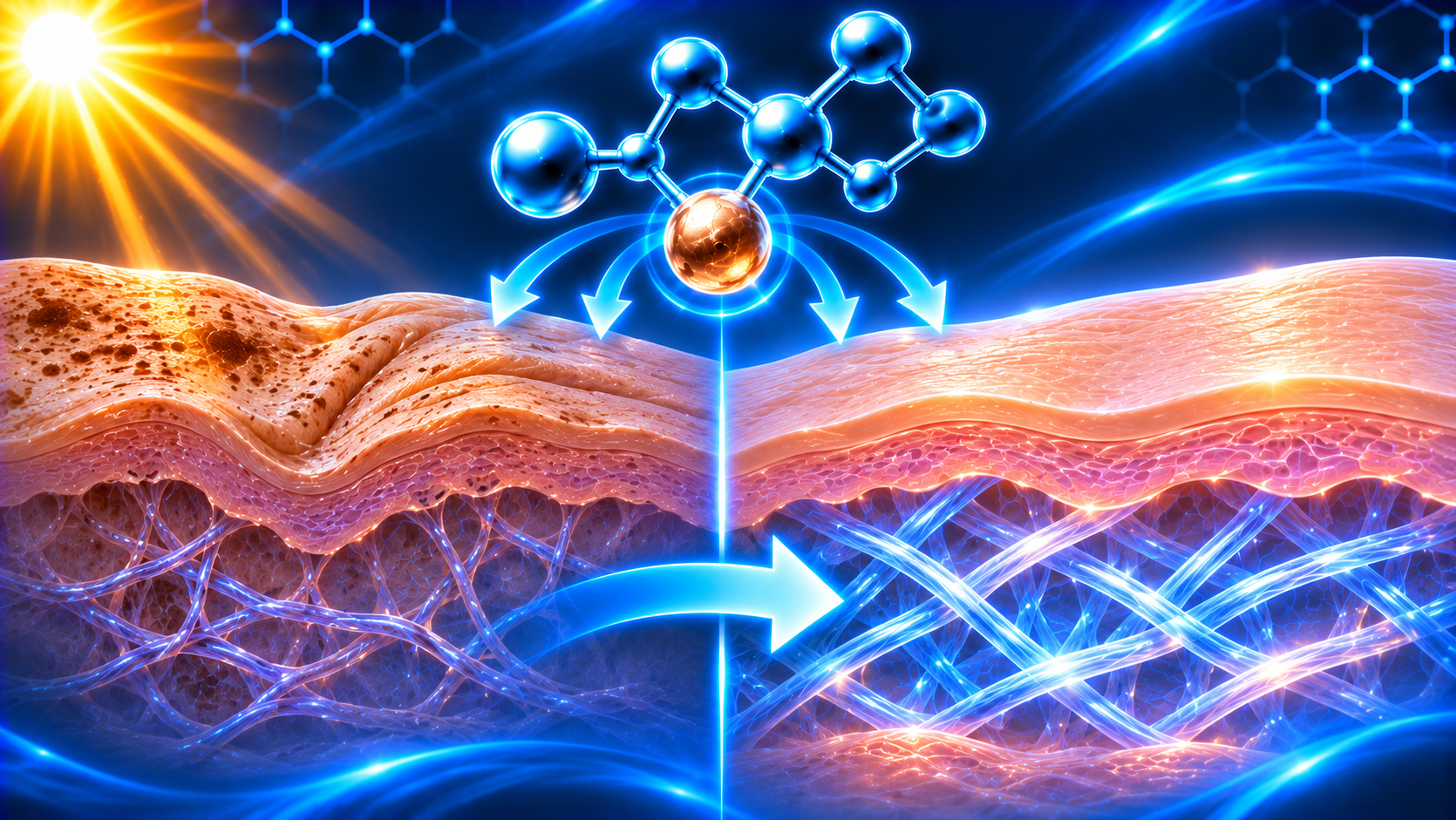
Stretch marks develop when the skin stretches rapidly, causing changes to the collagen and elastin fibers that keep it strong, smooth, and flexible. As these fibers become disrupted, visible lines can form on the skin.
Two important proteins play a major role:
Collagen: Helps keep skin firm, strong, and smooth.
Elastin: Gives skin flexibility and helps it stretch without losing its shape.
This is where GHK-Cu becomes particularly interesting.
GHK-Cu has been shown in laboratory research to influence collagen production and the skin's natural repair processes. It also affects the activity of cells responsible for maintaining the skin's underlying structure.
Because stretch marks involve changes to this same structure, researchers have a reason to investigate whether GHK-Cu could help improve their appearance.
Why Collagen Matters for Stretch Marks
Stretch marks aren't simply lines sitting on the surface of the skin. They involve changes in the deeper layers, where collagen provides much of the skin's strength and support.
This is why collagen remodeling is an important area of stretch mark research.
GHK-Cu's ability to influence collagen-related activity makes it a promising compound to study for improving skin texture and firmness.
Although direct clinical evidence for reducing stretch marks is still limited, GHK-Cu's connection to collagen production and skin remodeling offers a promising scientific foundation for future research.
Main Research Findings
1. GHK-Cu May Support Collagen Production
One of the most promising benefits of GHK-Cu for stretch mark research is its ability to influence collagen production.
Collagen helps keep skin firm, smooth, and supported. When collagen fibers become disrupted during rapid skin stretching, visible stretch marks can develop.
Research has shown that GHK-Cu can stimulate collagen-related activity and support the skin's natural remodeling processes.
This is important because improving the underlying collagen structure is one possible approach researchers are exploring for reducing the appearance of stretch marks.
While direct studies on GHK-Cu and stretch marks are still needed, its effects on collagen provide a promising reason to investigate whether it could help make stretch marks less noticeable.
2. GHK-Cu May Improve Skin Firmness and Texture
Stretch marks can leave skin looking uneven, slightly indented, or different in texture from the surrounding area.
GHK-Cu has attracted attention in skin research because of its potential to support the proteins and cellular processes responsible for maintaining skin firmness.
Some studies involving copper peptide formulations have explored improvements in overall skin appearance, texture, and firmness.
These findings suggest GHK-Cu may have potential for improving the appearance of skin affected by stretch marks.
Smoother, firmer-looking skin could potentially make stretch marks less noticeable, although this specific benefit has not yet been confirmed in controlled human studies.
3. GHK-Cu May Support Skin Repair and Remodeling
Another reason GHK-Cu is interesting for stretch marks is its role in tissue repair research.
Laboratory and preclinical studies suggest GHK-Cu can influence processes involved in skin repair, including cell activity, collagen remodeling, and the maintenance of connective tissue.
Stretch marks involve changes within the deeper layers of skin, making these repair-related processes especially relevant.
Rather than focusing only on the surface, researchers are interested in whether GHK-Cu could influence the underlying skin structure responsible for stretch mark appearance.
Its potential to support collagen remodeling and skin repair makes GHK-Cu an encouraging candidate for future stretch mark research.
Although scientists have not yet established that GHK-Cu can erase or reliably fade stretch marks, these findings help explain why copper peptides continue to attract attention in skin regeneration research.
Research Methodology / Context
What Does Research Say About GHK-Cu for Stretch Marks?
Although studies specifically examining GHK-Cu for stretch marks are limited, researchers have discovered several promising properties that could make this copper peptide useful in future skin repair research.
Much of the evidence comes from laboratory studies, preclinical research, and smaller investigations involving skin appearance and aging.
These studies have explored how GHK-Cu influences several important areas:
Collagen production: GHK-Cu has demonstrated an ability to influence collagen-related activity, which is important for maintaining firm, smooth skin.
Skin repair: Research suggests GHK-Cu can support biological processes involved in repairing and remodeling tissue.
Skin firmness and texture: Studies involving copper peptide formulations have investigated improvements in skin appearance and firmness.
Skin remodeling: GHK-Cu can influence the activity of cells responsible for maintaining the skin's underlying support structure.
What Could These Findings Mean for Stretch Marks?
Stretch marks develop when the skin's supporting fibers become disrupted. Because GHK-Cu influences some of the same processes involved in maintaining and remodeling those fibers, researchers have a scientific reason to explore its potential for improving stretch mark appearance.
The most promising connection is GHK-Cu's influence on collagen production and skin remodeling, two processes closely related to skin firmness and texture.
These findings suggest that GHK-Cu deserves further investigation as a possible approach to making stretch marks less noticeable.
However, the existing studies do not establish that GHK-Cu can reliably fade stretch marks, repair their underlying damage, or prevent new ones from forming. Those outcomes still need to be tested directly in human clinical trials.
Current Research Limitations
What Still Needs to Be Studied About GHK-Cu and Stretch Marks?
Research on GHK-Cu for skin repair, collagen production, and skin remodeling has produced encouraging findings. However, studies specifically examining whether GHK-Cu can reduce the appearance of stretch marks in humans remain limited.
Researchers still need to determine whether GHK-Cu can visibly improve stretch mark texture, depth, or discoloration. It is also unclear whether newer red or purple stretch marks would respond differently than older white stretch marks.
Another important question is how long noticeable improvements might take. Currently, there is no scientifically established timeline for stretch mark reduction using GHK-Cu.
The encouraging part is that GHK-Cu has already demonstrated activity in several biological processes involved in maintaining and repairing skin. Its influence on collagen-related activity and tissue remodeling provides a strong reason to continue investigating its potential.
While these findings do not yet prove that GHK-Cu can fade or remove stretch marks, they make it an interesting candidate for future skin regeneration research.
Discussion
Why GHK-Cu Shows Promise for Stretch Mark Improvement
When looking at GHK-Cu for stretch marks, one of the most interesting findings is how closely its researched properties relate to the processes involved in skin repair.
Stretch marks develop when the skin's supporting collagen and elastin fibers become disrupted. Over time, these changes can leave behind visible lines, uneven texture, and areas that appear slightly indented.
GHK-Cu has attracted attention because research suggests it can influence collagen production, support tissue remodeling, and affect the cellular processes responsible for maintaining healthy skin.
These properties make GHK-Cu a promising compound to investigate for improving the appearance of stretch marks.
Could GHK-Cu Help Make Stretch Marks Less Noticeable?
The possibility is worth exploring.
Because GHK-Cu influences collagen-related activity, researchers have a scientific reason to investigate whether it could help improve the texture and firmness of skin affected by stretch marks.
Potential areas of investigation include:
Smoother-looking skin: Whether collagen remodeling could improve uneven skin texture.
Improved firmness: Whether changes in the skin's supporting structure could make stretch marks appear less noticeable.
Skin renewal: Whether GHK-Cu's repair-related activity could contribute to improvements in the appearance of damaged skin.
These are potential benefits rather than confirmed outcomes for stretch marks.
What makes GHK-Cu especially interesting is that its research goes beyond surface-level skin appearance. Scientists have observed effects on biological processes involved in maintaining and remodeling the skin's underlying structure.
Although clinical studies are still needed to determine whether these effects translate into visible stretch mark improvement, GHK-Cu's connection to collagen and skin repair makes it a compelling subject for continued research.
Conclusion
Can GHK-Cu Help Improve the Appearance of Stretch Marks?
GHK-Cu shows promising potential for stretch mark research, particularly because of its effects on collagen production, skin repair, and tissue remodeling.
Stretch marks develop when the skin's underlying support structure becomes disrupted. Since GHK-Cu has demonstrated an ability to influence collagen-related activity and the processes involved in maintaining healthy skin, researchers have good reason to investigate whether it could help improve their appearance.
Its most interesting properties include:
Collagen support: Influencing the production and remodeling of proteins that help keep skin firm and smooth.
Skin texture: Supporting biological processes that may contribute to healthier-looking skin.
Tissue remodeling: Affecting repair-related activity within the skin's underlying structure.
While GHK-Cu has not yet been clinically proven to fade or remove stretch marks, these findings suggest it could become an interesting option for future research focused on improving skin texture and appearance.
The bottom line: GHK-Cu's connection to collagen production and skin remodeling makes it a promising compound to investigate for stretch marks. More human studies are needed to determine whether these properties translate into visible improvements.
As research continues, GHK-Cu remains an important compound of interest in the study of skin regeneration, collagen, and skin health.
At Peptide Purity USA, we emphasize high-quality research materials, analytical transparency, and responsible scientific investigation.
Research Use Only: All research materials offered by Peptide Purity USA are intended strictly for laboratory research purposes. Not for human or veterinary consumption. Not intended for diagnostic or therapeutic applications.
References
- 1. Maquart, F. X., Pickart, L., Laurent, M., Gillery, P., Monboisse, J. C., & Borel, J. P. (1988). Stimulation of collagen synthesis in fibroblast cultures by the tripeptide-copper complex glycyl-L-histidyl-L-lysine-Cu2+. *FEBS Letters, 238*(2), 343–346.
- 2. Pickart, L., Vasquez-Soltero, J. M., & Margolina, A. (2015). GHK peptide as a natural modulator of multiple cellular pathways in skin regeneration. *BioMed Research International, 2015*, 648108.
- 3. Pickart, L., & Margolina, A. (2018). Regenerative and protective actions of the GHK-Cu peptide in the light of the new gene data. *International Journal of Molecular Sciences, 19*(7), 1987.
- 4. Pickart, L., Vasquez-Soltero, J. M., & Margolina, A. (2015). GHK-Cu may prevent oxidative stress in skin by regulating copper and modifying expression of numerous antioxidant genes. *Cosmetics, 2*(3), 236–247.
- 5. Unraveling the molecular and cellular mechanisms of stretch marks. (2019). *Journal of Cosmetic Dermatology.*
- 6. Striae distensae: Scars without wounds. (2021). *Plastic and Reconstructive Surgery.*