
Introduction
Have you ever found yourself thinking about food even when you're not hungry?
Maybe you're planning your next meal immediately after finishing one, craving a snack despite feeling full, or constantly thinking about what to eat next.
This experience is often described as "food noise."
Food noise refers to frequent, persistent, or intrusive thoughts about food that may occur even when the body does not physically need more energy. Although it is not a formal medical diagnosis, the term has gained attention in discussions about appetite regulation, weight management, and metabolic research.
Interestingly, some individuals receiving GLP-1–based medications report experiencing fewer food-related thoughts, reduced cravings, and a greater sense of control over eating.
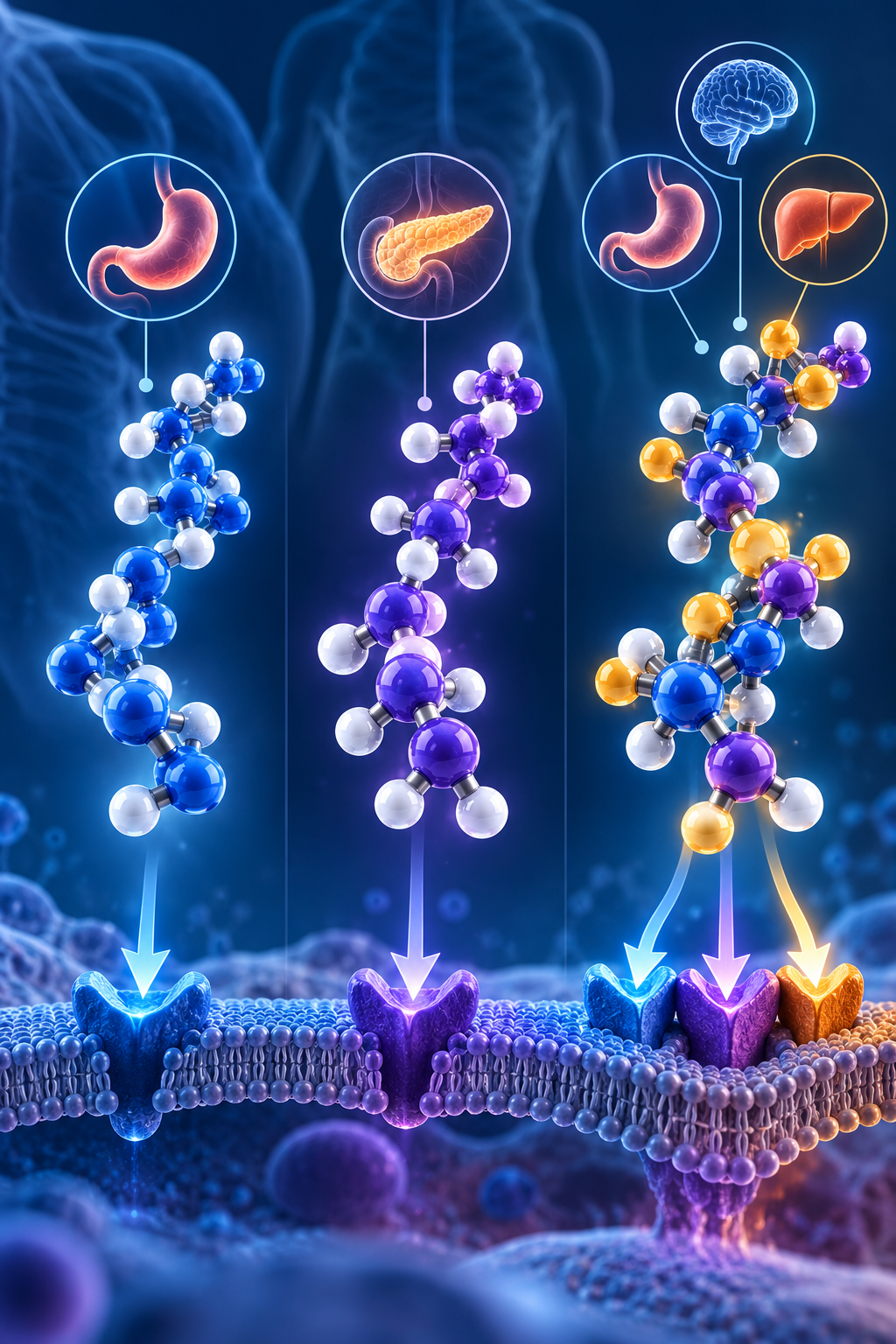
These observations have increased interest in how GLP-1–based compounds, including semaglutide, the dual GIP/GLP-1 receptor agonist tirzepatide, and the investigational triple-receptor agonist retatrutide, influence appetite and food-related behavior.
But why might these compounds make food-related thoughts feel quieter?
The answer may involve the complex communication between the digestive system and the brain, particularly the biological pathways responsible for hunger, fullness, and food-related motivation.
Main Research Findings
How Do GLP-Based Peptides Affect the Brain?
GLP-1, or glucagon-like peptide-1, is a naturally occurring hormone involved in blood sugar regulation, digestion, and appetite signaling.
After eating, GLP-1 helps communicate information about nutrient intake and fullness through biological pathways connecting the digestive system and brain.
GLP-1 receptors are found in brain regions involved in hunger, satiety, and food-related motivation, including areas of the hypothalamus and brainstem that help regulate eating behavior.
Research involving GLP-1 receptor agonists, such as semaglutide, has demonstrated effects on appetite, food intake, and certain measures of food cravings.
Newer compounds expand on this approach by targeting multiple hormone receptors.
Tirzepatide activates both GIP and GLP-1 receptors, while retatrutide, an investigational compound, activates GIP, GLP-1, and glucagon receptors.
Although these compounds differ in their mechanisms, research has demonstrated appetite-related effects across these treatment approaches. However, direct evidence specifically measuring food noise remains limited, particularly for investigational triple-receptor agonists.
These findings suggest that GLP-related signaling may influence not only how hungry someone feels, but also how strongly food captures their attention.
Why Might Food Noise Become Quieter?
Hunger and food cravings are not exactly the same thing.
Hunger is a biological signal associated with the body's need for energy.
Food cravings involve the desire to eat particular foods, sometimes even when physical hunger is absent.
Food noise may involve both experiences, along with frequent or repetitive thoughts about eating.
Clinical research has shown that certain GLP-1 receptor agonists can reduce hunger, improve perceived control over eating, and decrease some food cravings.
Studies have also identified changes in brain responses to food-related images and cues, suggesting that these treatments may influence pathways involved in food motivation and reward.
This may help explain why some individuals describe feeling less preoccupied with food during treatment.
However, food noise is not yet a consistently defined or standardized scientific measurement, and researchers are still investigating how these experiences relate to appetite regulation and brain signaling.
Do GLP-Based Peptides Eliminate Food Noise?
Not necessarily.
Responses vary between individuals, and reductions in food-related thoughts are not universal.
Factors such as sleep, stress, eating patterns, individual biology, and the specific compound being studied may influence appetite-related experiences.
It is also important to distinguish between naturally occurring GLP-1, approved GLP-1–based medications, and investigational multi-receptor compounds.
Although clinical studies have demonstrated meaningful effects on appetite and food intake, the evidence does not establish that these treatments completely eliminate food noise or produce identical effects in everyone.
Further research is needed to understand how different receptor pathways influence persistent food-related thoughts and whether these effects remain consistent over time.
Conclusion
Food noise describes an experience many people recognize: frequent thoughts about food, even when physical hunger is not the primary reason.
Scientific research has demonstrated that GLP-1 receptor signaling plays an important role in appetite regulation, satiety, food cravings, and the brain's response to food-related cues.
Studies involving GLP-1–based medications, including single- and dual-receptor agonists, have identified changes in hunger, food intake, and certain appetite-related behaviors.
Investigational triple-receptor agonists have also demonstrated effects on appetite and metabolic regulation, although their specific influence on food noise requires further study.
Together, these findings provide a possible biological explanation for why some individuals report experiencing fewer persistent food-related thoughts during treatment.
However, food noise remains an evolving area of scientific investigation, and individual responses can vary.
The key takeaway: Appetite involves more than an empty stomach. It reflects complex communication between the digestive system, brain, and biological pathways responsible for hunger, fullness, and food-related motivation.
At Peptide Purity USA, we emphasize scientific education, research transparency, and responsible investigation into peptide-related biological mechanisms.
Research Use Only: All research materials offered by Peptide Purity USA are intended strictly for laboratory research purposes. Not for human or veterinary consumption. Not intended for diagnostic or therapeutic applications.
References
- 1. van Bloemendaal L, et al. (2014). GLP-1 receptor activation modulates appetite- and reward-related brain areas in humans. Diabetes, Obesity and Metabolism.
- 2. Blundell J, et al. (2017). Effects of once-weekly semaglutide on appetite, energy intake, control of eating, food preference and body weight in subjects with obesity. Diabetes, Obesity and Metabolism.
- 3. M, et al. (2021). The effect of semaglutide 2.4 mg once weekly on energy intake, appetite, control of eating, and gastric emptying in adults with obesity. Diabetes, Obesity and Metabolism.