
Introduction
What makes retatrutide different from other metabolic peptides, and how does it produce such significant changes in body weight?
The answer lies in its unique ability to activate three different hormone receptors involved in appetite regulation, blood sugar control, and energy metabolism.
Retatrutide (LY3437943), commonly called Reta, is an investigational peptide known as a triple-receptor agonist.
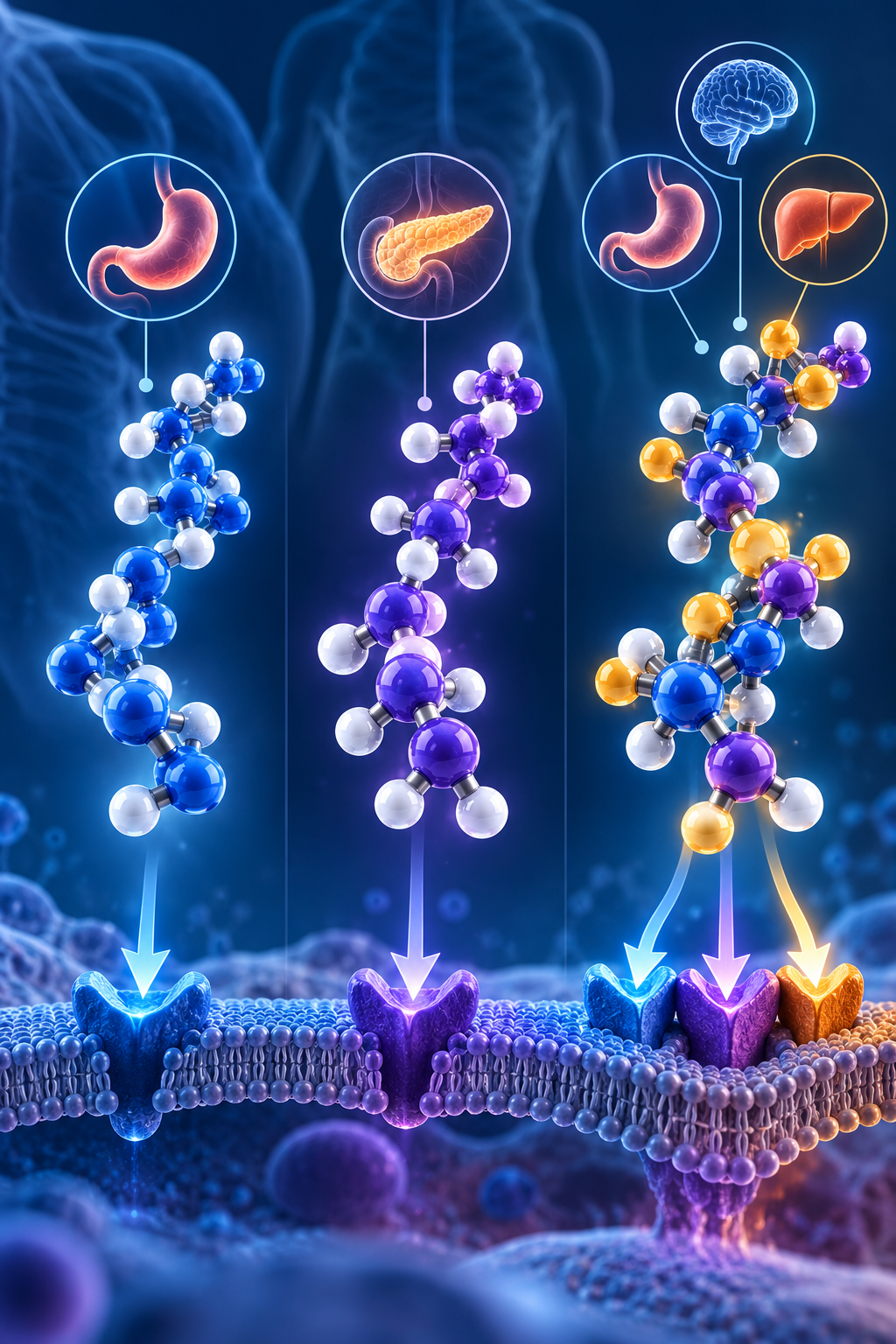
Unlike compounds that target only one or two metabolic pathways, retatrutide is designed to activate three receptors simultaneously:
GLP-1 (Glucagon-Like Peptide-1): Influences appetite, feelings of fullness, and blood glucose regulation.
GIP (Glucose-Dependent Insulinotropic Polypeptide): Supports glucose-dependent insulin secretion and participates in broader metabolic signaling.
Glucagon: Regulates glucose production in the liver and influences pathways associated with energy metabolism.
Together, these receptors form an interconnected hormonal system that helps regulate how the body responds to food, processes nutrients, and maintains energy balance.
This triple-agonist mechanism has attracted considerable scientific interest.
In a 2023 Phase 2 clinical trial, participants receiving the highest investigated dose experienced an average 24.2% reduction in body weight after 48 weeks.
More recently, a Phase 3 trial published in 2026 reported average weight reductions of up to 25.0% after 80 weeks, providing further evidence of retatrutide's substantial metabolic effects.
However, these results raise an important scientific question.
How do GLP-1, GIP, and glucagon receptors work together, and what role does each play in retatrutide's effects?
Understanding these three pathways provides insight into how retatrutide works and why triple-receptor agonism represents an important area of metabolic research.
Research Background
What Is Retatrutide?
Retatrutide (LY3437943) is a synthetic peptide developed to activate three hormone receptors involved in metabolic regulation.
It belongs to a class of investigational compounds known as triple-receptor agonists, also called triple agonists.
To understand how retatrutide works, it is important to first understand how hormones communicate with cells.
Hormones act as chemical messengers, carrying signals between different tissues and organs throughout the body.
Many hormones produce their effects by binding to specialized proteins called receptors, which are located on the surface of cells.
When a hormone or another activating molecule binds to a compatible receptor, it triggers cellular signaling pathways that influence specific biological processes.
These processes can include insulin secretion, appetite regulation, glucose metabolism, and energy balance.
An agonist is a molecule that binds to a receptor and activates it, producing a biological response.
Retatrutide is designed to mimic selected actions of three naturally occurring metabolic hormones by activating their corresponding receptors.
Unlike administering three separate compounds, retatrutide uses a single peptide molecule capable of interacting with all three receptor systems.
What Makes a Triple Agonist Different?
The primary difference between single-, dual-, and triple-receptor agonists is the number of hormonal receptor pathways they activate.
Researchers have developed several classes of metabolic compounds that target these pathways.
Single-Receptor Agonists — GLP-1
Compounds such as semaglutide activate the GLP-1 receptor.
This pathway influences appetite regulation, glucose-dependent insulin secretion, and gastric emptying.
GLP-1 receptor activation can reduce food intake and improve blood glucose regulation through several interconnected physiological mechanisms.
Dual-Receptor Agonists — GLP-1 + GIP
Tirzepatide activates both GLP-1 and GIP receptors.
By combining these two incretin pathways, tirzepatide influences glucose-dependent insulin secretion, appetite regulation, and other metabolic responses associated with nutrient intake.
Clinical research has demonstrated substantial reductions in body weight with dual-receptor agonism.
Triple-Receptor Agonists — GLP-1 + GIP + Glucagon
Retatrutide activates GLP-1, GIP, and glucagon receptors.
The addition of glucagon receptor activity introduces another pathway associated with hepatic glucose production, lipid metabolism, and potentially energy expenditure.
This creates a broader metabolic signaling mechanism than GLP-1 or GLP-1/GIP receptor activation alone.
Why Does Activating Three Receptors Matter?
The scientific rationale behind triple-receptor agonism involves targeting multiple biological processes that contribute to energy balance.
Body weight regulation is influenced by several interconnected systems, including hunger signaling, nutrient metabolism, hormonal activity, and energy expenditure.
Rather than targeting a single pathway, retatrutide is designed to influence several of these systems simultaneously.
For example, GLP-1 receptor activation can influence appetite and food intake, while GIP contributes to glucose regulation and broader metabolic signaling.
Glucagon receptor activation introduces additional effects involving liver metabolism and potentially the amount of energy the body expends.
Researchers are investigating whether combining these pathways produces metabolic effects that differ from those achieved through single- or dual-receptor activation.
However, activating three receptors does not automatically mean a compound is more effective or safer than one targeting fewer receptors.
The overall response depends on the strength of receptor activation, interactions between signaling pathways, and the compound's safety and tolerability.
The defining feature of retatrutide is its ability to activate three distinct metabolic hormone receptors through a single peptide molecule.
Understanding the individual roles of GLP-1, GIP, and glucagon is essential for explaining how these pathways may work together to influence appetite, glucose regulation, and energy metabolism.
Main Research Findings
1. GLP-1: Appetite Regulation and Blood Sugar Control
The first component of retatrutide's mechanism involves activation of the glucagon-like peptide-1 (GLP-1) receptor.
GLP-1 is a naturally occurring hormone released primarily by specialized intestinal cells following food consumption.
It plays an important role in communicating information about nutrient availability to the brain, pancreas, and gastrointestinal system.
When GLP-1 receptors are activated, several biological responses occur that influence appetite, digestion, and blood glucose regulation.
Appetite and Hunger Regulation
GLP-1 signaling influences areas of the brain involved in hunger, satiety, and food intake.
Activation of these pathways can reduce appetite, increase feelings of fullness, and decrease overall food consumption.
Researchers believe these effects contribute significantly to the weight reductions observed with GLP-1–based compounds.
Glucose-Dependent Insulin Secretion
GLP-1 stimulates pancreatic beta cells to release insulin when blood glucose concentrations are elevated.
Insulin helps regulate blood glucose by promoting glucose uptake and storage in various tissues.
Because this response depends on glucose availability, GLP-1 receptor activation generally carries a lower intrinsic risk of hypoglycemia than treatments that stimulate insulin release independently of blood glucose.
Gastric Emptying
GLP-1 receptor activation can slow gastric emptying, the process through which food moves from the stomach into the small intestine.
This can influence post-meal blood glucose responses and contribute to feelings of fullness.
However, the magnitude and persistence of this effect vary depending on the compound and duration of receptor activation.
Why GLP-1 Matters for Retatrutide
GLP-1 receptor activation provides an important mechanism through which retatrutide may reduce energy intake and influence glucose regulation.
By affecting appetite-related signaling and insulin secretion, this pathway contributes to the broader metabolic response observed in clinical investigations.
However, GLP-1 represents only one component of retatrutide's triple-receptor mechanism.
2. GIP: Insulin Regulation and Metabolic Signaling
The second receptor activated by retatrutide is the glucose-dependent insulinotropic polypeptide (GIP) receptor.
GIP is another naturally occurring hormone released by intestinal cells in response to food intake.
Like GLP-1, GIP belongs to a group of hormones called incretins, which help coordinate insulin secretion with nutrient consumption.
Although GLP-1 and GIP share certain functions, they also participate in different metabolic signaling pathways.
Glucose-Dependent Insulin Secretion
GIP stimulates pancreatic beta cells to release insulin when blood glucose concentrations are elevated.
This helps the body regulate blood sugar following meals.
Combining GIP and GLP-1 receptor activation provides two complementary pathways involved in glucose-dependent insulin secretion.
Adipose Tissue and Fat Metabolism
GIP receptors are also expressed in adipose tissue, where they participate in signaling associated with lipid storage and nutrient metabolism.
However, GIP's effects on fat metabolism are complex.
Its physiological actions depend on factors such as nutritional status, hormonal conditions, and interactions with other metabolic pathways.
Therefore, GIP receptor activation should not be interpreted simply as increasing fat storage or directly causing fat loss.
Appetite and Energy Balance
Experimental research suggests that GIP receptor signaling may also interact with brain pathways involved in appetite and energy regulation.
Studies involving dual GIP/GLP-1 receptor agonists have demonstrated substantial reductions in body weight.
However, these findings do not establish precisely how much of the observed weight reduction results from GIP activation independently of GLP-1 signaling.
Why GIP Matters for Retatrutide
GIP receptor activation introduces an additional layer of metabolic regulation beyond GLP-1 alone.
Researchers are investigating how these two incretin pathways interact with glucagon receptor signaling to influence glucose control, appetite, and energy balance.
The important distinction is that GIP does more than regulate hunger. Its biological activity involves insulin secretion, tissue-specific signaling, and complex metabolic interactions.
3. Glucagon: Energy Metabolism and the Third Receptor
The third receptor activated by retatrutide is the glucagon receptor.
This is one of the most distinctive features of retatrutide's mechanism and a major reason researchers are investigating triple-receptor agonism.
Glucagon is a naturally occurring hormone produced by pancreatic alpha cells.
It plays an essential role in maintaining blood glucose availability, particularly during fasting or periods when blood sugar concentrations decline.
However, glucagon also participates in several other metabolic processes involving the liver, nutrient utilization, and energy regulation.
Hepatic Glucose Production
One of glucagon's primary functions is stimulating the liver to release glucose into the bloodstream.
It accomplishes this through processes including glycogen breakdown and gluconeogenesis.
These mechanisms help maintain adequate glucose availability when the body is not receiving nutrients from food.
However, excessive glucagon signaling can contribute to elevated blood glucose concentrations.
Lipid Metabolism and Fat Utilization
Glucagon receptor activation also influences how the liver processes and utilizes fats.
Experimental investigations have identified effects on hepatic fatty acid oxidation, a process through which fatty acids are broken down to support energy production.
These findings have generated scientific interest in glucagon receptor activation for metabolic conditions involving abnormal liver fat accumulation.
Clinical studies involving retatrutide have reported substantial reductions in liver fat content.
However, because retatrutide activates three receptors simultaneously, these improvements cannot be attributed exclusively to glucagon receptor activity.
Energy Expenditure
One of the most interesting areas of glucagon research involves its potential influence on energy expenditure.
Energy expenditure refers to the energy the body uses to maintain essential physiological functions, support physical activity, and process nutrients.
Preclinical investigations suggest that glucagon receptor activation can influence metabolic pathways associated with increased energy expenditure.
This has led researchers to investigate whether adding glucagon receptor activity to GLP-1 and GIP signaling could enhance weight reduction through mechanisms beyond appetite suppression.
However, the extent to which retatrutide increases energy expenditure in humans has not been conclusively established.
Although experimental findings support this possibility, additional human studies using direct measurements of energy expenditure are necessary.
Why Doesn't Glucagon Simply Raise Blood Sugar?
Because glucagon stimulates hepatic glucose production, activating its receptor independently can increase blood glucose concentrations.
This raises an important question about retatrutide's triple-receptor design.
Retatrutide combines glucagon receptor activation with GLP-1 and GIP receptor activity.
Both incretin pathways support glucose-dependent insulin secretion, while GLP-1 signaling also suppresses endogenous glucagon secretion under certain conditions.
Researchers believe the combined hormonal effects may help counterbalance some of the glucose-raising activity associated with glucagon receptor activation.
Clinical investigations have reported improvements in glucose-related measurements among participants receiving retatrutide.
However, these results reflect the overall activity of the compound rather than demonstrating that glucagon's glucose-raising effects are completely eliminated.
Why Glucagon Matters for Retatrutide
Glucagon receptor activation introduces metabolic signaling pathways not directly targeted by dual GLP-1/GIP receptor agonists.
Its potential influence on hepatic fat metabolism and energy expenditure is an important scientific rationale behind retatrutide's development.
However, its precise contribution to human weight reduction remains under investigation.
4. How All Three Receptors Work Together
The defining feature of retatrutide is not simply that it activates three receptors, but that these receptors participate in interconnected systems involved in metabolic regulation.
Each receptor contributes different physiological effects.
| Receptor | Primary Biological Functions | Potential Contribution to Retatrutide |
|---|---|---|
| GLP-1 | Appetite regulation, insulin secretion, gastric emptying | Reduced energy intake and improved glucose regulation |
| GIP | Glucose-dependent insulin secretion and metabolic signaling | Additional glucose regulation and interactions with energy-balance pathways |
| Glucagon | Hepatic glucose production, lipid metabolism, energy regulation | Changes in nutrient utilization and potentially energy expenditure |
Together, these pathways may influence several components of energy balance.
Reduced Energy Intake
GLP-1 receptor activation can reduce hunger and increase feelings of fullness, contributing to lower food consumption.
Interactions with GIP signaling may also influence appetite-related pathways.
Improved Glucose Regulation
GLP-1 and GIP support glucose-dependent insulin secretion.
Their combined activity may help counterbalance certain glucose-raising effects associated with glucagon receptor activation.
Changes in Energy Metabolism
Glucagon receptor activation influences hepatic metabolism and pathways involved in nutrient utilization.
Experimental findings suggest that this activity may also contribute to increased energy expenditure, although its significance in humans remains uncertain.
Does This Mean Retatrutide Works by Both Reducing Appetite and Increasing Calorie Burning?
This is an important distinction.
Reduced energy intake is a well-supported mechanism of GLP-1–based weight reduction.
Increased energy expenditure is a proposed additional mechanism associated with glucagon receptor activation.
Preclinical research supports the possibility that triple-receptor agonism can influence both processes.
However, clinical trials demonstrating substantial weight reduction do not independently establish how much of that reduction results from appetite suppression versus increased energy expenditure.
The relative contribution of each receptor also remains difficult to isolate because retatrutide activates all three simultaneously.
The most important finding is that retatrutide combines appetite-related signaling, glucose regulation, and broader metabolic pathways within a single triple-receptor agonist.
This coordinated mechanism provides the scientific foundation for its development and helps explain why researchers are investigating its effects on obesity and metabolic disease.
Research Methodology / Context
What Have Clinical Trials Revealed About Retatrutide?
Although laboratory investigations help explain how retatrutide interacts with GLP-1, GIP, and glucagon receptors, clinical trials are necessary to determine how these interactions affect human metabolism.
Researchers have investigated retatrutide through randomized, controlled clinical trials examining body weight, glucose regulation, metabolic health, and treatment tolerability.
These studies provide important evidence of retatrutide's biological activity, although they do not independently establish the contribution of each receptor.
Phase 2 Clinical Trial: Evidence of Substantial Weight Reduction
A randomized, double-blind, placebo-controlled Phase 2 study published in The New England Journal of Medicine in 2023 evaluated retatrutide in 338 adults with obesity or overweight and a weight-related condition.
Participants were assigned to receive different retatrutide regimens or placebo over a 48-week treatment period.
Researchers evaluated changes in body weight, metabolic measurements, and adverse events.
At 48 weeks, average body weight reductions included:
| Treatment Group | Average Body Weight Reduction |
|---|---|
| Placebo | 2.1% |
| Retatrutide 1 mg | 8.7% |
| Retatrutide 4 mg (combined groups) | 17.1% |
| Retatrutide 8 mg (combined groups) | 22.8% |
| Retatrutide 12 mg | 24.2% |
These findings demonstrated substantial weight reduction across several investigational treatment groups.
However, the study primarily evaluated clinical outcomes rather than directly measuring the individual contributions of GLP-1, GIP, and glucagon receptor activation.
The results demonstrate retatrutide's overall weight-reducing activity, but they do not establish exactly how much of that effect comes from each receptor.
Phase 3 Research: Further Evidence of Metabolic Effects
Subsequent Phase 3 investigations have expanded the clinical evidence surrounding retatrutide.
Results reported in 2026 demonstrated substantial reductions in body weight over longer treatment periods, with average reductions reaching approximately 25% after 80 weeks in a studied population.
Additional investigations have examined retatrutide's effects on glucose regulation and obesity-related metabolic conditions.
These findings provide further evidence that retatrutide's combined receptor activity can produce meaningful physiological changes.
However, even large clinical trials cannot automatically determine whether weight reduction results primarily from reduced food intake, increased energy expenditure, or interactions between multiple metabolic pathways.
What Do These Studies Tell Us About How Reta Works?
Clinical investigations support three important conclusions.
First, retatrutide produces substantial reductions in body weight under controlled research conditions.
Second, its metabolic effects are consistent with the combined biological activities of GLP-1, GIP, and glucagon receptor signaling.
Third, additional mechanistic studies are necessary to determine the relative contribution of each receptor and the role of energy expenditure in humans.
The central distinction is that clinical trials demonstrate what retatrutide does, while mechanistic research helps explain how it produces those effects.
Together, these approaches provide a more complete understanding of retatrutide's potential role in metabolic research.
Current Research Limitations
Although retatrutide has demonstrated substantial effects on body weight and metabolic regulation in clinical trials, several important scientific questions remain unanswered.
Understanding these limitations is essential for distinguishing established clinical findings from proposed biological mechanisms.
The Individual Contribution of Each Receptor
One of the primary challenges in retatrutide research is determining how much each receptor contributes to its overall metabolic effects.
Retatrutide activates GLP-1, GIP, and glucagon receptors simultaneously, making it difficult to isolate the influence of each pathway.
Although their individual physiological functions are reasonably well understood, the precise contribution of each receptor to retatrutide-associated weight reduction has not been established in humans.
Additional mechanistic studies are necessary to clarify how these signaling pathways interact and whether particular receptor activities contribute more strongly to specific metabolic outcomes.
Does Retatrutide Actually Increase Energy Expenditure?
One of the most interesting unanswered questions involves glucagon receptor activation and energy expenditure.
Preclinical research suggests that glucagon signaling can influence metabolic processes associated with increased energy utilization.
This has led researchers to investigate whether retatrutide may influence both energy intake and energy expenditure.
However, substantial weight reduction in clinical trials does not independently demonstrate that participants burned more calories because of glucagon receptor activation.
Changes in body weight can result from multiple physiological processes, including reduced food intake and changes in energy metabolism.
Direct human studies measuring energy expenditure are needed to establish whether this proposed mechanism makes a meaningful contribution to retatrutide's effects.
Long-Term Safety and Tolerability
Clinical trials have identified several adverse effects associated with retatrutide.
The most frequently reported adverse events have involved the gastrointestinal system, including nausea, vomiting, and diarrhea.
These effects have often been more pronounced during treatment initiation or dose escalation.
Increases in heart rate have also been observed in clinical investigations.
Although controlled trials provide important information about safety and tolerability, longer-term studies and larger populations are necessary to better characterize uncommon adverse events and potential effects associated with extended exposure.
Individual Differences in Metabolic Response
Not all individuals respond to metabolic compounds in the same way.
Clinical outcomes may vary depending on factors such as baseline metabolic health, body composition, diabetes status, genetic differences, and treatment tolerability.
Researchers are still investigating whether these characteristics influence how individuals respond to retatrutide's combined receptor activity.
These differences highlight why average clinical trial results cannot be assumed to represent the response of every individual.
Regulatory Status and Remaining Research Questions
Retatrutide remains an investigational compound and, as of October 2026, has not received FDA approval for routine clinical use.
Although clinical investigations have produced promising findings, regulatory approval requires a comprehensive evaluation of safety, effectiveness, manufacturing quality, and overall benefit-risk considerations.
Further research is also needed to clarify the long-term metabolic effects of sustained triple-receptor activation.
The most important limitation is that researchers have demonstrated substantial clinical effects with retatrutide, but the precise mechanisms responsible for those outcomes are not yet fully understood.
Continued investigation will help determine how GLP-1, GIP, and glucagon signaling interact and whether triple-receptor agonism offers distinct advantages for specific metabolic conditions.
Discussion
Why Is Retatrutide's Triple-Agonist Mechanism Important?
Retatrutide represents an important development in metabolic research because it combines three distinct hormonal signaling pathways within a single peptide molecule.
Earlier generations of incretin-based compounds demonstrated that activating GLP-1 receptors could influence appetite, glucose regulation, and body weight.
Dual-receptor agonists, such as tirzepatide, expanded this approach by combining GLP-1 and GIP receptor activation.
Retatrutide introduces a third pathway through glucagon receptor activation, creating a broader approach to metabolic regulation.
The scientific interest in this combination extends beyond simply activating more receptors.
Researchers are investigating whether coordinated activation of GLP-1, GIP, and glucagon receptors can influence multiple components of energy balance simultaneously.
Energy Intake vs. Energy Expenditure
Body weight regulation depends on the relationship between energy intake and energy expenditure.
Energy intake refers to the calories obtained from food and beverages, while energy expenditure describes the energy used to maintain essential biological functions, support physical activity, and process nutrients.
GLP-1 receptor activation has an established role in reducing appetite and food intake.
GIP receptor activation contributes additional metabolic signaling, including pathways involved in glucose regulation and potentially appetite-related responses.
Glucagon receptor activation introduces another dimension through its effects on hepatic metabolism and pathways potentially associated with energy expenditure.
This combination has led researchers to investigate whether retatrutide may influence both sides of the energy balance equation.
However, while reduced energy intake is a well-supported mechanism of GLP-1–based weight reduction, the contribution of increased energy expenditure to retatrutide's effects in humans remains uncertain.
Why Doesn't More Receptor Activation Automatically Mean Better Results?
Although retatrutide activates three receptors, the number of receptors targeted does not independently determine a compound's effectiveness.
Different receptors can produce overlapping, complementary, or opposing physiological responses.
For example, glucagon receptor activation can increase hepatic glucose production, while GLP-1 and GIP receptor signaling support glucose-dependent insulin secretion.
The overall metabolic response depends on how these pathways interact.
Other factors, including receptor potency, signaling duration, individual biological differences, and treatment tolerability, also influence clinical outcomes.
This is why clinical trials are necessary to evaluate whether a particular receptor combination produces meaningful benefits and acceptable safety outcomes.
The potential significance of retatrutide lies in the balance of its three receptor activities, not simply the number of receptors it activates.
What Could Triple-Receptor Research Reveal?
Retatrutide provides researchers with an opportunity to better understand how hormonal pathways involved in appetite, glucose regulation, and energy metabolism interact.
Its clinical findings have demonstrated that simultaneous activation of GLP-1, GIP, and glucagon receptors can produce substantial reductions in body weight.
However, the mechanisms responsible for these outcomes remain an active area of investigation.
Future research may help clarify whether glucagon receptor activity contributes meaningfully to increased energy expenditure, how the three pathways influence one another, and whether particular metabolic conditions respond differently to triple-receptor activation.
These findings could contribute to the development of future compounds targeting multiple metabolic pathways.
The central scientific takeaway is that retatrutide represents a coordinated approach to metabolic signaling, combining established incretin pathways with glucagon receptor activity to investigate broader effects on energy balance.
Conclusion
Retatrutide represents an important advancement in metabolic research through its ability to activate three distinct hormone receptors involved in appetite regulation, glucose metabolism, and energy balance.
Unlike single- or dual-receptor agonists, retatrutide combines GLP-1, GIP, and glucagon receptor activation within a single peptide molecule.
Each receptor contributes different biological functions.
GLP-1 influences appetite regulation, glucose-dependent insulin secretion, and gastric emptying, helping regulate food intake and blood glucose concentrations.
GIP supports glucose-dependent insulin secretion and participates in broader metabolic signaling, including pathways associated with nutrient processing and energy regulation.
Glucagon influences hepatic glucose production, lipid metabolism, and pathways potentially associated with energy expenditure, introducing an additional dimension to retatrutide's metabolic activity.
Together, these three pathways create a coordinated hormonal response that influences multiple aspects of metabolic regulation.
Clinical investigations have demonstrated substantial reductions in body weight, providing strong evidence of retatrutide's biological activity in humans.
However, the precise contribution of each receptor to these outcomes remains under investigation, particularly the potential role of glucagon receptor activation in increasing energy expenditure.
Although preclinical research supports several proposed mechanisms, additional human studies are necessary to clarify how these pathways interact and whether their combined activity provides distinct long-term advantages.
The most important takeaway is that retatrutide works by activating three interconnected metabolic hormone receptors rather than relying on a single appetite-regulating pathway.
This triple-agonist mechanism makes retatrutide an important area of ongoing research into obesity, metabolic regulation, and the complex hormonal systems that influence energy balance.
At Peptide Purity USA, we emphasize scientifically grounded education, research material quality, analytical transparency, and responsible laboratory practices.
Research Use Only: All research materials offered by Peptide Purity USA are intended strictly for laboratory research purposes. Not for human or veterinary consumption. Not intended for diagnostic or therapeutic applications.
References
- 1. Jastreboff AM, et al. (2023). Triple–Hormone-Receptor Agonist Retatrutide for Obesity — A Phase 2 Trial. New England Journal of Medicine, 389, 514–526.
- 2. Jastreboff AM, et al. (2026). Retatrutide, a Triple Hormone Receptor Agonist, for Treatment of Obesity. New England Journal of Medicine.
- 3. Eli Lilly and Company (2026). Retatrutide Phase 3 TRIUMPH-1 Results.
- 4. Eli Lilly and Company (2026). TRIUMPH-2 and TRIUMPH-3 Phase 3 Results.