
Introduction
Retatrutide is an investigational peptide-based compound that has attracted significant scientific interest due to its effects on metabolic regulation, energy balance, and body-weight management in clinical research.
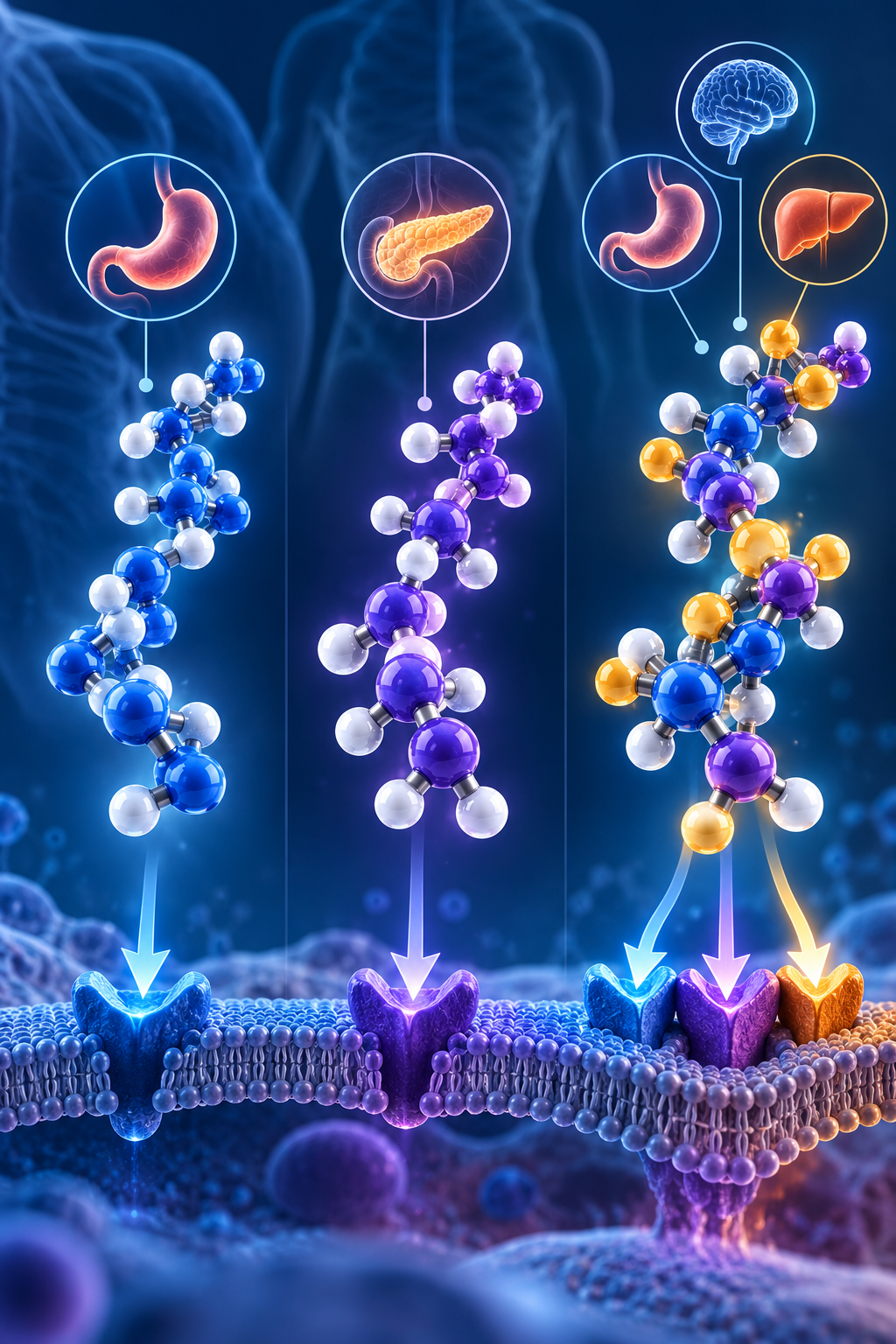
Unlike compounds that primarily target a single metabolic signaling pathway, retatrutide functions as a triple receptor agonist, activating three hormone receptors involved in metabolic regulation: the glucagon-like peptide-1 (GLP-1) receptor, glucose-dependent insulinotropic polypeptide (GIP) receptor, and glucagon receptor.
This combination of receptor activities distinguishes retatrutide from single- and dual-receptor agonists and has made it an important subject of research involving body-weight regulation, glucose metabolism, appetite signaling, and energy expenditure.
Published clinical studies have demonstrated substantial reductions in body weight and changes in several metabolic measurements among participants receiving retatrutide. These findings have generated interest in the potential applications of triple receptor agonism in metabolic research. However, observed outcomes must be interpreted within the context of controlled clinical trials, defined participant populations, and ongoing evaluations of long-term safety and effectiveness.
Understanding the scientific significance of retatrutide requires examining its molecular mechanism, published clinical findings, and current research limitations. Together, these areas provide insight into how coordinated activation of multiple metabolic receptors may influence complex physiological processes.
Research Background
What Is Retatrutide?
Retatrutide (LY3437943) is a synthetic, investigational peptide designed to activate three hormone receptors involved in metabolic regulation: the glucagon-like peptide-1 (GLP-1), glucose-dependent insulinotropic polypeptide (GIP), and glucagon receptors.
These receptors participate in interconnected physiological processes, including nutrient sensing, glucose regulation, insulin secretion, appetite signaling, and energy metabolism.
Retatrutide belongs to an emerging class of compounds known as triple receptor agonists, which are being investigated for their ability to influence multiple metabolic pathways simultaneously.
Unlike single-receptor GLP-1 agonists or dual GIP/GLP-1 agonists, retatrutide also activates the glucagon receptor. This additional mechanism has generated scientific interest because glucagon signaling plays an important role in hepatic glucose production, lipid metabolism, and energy regulation.
The interaction between these three receptor pathways forms the foundation of ongoing research into retatrutide's metabolic effects.
Understanding the Triple Receptor Mechanism
Retatrutide's mechanism of action involves coordinated activation of three hormone receptors, each contributing to different aspects of metabolic regulation.
GLP-1 Receptor Activation
Glucagon-like peptide-1 (GLP-1) is an incretin hormone released primarily from intestinal cells in response to nutrient intake.
GLP-1 receptor activation supports glucose-dependent insulin secretion, suppresses inappropriate glucagon secretion under certain conditions, slows gastric emptying, and influences appetite-related signaling pathways in the central nervous system.
Research involving GLP-1 receptor agonists has demonstrated effects on glucose regulation, satiety, and food intake, making this pathway an important component of metabolic research.
GIP Receptor Activation
Glucose-dependent insulinotropic polypeptide (GIP) is an incretin hormone released from intestinal K cells following nutrient consumption.
GIP receptor activation enhances glucose-dependent insulin secretion and participates in metabolic signaling associated with nutrient handling and adipose tissue function.
Researchers continue to investigate how GIP receptor activation interacts with GLP-1 signaling and whether their combined activity contributes to changes in appetite regulation, glucose metabolism, and body-weight outcomes.
Glucagon Receptor Activation
Glucagon is a peptide hormone secreted by pancreatic alpha cells that plays an important role in maintaining glucose availability, particularly during fasting.
Glucagon receptor activation primarily affects the liver, where it stimulates processes involved in glucose production and energy metabolism. It can also influence lipid metabolism and energy expenditure.
Unlike GLP-1 and GIP signaling, glucagon receptor activation can increase blood glucose levels, making its integration into multi-receptor compounds scientifically complex.
Researchers are investigating whether combining glucagon receptor activation with GLP-1 and GIP receptor signaling can produce complementary metabolic effects while moderating certain glucose-related consequences.
Scientific Significance of Triple Receptor Agonism
The scientific interest in retatrutide extends beyond the individual actions of its three receptor targets.
By activating GLP-1, GIP, and glucagon receptors within a single molecular structure, retatrutide provides researchers with an opportunity to examine how multiple hormonal signaling pathways interact to influence energy balance, glucose regulation, and body-weight control.
Clinical findings suggest that this combined mechanism can produce substantial metabolic effects. However, the relative contribution of each receptor and the extent to which their activities interact synergistically remain areas of ongoing investigation.
Understanding these interactions is essential for interpreting retatrutide research findings and evaluating the broader scientific potential of multi-receptor metabolic compounds.
Main Research Findings
3.1 Body Weight and Energy Balance Research
One of the most extensively investigated aspects of retatrutide is its effect on body-weight regulation and metabolic energy balance.
A randomized, double-blind, placebo-controlled phase 2 clinical trial published in The New England Journal of Medicinein 2023 evaluated retatrutide in 338 adults with obesity or overweight accompanied by at least one weight-related condition.
Over 48 weeks, researchers observed substantial reductions in body weight, with the magnitude of change generally increasing across the investigated dose groups.
The study reported a mean body-weight reduction of 24.2% in the 12 mg retatrutide group, compared with 2.1% in the placebo group.
These findings provided early clinical evidence that triple receptor agonism could produce substantial changes in body-weight regulation under controlled research conditions.
Subsequent phase 3 research expanded upon these observations.
The TRIUMPH-1 trial, published in September 2026, evaluated 2,339 adults with obesity who did not have diabetes over an 80-week treatment period.
The study reported mean body-weight reductions of 23.7% and 25.0% in the 9 mg and 12 mg retatrutide groups, respectively, compared with 3.9% in the placebo group.
Together, these findings provide evidence of retatrutide's effects on body-weight regulation in the populations studied.
However, clinical trial outcomes should not be interpreted as guaranteed individual responses or as evidence that independently distributed research materials possess equivalent pharmaceutical quality, safety, or biological activity.
3.2 Glucose Metabolism and Insulin Signaling
Retatrutide has also demonstrated significant scientific relevance in research involving glucose regulation, insulin signaling, and metabolic function.
GLP-1 and GIP receptor activation influences glucose-dependent insulin secretion, while glucagon receptor signaling participates in hepatic glucose production and energy metabolism.
The combined activation of these pathways has generated interest in whether triple receptor agonism can influence glycemic control through multiple complementary biological mechanisms.
A randomized, double-blind, placebo-controlled phase 3 clinical trial, TRANSCEND-T2D-1, published in The Lancet in June 2026, evaluated retatrutide in 537 adults with type 2 diabetes inadequately controlled through diet and exercise alone.
After 40 weeks, researchers reported reductions in glycated hemoglobin (HbA1c), a laboratory measurement reflecting average blood glucose levels over approximately two to three months.
Mean HbA1c reductions ranged from 1.69 to 1.94 percentage points across the retatrutide groups, compared with 0.81 percentage points in the placebo group.
The trial also documented changes in body weight, demonstrating that retatrutide's metabolic effects extend beyond body-weight measurements alone.
These findings support continued investigation into the relationship between triple receptor activation, glucose regulation, and broader metabolic function.
Nevertheless, the long-term implications of these effects, including their relationship to clinical outcomes and safety, require continued evaluation.
3.3 Lipid Metabolism and Energy Expenditure
Another important area of retatrutide research involves lipid metabolism, energy utilization, and the physiological processes associated with energy expenditure.
Glucagon receptor activation plays a role in hepatic energy metabolism and can influence pathways involved in lipid oxidation, glucose production, and metabolic fuel availability.
Preclinical investigations of multi-receptor agonists incorporating glucagon signaling have suggested that combining incretin receptor activation with glucagon receptor activity may influence both energy intake and energy expenditure.
This mechanism has attracted scientific interest because body-weight regulation involves interactions between appetite, nutrient metabolism, energy consumption, and physiological energy requirements.
However, the extent to which increased energy expenditure independently contributes to the weight reductions observed in human retatrutide trials has not been conclusively established.
Researchers continue to investigate whether the compound's observed effects result primarily from changes in appetite and food intake, altered energy expenditure, or interactions between multiple metabolic pathways.
Understanding these mechanisms may help clarify the biological significance of triple receptor agonism in metabolic research.
3.4 Cardiometabolic Research
Retatrutide research also includes investigations into physiological measurements associated with cardiometabolic health.
Clinical studies have examined variables such as blood pressure, waist circumference, lipid profiles, glucose-related biomarkers, and heart rate.
Changes in these measurements are scientifically relevant because metabolic regulation involves interconnected processes affecting cardiovascular function, energy balance, and glucose homeostasis.
However, improvements in certain cardiometabolic markers may occur partly as a consequence of substantial body-weight reduction rather than through direct receptor-mediated effects.
Distinguishing between these mechanisms remains an important consideration when interpreting clinical research findings.
Additionally, dose-dependent increases in heart rate were observed during the 2023 phase 2 obesity trial. These increases peaked around week 24 and subsequently declined, although their long-term clinical significance remains uncertain.
Further research is necessary to determine how prolonged triple receptor activation may influence cardiovascular outcomes and whether observed changes in metabolic biomarkers translate into sustained clinical benefits.
3.5 Additional Obesity-Related Research
Recent phase 3 investigations have expanded retatrutide research beyond body-weight regulation and glucose metabolism to examine outcomes associated with obesity-related conditions.
The TRIUMPH-1 trial included subgroups of participants with knee osteoarthritis and obstructive sleep apnea, allowing researchers to evaluate additional clinical measurements.
Among participants with knee osteoarthritis, investigators observed reductions in reported knee pain scores compared with placebo.
Among participants with obstructive sleep apnea, researchers reported reductions in apnea-hypopnea events, a measurement used to assess the frequency of breathing interruptions during sleep.
These findings suggest that retatrutide-associated metabolic changes may be accompanied by improvements in certain obesity-related clinical outcomes.
However, the biological mechanisms underlying these observations remain uncertain.
In particular, improvements in knee pain should not be interpreted as evidence of direct cartilage regeneration or joint tissue repair. Similarly, reductions in sleep apnea measurements do not establish a direct effect on airway anatomy or respiratory control independent of body-weight changes.
Continued investigation is necessary to determine the extent to which these outcomes are associated with weight reduction, direct pharmacological activity, or interactions between multiple physiological pathways.
Research Methodology / Context
Retatrutide has been investigated through preclinical studies and randomized clinical trials designed to evaluate its pharmacological activity, metabolic effects, and safety profile.
These investigations provide researchers with a structured approach to understanding how triple receptor agonism influences physiological processes associated with glucose regulation, energy balance, and body-weight control.
Clinical research involving retatrutide has generally incorporated randomized, double-blind, placebo-controlled study designs, defined participant eligibility criteria, standardized outcome measurements, and systematic safety monitoring.
These methods help reduce potential bias, improve the reliability of observed findings, and support comparisons between investigational treatment groups and control populations.
Clinical Research Methods
Several important research methods have been used to evaluate retatrutide's biological activity and clinical outcomes:
Randomized Controlled Trials: Participants are assigned to investigational treatment or control groups using randomized allocation. Double-blind study designs help minimize bias by limiting knowledge of treatment assignments among participants and investigators.
Body Weight and Anthropometric Measurements: Researchers assess changes in body weight, waist circumference, and related physical measurements to evaluate metabolic outcomes. Selected studies may also incorporate body-composition assessments to distinguish changes in fat mass from other tissue compartments.
Metabolic Laboratory Testing: Blood-based measurements, including fasting glucose, glycated hemoglobin (HbA1c), and lipid biomarkers, help researchers evaluate changes in glucose regulation and metabolic function.
Pharmacological Evaluation: Preclinical investigations and clinical pharmacology studies examine receptor activity, pharmacokinetic characteristics, and biological responses associated with retatrutide's triple receptor mechanism.
Safety and Tolerability Monitoring: Clinical trials systematically document adverse events, gastrointestinal symptoms, heart rate, laboratory findings, and treatment discontinuations to evaluate potential safety concerns.
Clinical Trial Development and Research Context
The progression of retatrutide research from smaller clinical investigations to larger phase 3 trials has expanded the available evidence regarding its metabolic effects and tolerability.
A 2023 phase 2 clinical trial evaluated 338 adults over 48 weeks, while the 2026 TRIUMPH-1 phase 3 trial included 2,339 participants over an 80-week treatment period.
These studies illustrate how increasing trial size and duration can provide more comprehensive information about treatment-associated outcomes, individual variability, and adverse events.
However, clinical trial findings must be interpreted within the context of the populations studied, research protocols, and predefined outcome measures.
Controlled clinical trials also use investigational pharmaceutical materials manufactured under regulated conditions. Their findings should not be assumed to apply directly to independently distributed research-grade compounds.
Although larger and longer-duration trials strengthen the available evidence, continued research remains necessary to evaluate long-term safety, sustained metabolic effects, and outcomes across different populations.
Current Research Limitations
Despite promising findings from clinical investigations, several important limitations remain in the scientific understanding of retatrutide and its long-term metabolic effects.
Although phase 2 and phase 3 clinical trials have expanded the available evidence, continued research is necessary to better understand the compound's safety profile, individual variability, and the long-term implications of triple receptor agonism.
Long-Term Safety and Sustained Effects
While larger clinical trials have provided valuable information about retatrutide's metabolic activity and tolerability, the effects of prolonged exposure to simultaneous GLP-1, GIP, and glucagon receptor activation remain under investigation.
Existing studies have evaluated participants over defined treatment periods, but additional long-term follow-up is necessary to assess sustained metabolic outcomes, delayed adverse events, and potential changes following treatment discontinuation.
Researchers must also determine whether the metabolic effects observed during clinical investigations remain consistent across different populations and over extended periods.
Gastrointestinal Adverse Events
Gastrointestinal symptoms have been among the most frequently reported adverse events in retatrutide clinical trials.
Reported effects include nausea, vomiting, diarrhea, and constipation, with the frequency and severity of certain symptoms varying across study groups.
These observations are consistent with the gastrointestinal effects associated with incretin-based receptor activation.
Although many reported gastrointestinal events have been mild to moderate in severity, some participants have experienced more significant symptoms or discontinued treatment because of adverse events.
These findings highlight the importance of continued investigation into retatrutide's tolerability and overall safety profile.
Heart Rate and Cardiovascular Effects
Changes in heart rate represent another important consideration in retatrutide research.
The 2023 phase 2 obesity trial reported dose-dependent increases in heart rate, with observed changes peaking around week 24 before subsequently declining.
Although these findings provide insight into the compound's physiological activity, their long-term cardiovascular significance remains uncertain.
Additional research is necessary to evaluate potential effects on cardiovascular function, particularly among populations with preexisting cardiovascular risk factors.
Changes in blood pressure, lipid measurements, and other cardiometabolic biomarkers should also be interpreted cautiously, as improvements in these variables do not necessarily establish reductions in long-term cardiovascular events.
Individual Variability and Study Populations
Clinical trial outcomes represent average responses observed within specific participant populations and controlled research environments.
Individual responses may vary according to factors such as age, baseline metabolic health, body composition, glucose regulation, and other physiological characteristics.
Furthermore, clinical trials commonly apply defined eligibility criteria that may exclude individuals with certain medical conditions or other risk factors.
These limitations can affect how broadly study findings may be generalized beyond the populations originally investigated.
Consequently, reported average changes in body weight or metabolic measurements should not be interpreted as predictable outcomes for every individual.
Mechanistic Uncertainty
Although retatrutide's activity at GLP-1, GIP, and glucagon receptors is established, the relative contribution of each receptor to its observed metabolic effects remains incompletely understood.
In particular, researchers continue to investigate the relationship between appetite-related signaling, glucose metabolism, lipid utilization, and energy expenditure.
It remains uncertain how much of the observed body-weight reduction can be attributed to changes in energy intake compared with alterations in energy expenditure or other metabolic processes.
Further mechanistic investigations may help clarify how these pathways interact and whether their combined activation produces effects that differ from those of single- or dual-receptor agonists.
Research Material Variability and Reproducibility
Another important limitation involves the distinction between investigational pharmaceutical materials used in regulated clinical trials and independently distributed laboratory research compounds.
Clinical trial materials are manufactured, characterized, and administered under controlled pharmaceutical and research protocols.
Research-grade materials obtained outside these settings may differ in identity, purity, formulation, stability, and other quality-related characteristics.
Consequently, findings from regulated clinical trials cannot automatically be generalized to independently distributed research materials.
Analytical characterization, appropriate laboratory handling, and transparent documentation are important considerations for supporting the reliability and reproducibility of laboratory investigations.
Overall Research Considerations
The expanding clinical evidence surrounding retatrutide has strengthened scientific understanding of triple receptor agonism. However, important questions remain regarding long-term safety, cardiovascular outcomes, individual variability, and the biological mechanisms underlying observed metabolic changes.
Addressing these limitations through continued clinical and laboratory investigation will be essential for developing a more complete understanding of retatrutide's pharmacological profile.
Discussion
Retatrutide represents a significant development in the scientific investigation of multi-receptor metabolic signaling and the interactions between hormonal pathways involved in energy regulation.
By simultaneously activating glucagon-like peptide-1 (GLP-1), glucose-dependent insulinotropic polypeptide (GIP), and glucagon receptors, retatrutide provides researchers with an opportunity to examine how coordinated receptor activity influences glucose metabolism, appetite regulation, energy balance, and body-weight control.
Published phase 2 and phase 3 clinical trials have demonstrated substantial changes in body weight and several metabolic measurements, contributing to growing scientific interest in triple receptor agonism as an investigational approach to metabolic regulation.
These findings are particularly relevant because metabolic processes are governed by interconnected hormonal signaling pathways rather than isolated biological mechanisms.
However, the scientific significance of retatrutide extends beyond the magnitude of the outcomes observed in clinical trials.
An important area of ongoing investigation involves understanding how GLP-1, GIP, and glucagon receptor activation interact and whether their combined effects differ from those produced by single- or dual-receptor agonists.
Although clinical findings support the biological activity of this multi-receptor approach, the relative contributions of appetite-related signaling, glucose regulation, lipid metabolism, and energy expenditure remain incompletely understood.
Furthermore, changes in metabolic biomarkers and body-weight measurements must be distinguished from established long-term clinical outcomes.
Future research may help clarify retatrutide's effects on body composition, cardiovascular health, metabolic function, and the sustainability of observed changes across different participant populations.
Continued investigation will also be important for characterizing long-term safety, identifying factors associated with individual variability, and improving scientific understanding of multi-receptor peptide pharmacology.
Overall, retatrutide illustrates how advances in peptide research are expanding the understanding of complex metabolic signaling networks and their potential significance in future scientific investigations.
Regulatory and Safety Considerations
Retatrutide remains an investigational compound undergoing clinical development, and published research findings should not be interpreted as evidence of regulatory approval or authorization for general medical use.
Although clinical trials have demonstrated significant metabolic effects, additional evaluation is necessary to establish its complete long-term safety profile and determine its regulatory status for specific clinical applications.
Clinical investigations have reported adverse events, including gastrointestinal symptoms such as nausea, vomiting, diarrhea, and constipation, as well as changes in heart rate.
These findings emphasize the importance of continued safety monitoring and careful interpretation of clinical research outcomes.
Additionally, the pharmaceutical materials used in regulated clinical trials are manufactured and evaluated under controlled conditions that may differ substantially from those associated with independently distributed laboratory research compounds.
Research-grade retatrutide should not be considered interchangeable with pharmaceutical investigational products used in clinical studies.
Materials designated for research use only are intended strictly for appropriate laboratory investigation and are not intended for human or veterinary consumption, self-administration, diagnostic procedures, or therapeutic applications.
Researchers should follow applicable institutional protocols, laboratory safety procedures, and regulatory requirements when handling investigational peptide compounds.
Conclusion
Retatrutide has emerged as an important subject of metabolic research due to its unique ability to activate three hormone receptors involved in glucose regulation, energy balance, and metabolic function.
Through its combined activity at the glucagon-like peptide-1 (GLP-1), glucose-dependent insulinotropic polypeptide (GIP), and glucagon receptors, retatrutide provides researchers with an opportunity to investigate the complex interactions between hormonal signaling pathways and metabolic regulation.
Published phase 2 and phase 3 clinical trials have demonstrated substantial changes in body weight, glucose-related measurements, and other metabolic markers, supporting continued scientific interest in retatrutide research and triple receptor agonism.
However, despite these findings, important questions remain regarding long-term safety, the individual contributions of each receptor pathway, and the broader clinical implications of sustained metabolic changes.
As scientific investigation progresses, carefully controlled clinical studies, continued safety monitoring, and transparent reporting will be essential for developing a more complete understanding of retatrutide's pharmacological activity and biological effects.
At Peptide Purity USA, we emphasize research material quality, analytical transparency, and responsible laboratory practices to support reliable scientific investigation.
Research Use Only: All peptides offered by Peptide Purity USA are intended strictly for laboratory research purposes. Not for human or veterinary consumption. Not intended for diagnostic or therapeutic applications.
References
- 1. Jastreboff AM, Kaplan LM, Frías JP, et al. Triple–Hormone-Receptor Agonist Retatrutide for Obesity — A Phase 2 Trial. New England Journal of Medicine. 2023;389:514–526. DOI: 10.1056/NEJMoa2301972.
- 2. Jastreboff AM, Kaplan LM, Davies MJ, et al. Retatrutide, a Triple Hormone Receptor Agonist, for Treatment of Obesity. New England Journal of Medicine. Published September 29, 2026. DOI: 10.1056/NEJMoa2604169.
- 3. Bajaj HS, et al. Efficacy and Safety of Retatrutide, a GIP, GLP-1, and Glucagon Receptor Agonist, in People With Type 2 Diabetes and Inadequate Glycaemic Control With Diet and Exercise (TRANSCEND-T2D-1): A Double-Blind, Randomised, Phase 3 Trial. The Lancet. 2026. DOI: 10.1016/S0140-6736(26)00967-0.
- 4. Bellido V, le Roux CW, Ekinci EI, et al. Retatrutide in Adults With Obesity and Type 2 Diabetes (TRIUMPH-2): A Double-Blind, Parallel-Group, Randomised, Placebo-Controlled, Phase 3 Trial. The Lancet. Published September 29, 2026. DOI: 10.1016/S0140-6736(26)01861-1