Introduction
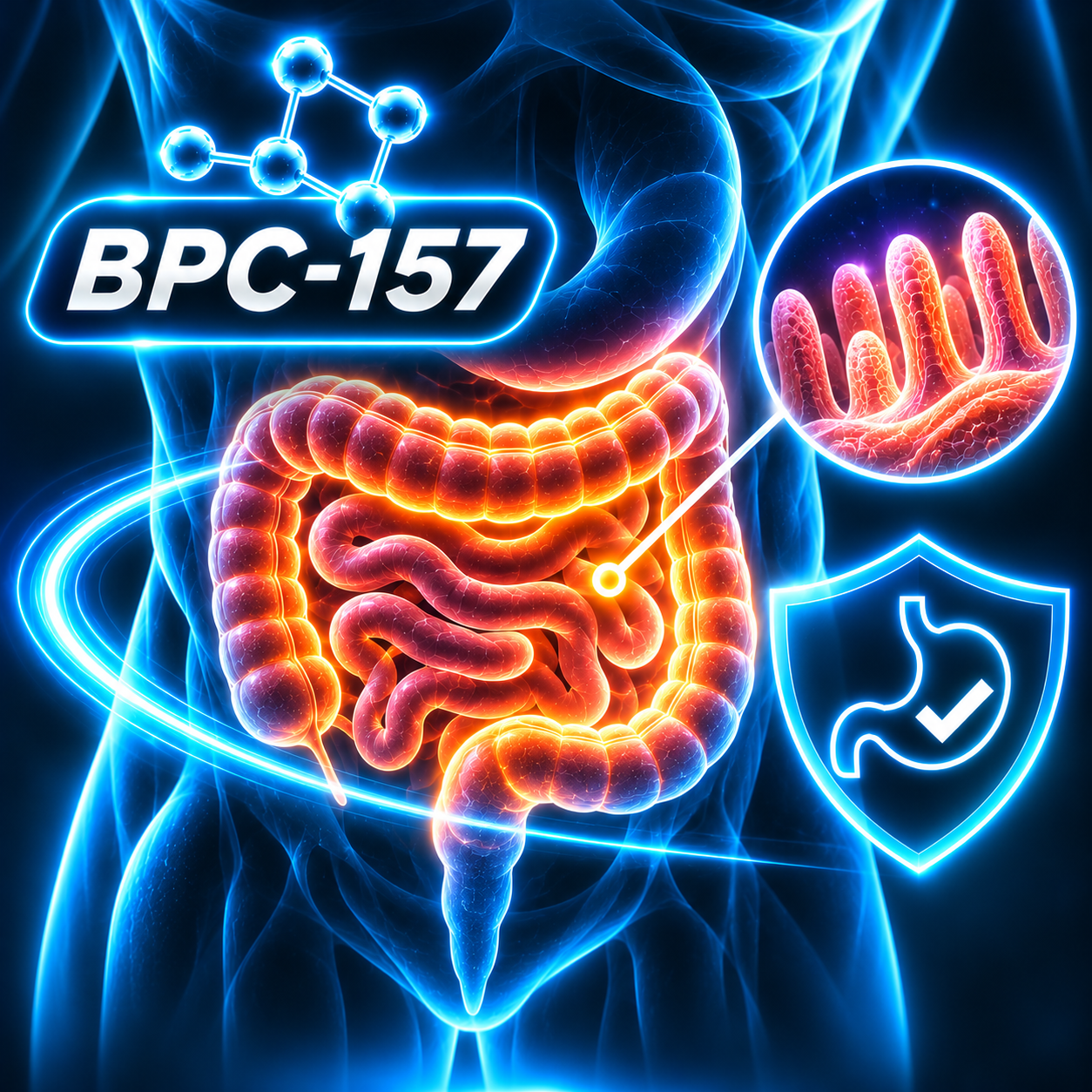
Can BPC-157 help heal the gut?
It's a question attracting growing interest as researchers explore this peptide's potential benefits for intestinal repair, stomach ulcers, and gastrointestinal health.
BPC-157 has shown promising gut-protective and tissue-healing effects in animal studies, particularly in research involving damage to the stomach and intestinal lining.
While many people associate BPC-157 with muscle recovery and tendon healing, some of its most interesting research actually involves the digestive system.
Your gut is constantly working to protect itself from stomach acid, digestive enzymes, bacteria, and inflammation. When its protective lining becomes damaged, normal digestive function can be disrupted.
Researchers have investigated whether BPC-157 can help support the biological processes involved in repairing that damage.
Early findings suggest potential benefits involving:
Intestinal lining repair: Supporting healing-related processes in damaged gastrointestinal tissue.
Stomach ulcer protection: Reducing tissue injury in experimental ulcer models.
Gut inflammation: Influencing inflammatory responses associated with intestinal damage.
Gastrointestinal recovery: Supporting cellular and vascular processes involved in tissue repair.
These findings make BPC-157 an interesting candidate for further gastrointestinal research.
However, most evidence comes from animal studies, and BPC-157 has not been proven to heal gastrointestinal conditions in humans.
So, what does the research actually show about BPC-157 gut benefits, and why has this peptide attracted so much attention for intestinal healing?
Let's explore the science behind its potential.
Research Background
What Is BPC-157?
BPC-157, short for Body Protection Compound-157, is a synthetic peptide made up of 15 amino acids.
It was developed from a sequence associated with a protein described in gastric juice research, which helps explain its longstanding connection to the digestive system.
Although BPC-157 has become widely discussed for muscle, tendon, and ligament recovery, some of its most notable early research focused on protecting and repairing gastrointestinal tissue.
Scientists have investigated its potential effects on stomach ulcers, intestinal injuries, inflammation, and the biological processes involved in tissue healing.
Unlike peptides that primarily influence hormone production, BPC-157 has attracted attention for its possible interactions with several repair-related pathways.
These include cellular protection, blood vessel signaling, and inflammatory regulation.
Why Is BPC-157 Studied for Gut Healing?
The digestive tract has a remarkable ability to protect and repair itself.
Its inner lining acts as a barrier between the contents of the gut and the rest of the body. This barrier allows nutrients to pass through while helping prevent harmful substances from entering surrounding tissue.
However, inflammation, infections, medications, and certain gastrointestinal conditions can damage this protective lining.
When damage occurs, the body relies on several processes to restore normal function:
Cellular repair: Replacing or restoring damaged cells along the intestinal lining.
Healthy blood circulation: Delivering oxygen and nutrients needed for tissue recovery.
Inflammation regulation: Controlling inflammatory activity that can interfere with healing.
Barrier protection: Maintaining the connections between intestinal cells that help regulate permeability.
Researchers have investigated whether BPC-157 can influence these processes.
Animal studies suggest that BPC-157 may help protect gastrointestinal tissue and support healing following certain types of experimental injury.
This combination of potential protective and repair-related effects is what makes BPC-157 particularly interesting in gut health research.
How Might BPC-157 Support Intestinal Repair?
Rather than acting through one clearly established mechanism, BPC-157 appears to influence several biological pathways in experimental models.
Researchers have observed effects involving nitric oxide signaling, vascular responses, and cellular processes associated with tissue repair.
These pathways matter because successful gastrointestinal healing requires more than simply reducing inflammation.
Damaged cells must recover, blood circulation must support the injured area, and the intestinal lining must restore its protective function.
The possibility that BPC-157 influences several of these processes helps explain why it continues to be investigated for gastrointestinal protection and repair.
However, these mechanisms remain under investigation, and their clinical significance in humans has not been established.
Main Research Findings
1. BPC-157 and Intestinal Lining Repair
One of the most promising areas of BPC-157 gut research involves its potential to protect and repair the intestinal lining.
The intestinal lining acts as a protective barrier, allowing nutrients to enter the bloodstream while helping prevent harmful substances from passing through.
When this barrier becomes damaged, inflammation and increased intestinal permeability can occur.
Animal studies have shown that BPC-157 can reduce certain types of gastrointestinal tissue damage and promote healing-related responses following experimental injury.
Researchers have observed improvements in tissue structure and recovery in several intestinal injury models.
These findings suggest that BPC-157 may influence the biological processes involved in restoring damaged gastrointestinal tissue.
Why it matters: Protecting and repairing the intestinal lining is essential for maintaining normal digestive function. BPC-157's effects in experimental models make it a promising candidate for further intestinal repair research.
2. BPC-157 and Stomach Ulcer Healing
Stomach ulcers occur when the protective lining of the stomach becomes damaged, exposing underlying tissue to digestive acid.
BPC-157 has been investigated in several experimental models of gastric injury, including damage caused by substances that weaken the stomach's natural defenses.
In animal studies, researchers have reported that BPC-157 can reduce the severity of certain gastric injuries and improve healing-related outcomes.
These findings have led scientists to investigate its potential influence on stomach tissue protection, blood circulation, and cellular repair.
One of the strongest recurring findings in BPC-157 gastrointestinal research is its protective activity in experimental stomach injury models.
Although these results are encouraging, clinical trials have not established BPC-157 as a safe or effective treatment for stomach ulcers in humans.
3. BPC-157 and Gut Inflammation
Inflammation is a natural response to injury, but prolonged inflammation can interfere with the gut's ability to recover.
Researchers have studied BPC-157 in animal models of intestinal inflammation, including experimentally induced colitis.
Some studies have reported reductions in intestinal tissue damage and improvements in selected inflammatory measurements following BPC-157 exposure.
These results suggest that the peptide may influence pathways involved in inflammation and gastrointestinal recovery.
The potential combination of tissue protection and inflammation-related effects is one reason BPC-157 continues to attract interest in digestive health research.
However, experimental colitis is not identical to human inflammatory bowel diseases, and BPC-157 has not been proven to treat Crohn's disease or ulcerative colitis.
4. BPC-157 and Blood Flow to the Gut
Healthy circulation plays an important role in gastrointestinal healing.
Blood vessels deliver oxygen and nutrients to damaged tissue, helping support cellular recovery and normal repair processes.
BPC-157 has demonstrated effects on vascular signaling in experimental studies, particularly pathways associated with nitric oxide and blood vessel function.
Researchers have also investigated its influence on cellular signaling involved in blood vessel formation and tissue repair.
These findings suggest that vascular regulation may contribute to some of BPC-157's observed gastrointestinal protective effects.
The exact mechanisms and their relevance to human digestive health still require further investigation.
5. BPC-157 and Leaky Gut
Can BPC-157 help with leaky gut?
The term leaky gut commonly refers to increased intestinal permeability, a condition in which the intestinal barrier allows substances to pass through more readily than normal.
Because BPC-157 has demonstrated protective effects in gastrointestinal injury models, researchers have reason to investigate its potential relationship with intestinal barrier function.
Its reported effects on tissue repair, inflammation, and vascular signaling may be relevant to understanding how damaged intestinal tissue recovers.
However, there is currently insufficient human evidence to establish that BPC-157 reverses increased intestinal permeability or treats leaky gut in people.
What Are the Most Promising BPC-157 Gut Benefits?
Current preclinical research highlights several potential gastrointestinal benefits:
| Research Area | Promising Findings |
|---|---|
| Intestinal repair | Protection and healing-related responses in damaged tissue |
| Stomach ulcers | Reduced gastric injury in experimental models |
| Gut inflammation | Improvements in selected inflammatory and tissue measurements |
| Blood circulation | Effects on vascular pathways associated with repair |
| Intestinal barrier | Potential relevance to gastrointestinal barrier protection |
The overall research picture is encouraging: BPC-157 has demonstrated gastrointestinal protective and repair-related activity across multiple experimental models.
While human clinical evidence remains limited, these findings provide a scientific foundation for continued research into BPC-157 and gut health.
Research Methodology / Context
How Have Researchers Studied BPC-157 and Gut Healing?
Most research investigating BPC-157 and gastrointestinal health has been conducted using laboratory animals, particularly rats.
Scientists use controlled injury models to examine whether BPC-157 influences the body's response to damaged stomach and intestinal tissue.
These experiments typically focus on three areas:
Gastric injury studies: Researchers examine whether BPC-157 reduces stomach lining damage or improves healing following experimentally induced ulcers.
Intestinal inflammation studies: Scientists investigate changes in tissue damage, inflammation, and recovery in experimental colitis and other intestinal injury models.
Tissue repair studies: Researchers evaluate cellular changes, blood vessel responses, and healing-related processes in damaged gastrointestinal tissue.
To measure results, scientists may examine tissue samples under a microscope, assess the extent of visible injury, and compare treated animals with untreated control groups.
What Makes These Findings Encouraging?
BPC-157 has demonstrated protective and repair-related effects across several types of experimental gastrointestinal injury.
This is important because gut healing involves multiple biological processes working together, including cellular repair, inflammation regulation, and healthy blood circulation.
The fact that BPC-157 has shown activity across different gastrointestinal injury models provides a meaningful reason for continued scientific investigation.
However, most findings come from preclinical studies, and differences between animal models and human digestive conditions must be considered.
Controlled human clinical trials are still needed to determine whether these promising experimental results translate into safe and effective gastrointestinal treatments.
Current Research Limitations
Does BPC-157 Actually Heal the Human Gut?
BPC-157 has demonstrated promising gastrointestinal protective and healing-related effects in animal studies. However, several important questions remain unanswered.
The biggest limitation is the lack of high-quality human clinical trials confirming that BPC-157 can safely and effectively heal gastrointestinal tissue.
Although experimental findings are encouraging, results from laboratory animals do not always translate into the same benefits in people.
Current research has several limitations:
Limited human evidence: There is insufficient clinical research demonstrating that BPC-157 improves gut health or repairs intestinal damage in humans.
Long-term safety: Potential side effects and risks associated with repeated exposure have not been adequately established.
Unproven treatment protocols: Researchers have not established safe and effective human dosing or treatment durations for gastrointestinal conditions.
Disease-specific research: BPC-157 has not been clinically proven to treat stomach ulcers, Crohn's disease, ulcerative colitis, or increased intestinal permeability.
BPC-157 is not FDA-approved for treating gastrointestinal disorders or other medical conditions.
What Does This Mean for BPC-157 Gut Research?
These limitations do not negate the positive findings observed in experimental studies.
BPC-157 has demonstrated meaningful biological activity in gastrointestinal injury models, making it a promising subject for further investigation.
The next step is well-designed human research to determine whether these protective and repair-related effects can translate into safe, measurable clinical benefits.
Discussion
Why BPC-157 Shows Promise for Gut Healing
What makes BPC-157 particularly interesting for gastrointestinal research is its potential to influence several processes involved in tissue protection and repair.
The digestive system depends on more than a healthy intestinal lining. Blood circulation, cellular regeneration, and controlled inflammatory responses all play important roles in maintaining gut health.
When these systems become disrupted, healing can become more difficult.
BPC-157 has demonstrated protective and repair-related activity across multiple gastrointestinal injury models, suggesting that its effects may involve more than one biological pathway.
This is especially interesting because repairing damaged intestinal tissue requires several processes to work together.
Rather than focusing exclusively on inflammation or stomach acid, BPC-157 research has explored mechanisms associated with tissue recovery, vascular function, and gastrointestinal protection.
Could BPC-157 Become an Important Area of Gut Health Research?
The growing interest in BPC-157 extends beyond its potential role in muscle and tendon recovery.
Its history of gastrointestinal investigation makes it a relevant compound for scientists studying intestinal injuries, stomach ulcers, and inflammatory damage.
The strongest argument for continued BPC-157 gut research is the range of encouraging protective effects observed in preclinical experiments.
However, the next major step is determining whether those findings translate into measurable benefits for human gastrointestinal conditions.
Future clinical studies will need to examine effectiveness, safety, and which specific digestive conditions, if any, might benefit.
For now, BPC-157 remains an experimental peptide with promising preclinical findings rather than an established gut-healing treatment.
Conclusion
BPC-157 has become an interesting subject in gut health research, particularly for its potential role in protecting and repairing gastrointestinal tissue.
Although often associated with muscle and tendon recovery, some of its most promising experimental findings involve the digestive system.
Animal studies have demonstrated protective and healing-related effects involving the intestinal lining, stomach ulcers, inflammation, and damaged gastrointestinal tissue.
These findings suggest that BPC-157 may influence several important processes involved in gut protection and intestinal repair.
Its potential effects on cellular recovery, vascular signaling, and inflammatory responses make it a compelling candidate for continued gastrointestinal research.
However, human clinical evidence remains limited, and BPC-157 has not been proven to safely or effectively treat digestive conditions in people.
The key takeaway: BPC-157 has demonstrated promising gut-protective and tissue-repair effects in preclinical research, but human studies are still needed to confirm its potential benefits.
At Peptide Purity USA, we emphasize high-quality research materials, analytical transparency, and scientifically grounded education to support responsible peptide research.
Research Use Only: All research materials offered by Peptide Purity USA are intended strictly for laboratory research purposes. Not for human or veterinary consumption. Not intended for diagnostic or therapeutic applications.
References
- 1. Duzel, A., et al. (2017). Stable gastric pentadecapeptide BPC 157 in the treatment of colitis and ischemia and reperfusion in rats: New insights. World Journal of Gastroenterology, 23(48), 8465–8488. DOI: 10.3748/wjg.v23.i48.8465.
- 2. Klicek, R., et al. (2008). Pentadecapeptide BPC 157, in clinical trials as a therapy for inflammatory bowel disease (PL14736), is effective in the healing of colocutaneous fistulas in rats: Role of the nitric oxide-system. Journal of Pharmacological Sciences, 108(1), 7–17. DOI: 10.1254/jphs.FP0072161.
- 3. Sikiric, P., et al. (2012). Focus on ulcerative colitis: Stable gastric pentadecapeptide BPC 157. Current Medicinal Chemistry, 19, 126–132.
- 4. Sikiric, P., et al. (2013). Toxicity by NSAIDs. Counteraction by stable gastric pentadecapeptide BPC 157. Current Pharmaceutical Design, 19, 76–83.
- 5. Seiwerth, S., et al. (2014). BPC 157 and blood vessels. Current Pharmaceutical Design, 20, 1121–1125.
- 6. . Sikiric, P., et al. (2014). Stable gastric pentadecapeptide BPC 157–NO-system relation. Current Pharmaceutical Design, 20, 1126–1135.