Introduction
BPC-157 vs. TB-500: Which Peptide Has Stronger Scientific Evidence for Injury Recovery?
Peptides have attracted growing scientific interest for their potential roles in tissue repair, cellular signaling, and biological processes associated with injury recovery.
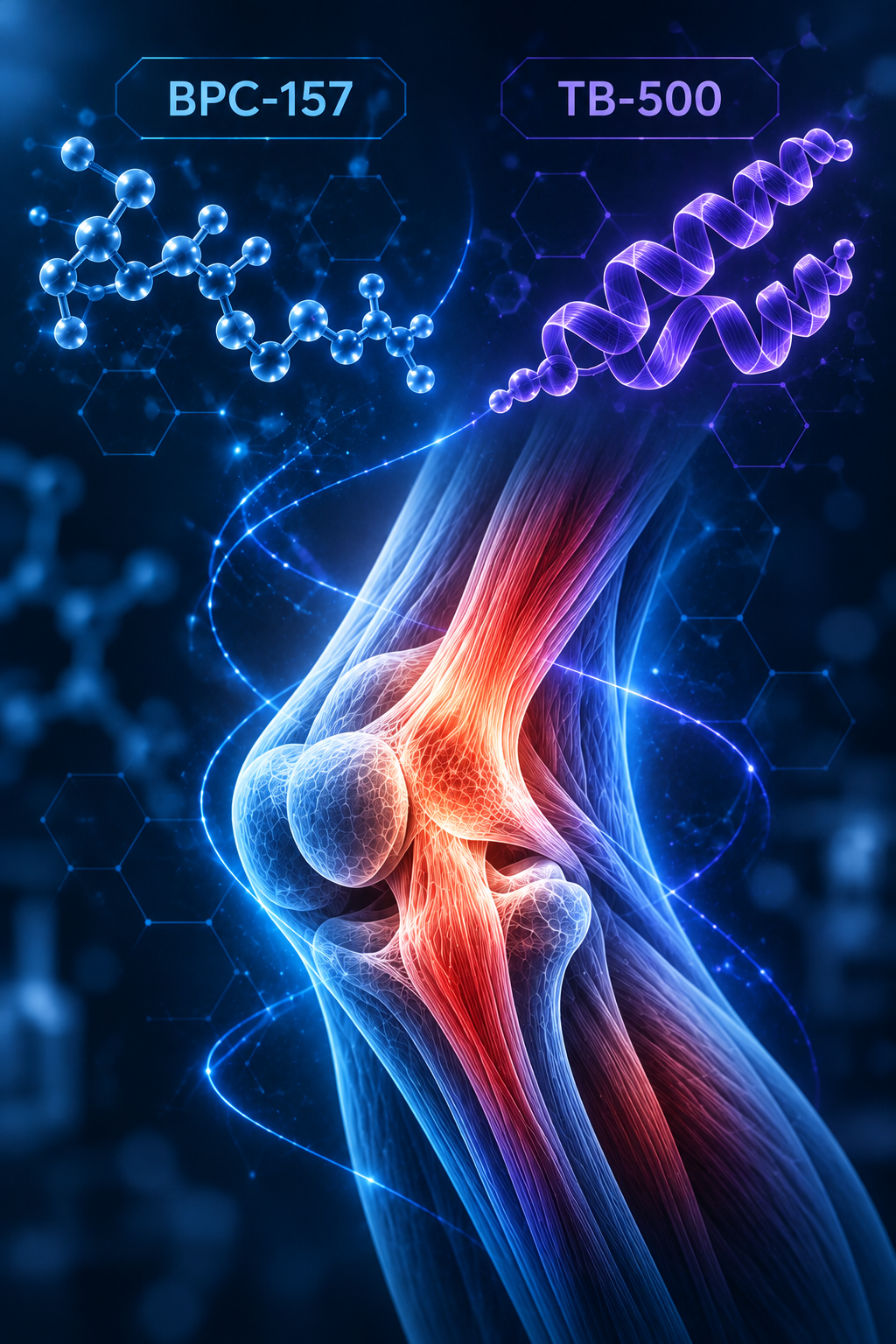
Among the compounds frequently discussed are BPC-157 and TB-500, two investigational peptides associated with different mechanisms that may influence how tissues respond to injury.
BPC-157 is a synthetic peptide consisting of 15 amino acids that has been investigated primarily in preclinical models of tendon, ligament, muscle, and gastrointestinal tissue injury.
TB-500 is commonly associated with thymosin beta-4, a naturally occurring peptide involved in actin regulation, cellular migration, and wound-associated biological processes. However, TB-500 preparations may differ from full-length thymosin beta-4, making their molecular identity an important consideration when evaluating research findings.
Experimental studies involving BPC-157 have reported changes in tendon fibroblast activity, cellular migration, and selected tissue-healing measurements. Research involving thymosin beta-4 has explored cellular movement, wound repair, and tissue remodeling.
Although these findings suggest potential relevance to injury-related research, the two compounds differ in their proposed mechanisms and the strength of their supporting scientific evidence.
Importantly, promising laboratory and animal findings do not establish that either peptide safely or effectively improves injury recovery in humans. High-quality clinical evidence remains insufficient.
So, how do BPC-157 and TB-500 compare, and what does the scientific research actually show?
This article examines their biological differences, experimental findings involving tendon, ligament, and muscle injuries, and the limitations researchers should consider when evaluating their potential roles in tissue repair.
Research Background
Understanding BPC-157 and TB-500
BPC-157 and TB-500 are investigational peptides that have attracted scientific interest for their potential involvement in biological processes associated with tissue repair and injury recovery.
Although both are studied in relation to cellular activity and tissue remodeling, they differ in molecular structure, biological origin, and proposed mechanisms of action.
Understanding these differences provides important context for evaluating their experimental findings and potential relevance to injury-related research.
BPC-157: Research Background and Biological Mechanisms
BPC-157, also known as Body Protection Compound-157, is a synthetic peptide consisting of 15 amino acids.
It has been investigated primarily in preclinical studies involving gastrointestinal tissue protection, tendon and ligament injuries, skeletal muscle damage, and vascular responses.
Experimental research suggests that BPC-157 may influence several biological processes associated with tissue repair:
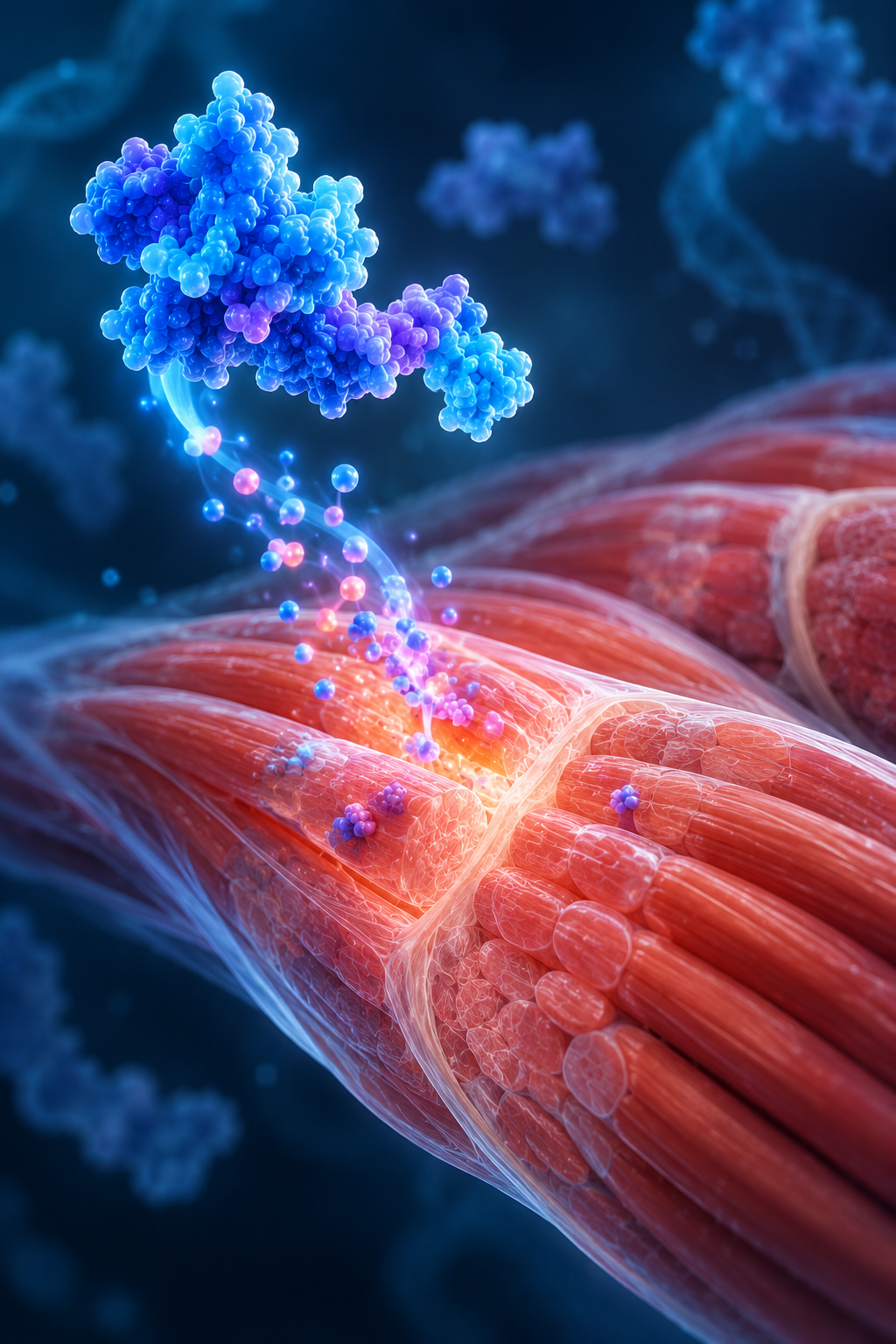
Cellular migration: Laboratory studies have reported increased movement of tendon fibroblasts, cells involved in connective tissue maintenance and remodeling.
Connective tissue organization: Animal studies have observed changes in collagen arrangement and selected structural measurements during tendon and ligament healing.
Vascular signaling: Certain experimental findings suggest interactions with nitric oxide–related pathways involved in blood vessel responses.
Cellular signaling: Research has explored pathways associated with cell survival, adhesion, and migration, including the FAK-paxillin signaling pathway.
Of particular interest is BPC-157's interaction with tendon fibroblasts, which contribute to the production and organization of connective tissue components.
Laboratory investigations have reported increased fibroblast migration and changes in signaling pathways associated with cellular movement under specific experimental conditions.
However, these findings originate primarily from laboratory and animal research, and their relevance to human injury recovery remains uncertain.
TB-500: Research Background and Biological Mechanisms
TB-500 is a name commonly used for synthetic peptide preparations associated with thymosin beta-4, a naturally occurring peptide composed of 43 amino acids.
Thymosin beta-4 is found in various tissues and cell types and has been investigated for its involvement in actin regulation, cellular migration, and wound-associated biological responses.
An important distinction is that TB-500 and full-length thymosin beta-4 are not necessarily identical compounds.
The term TB-500 has been applied to different preparations, including shorter peptide fragments derived from thymosin beta-4. These differences in molecular composition may influence biological activity and experimental outcomes.
Research involving thymosin beta-4 has identified several mechanisms relevant to tissue repair:
Actin regulation: Thymosin beta-4 interacts with actin, a structural protein involved in maintaining cell shape and supporting cellular movement.
Cellular migration: Experimental studies have investigated its influence on the movement of cells involved in wound-associated responses.
Tissue remodeling: Research has explored interactions with extracellular matrix organization and processes associated with tissue maintenance.
Inflammatory signaling: Laboratory findings suggest potential interactions with pathways involved in inflammatory responses following tissue injury.
Angiogenesis: Certain experimental investigations have reported effects on biological processes associated with new blood vessel formation.
These findings have contributed to scientific interest in thymosin beta-4 for wound healing, cardiovascular research, and tissue remodeling.
However, findings involving full-length thymosin beta-4 cannot automatically be applied to TB-500 fragments, which may differ in structure and biological activity.
Key Differences Between BPC-157 and TB-500
Although BPC-157 and TB-500 are frequently discussed together in injury-related research, their proposed mechanisms emphasize different aspects of cellular activity.
BPC-157 research has focused primarily on connective tissue repair, particularly tendon fibroblast migration, cellular signaling, and structural changes observed in experimental injury models.
In contrast, thymosin beta-4 research has emphasized actin regulation and cellular migration, biological processes that contribute to wound-associated responses and tissue remodeling.
These mechanisms may overlap because tissue repair involves several interconnected processes, including cellular movement, collagen organization, vascular activity, and inflammatory regulation.
However, differences in molecular structure and experimental evidence make it important to evaluate each compound independently.
Current scientific evidence does not establish that either BPC-157 or TB-500 is superior for human injury recovery.
Further investigation is necessary to determine whether their proposed biological mechanisms translate into meaningful improvements in tissue healing and functional recovery.
Main Research Findings
BPC-157 and TB-500 in Injury-Related Research
Scientific investigations involving BPC-157, TB-500, and thymosin beta-4 have explored biological processes associated with tendon healing, ligament repair, muscle injury, and tissue remodeling.
Although these research areas overlap, the available evidence differs considerably between the compounds.
BPC-157 has been investigated in several preclinical models of musculoskeletal injury, while research involving thymosin beta-4 has explored a broader range of cellular mechanisms associated with wound healing and tissue repair.
The following findings highlight the current evidence for each compound across different injury-related research areas.
Tendon Healing Research
Tendon healing represents one of the most extensively investigated areas of BPC-157 research.
In experimental rat Achilles tendon injury models, researchers have reported improvements in selected healing-related measurements, including tendon organization, collagen arrangement, and mechanical strength.
Laboratory studies have also identified changes in tendon fibroblast migration and signaling pathways involved in cellular movement.
These findings suggest that BPC-157 may influence biological processes associated with tendon repair under controlled experimental conditions.
Research involving thymosin beta-4 has explored mechanisms relevant to tendon healing, particularly actin regulation, cellular migration, and extracellular matrix remodeling.
Direct evidence involving TB-500 in tendon injury models is more limited, although a recent comparative animal study has reported potentially relevant findings.
Importantly, research involving full-length thymosin beta-4 cannot automatically establish equivalent effects for TB-500 preparations.
Ligament Injury Research
BPC-157 has also been investigated in experimental models of ligament injury.
Certain animal studies have reported improvements in tissue organization and biomechanical measurements following experimentally induced ligament damage.
These observations suggest possible interactions with biological pathways involved in connective tissue repair.
In comparison, thymosin beta-4 research has focused primarily on cellular migration, extracellular matrix regulation, and wound-associated tissue responses.
Although these mechanisms are relevant to ligament biology, direct evidence demonstrating improved ligament healing with TB-500 remains limited.
Current findings therefore do not establish that TB-500 produces the same ligament-related effects observed in certain BPC-157 animal studies.
Muscle Injury and Tissue Regeneration
Muscle recovery involves several interconnected biological processes, including inflammatory regulation, cellular signaling, extracellular matrix remodeling, and restoration of tissue structure.
BPC-157 has been investigated in preclinical models of skeletal muscle injury, with some animal studies reporting improvements in selected structural and functional measurements.
These findings suggest potential involvement in biological processes associated with muscle tissue repair, although the underlying mechanisms remain incompletely understood.
Thymosin beta-4 has also attracted scientific interest for its interactions with actin regulation, cellular migration, and tissue remodeling.
However, much of this research involves biological systems other than skeletal muscle injury, and the findings cannot automatically be attributed to TB-500 fragments.
Neither compound has sufficient human clinical evidence demonstrating improved muscle recovery or regeneration.
Direct Comparison: BPC-157 vs. TB-500 in Achilles Tendon Research
A 2026 study published in Joint Diseases and Related Surgery directly compared BPC-157, TB-500, and their combination in a rat Achilles tendon injury model.
The investigation included 32 rats divided into four experimental groups: a control group, a BPC-157 group, a TB-500 group, and a group receiving both compounds.
Researchers evaluated tendon healing over four weeks using biomechanical testing and histological examination.
The study reported several notable findings:
BPC-157: Certain structural and biomechanical measurements showed numerical improvements, although several comparisons with the control group did not reach statistical significance.
TB-500: Researchers reported statistically significant improvements in maximum tendon load to failure and selected histological measurements compared with controls.
Combined BPC-157 and TB-500: The combination did not demonstrate additional benefits over either compound individually.
Tissue organization: Histological findings suggested changes in collagen organization and tissue remodeling, particularly in the TB-500 group.
These findings provide preliminary evidence that the compounds may influence certain aspects of tendon healing under experimental conditions.
However, the study was relatively small, and biomechanical testing involved only four tendons per group.
Although TB-500 demonstrated statistically significant improvements in selected measurements, these results do not establish that it is superior to BPC-157 for human injury recovery.
Further independent investigations are necessary to determine whether the findings are reproducible across different injury models.
Which Peptide Has Stronger Scientific Evidence for Injury Recovery?
The strength of the available scientific evidence depends on the specific injury, experimental model, and biological outcome being investigated.
BPC-157 has a broader body of published preclinical research specifically examining tendon and ligament injuries, including studies involving fibroblast migration, tissue organization, and biomechanical healing measurements.
TB-500 has a smaller body of direct musculoskeletal injury research, although studies involving thymosin beta-4 have identified mechanisms relevant to cellular migration, wound healing, and tissue remodeling.
The 2026 direct comparative study provides additional experimental evidence involving TB-500 and Achilles tendon healing, but its findings remain preliminary.
These distinctions suggest that BPC-157 has been investigated more extensively in certain musculoskeletal injury models, while TB-500 represents a less extensively studied compound with some emerging experimental findings.
However, neither peptide has sufficient high-quality human clinical evidence to establish its safety or effectiveness for treating tendon, ligament, or muscle injuries.
Further research is necessary to determine whether the biological effects observed in laboratory and animal studies translate into meaningful improvements in human tissue healing.
Research Methodology / Context
How BPC-157 and TB-500 Are Studied
Research involving BPC-157 and TB-500 has relied primarily on laboratory experiments and animal models to investigate biological processes associated with tissue repair.
These methods allow researchers to examine cellular activity, tissue organization, and mechanical properties under controlled experimental conditions.
However, interpreting the findings requires careful consideration of the peptide's molecular identity, the type of injury being studied, and the methods used to measure healing.
Understanding how these experiments are conducted helps distinguish observed biological activity from demonstrated improvements in injury recovery.
Laboratory and Cellular Research
Laboratory studies, often described as in vitro research, allow investigators to examine how peptides interact with specific cells and biological signaling pathways.
BPC-157 has been studied using tendon fibroblasts and other cell types involved in connective tissue maintenance.
Researchers have evaluated cellular migration, survival, and signaling activity to better understand its proposed involvement in tissue repair.
In comparison, laboratory investigations involving thymosin beta-4 have focused on actin regulation, cellular migration, and wound-associated biological responses.
These experiments help identify potential molecular mechanisms, but changes observed in isolated cells do not necessarily indicate improved tissue healing in living organisms.
Animal Models of Tendon, Ligament, and Muscle Injury
Animal studies provide an opportunity to examine how tissues respond to experimental injuries under controlled conditions.
BPC-157 has been investigated in models of Achilles tendon damage, ligament injury, and skeletal muscle injury.
Research involving TB-500 and thymosin beta-4 has also explored tissue remodeling and wound-associated biological activity, although the experimental models and molecular preparations differ.
Researchers commonly evaluate healing using several methods:
Histological analysis: Microscopic examination of tissue structure, cellular activity, and organization following injury.
Biomechanical testing: Measurement of tissue strength, including tensile properties and maximum load to failure.
Collagen assessment: Evaluation of collagen fiber arrangement and extracellular matrix organization.
Molecular analysis: Investigation of protein expression, cellular signaling, and biological markers associated with tissue responses.
Functional measurements: Assessment of selected movement-related or muscle-function outcomes in experimental models.
Together, these measurements provide information about structural, cellular, and functional changes during healing.
However, improvements in individual measurements do not necessarily indicate complete restoration of normal tissue function.
Direct Comparative Research
Direct comparative studies are especially valuable because they evaluate different compounds within the same experimental model.
The 2026 rat Achilles tendon study comparing BPC-157, TB-500, and their combination provides an example of this approach.
Researchers used separate experimental groups to examine differences in selected biomechanical and histological healing measurements.
This design allows more direct comparisons than evaluating findings from unrelated studies conducted under different conditions.
However, the study's relatively small sample size and limited observation period restrict the conclusions that can be drawn.
Additional independent investigations are necessary to determine whether the findings are reproducible across different injury models and experimental settings.
Translating Preclinical Findings to Human Research
Although laboratory and animal studies provide valuable information about biological mechanisms, their findings cannot automatically be applied to humans.
Differences in species biology, tissue structure, metabolism, and injury characteristics may influence how experimental results translate to human recovery.
Research materials may also differ in molecular identity, purity, stability, and formulation, introducing additional variables that affect experimental outcomes.
This is particularly important for TB-500, as findings involving full-length thymosin beta-4 cannot automatically be generalized to shorter peptide fragments.
For both BPC-157 and TB-500, sufficient high-quality human clinical evidence demonstrating improved musculoskeletal injury recovery remains unavailable.
Future research involving verified peptide identity, appropriate control groups, standardized measurements, and independent replication will be essential for determining whether the biological effects observed in preclinical studies have meaningful clinical relevance.
Current Research Limitations
Limitations of BPC-157 and TB-500 Injury Research
Although experimental investigations involving BPC-157 and TB-500 have identified biological processes potentially relevant to tissue repair, several important limitations remain.
Most available findings originate from laboratory and animal studies, while high-quality human clinical evidence demonstrating improved musculoskeletal injury recovery remains insufficient.
These limitations are particularly important when comparing the compounds because differences in molecular identity, study design, and experimental outcomes can influence how scientific findings are interpreted.
Limited Human Clinical Evidence
One of the most significant limitations surrounding BPC-157 and TB-500 is the lack of robust human clinical trials evaluating their effects on injury recovery.
BPC-157 has been investigated in several preclinical models involving tendon, ligament, and muscle injuries, but these findings have not been adequately validated through large, randomized, controlled human studies.
Similarly, research involving thymosin beta-4 has explored wound healing and tissue remodeling, but these investigations do not establish the clinical effectiveness of TB-500 for musculoskeletal injuries.
Human studies involving specific thymosin beta-4 formulations also cannot automatically establish the safety or effectiveness of other preparations marketed as TB-500.
Neither compound currently has sufficient high-quality clinical evidence to establish improved tendon, ligament, or muscle recovery in humans.
Limitations of Animal and Laboratory Models
Animal studies provide valuable information about tissue repair mechanisms, but experimentally induced injuries may differ considerably from those experienced by humans.
Differences in tissue structure, metabolism, immune responses, and healing rates can influence how findings translate between species.
Additionally, many preclinical investigations evaluate healing over relatively short periods.
Although improvements in collagen organization, tissue strength, or cellular activity may indicate biological effects, these measurements do not necessarily demonstrate complete functional recovery.
Long-term outcomes, including tissue durability, reinjury risk, and sustained recovery, remain insufficiently understood.
Differences in Peptide Identity and Research Materials
The molecular identity and composition of research materials represent another important limitation.
BPC-157 is a defined synthetic peptide consisting of 15 amino acids, although differences in material quality, formulation, and experimental conditions may influence results.
TB-500 presents additional challenges because the term has been applied to different preparations associated with thymosin beta-4.
Full-length thymosin beta-4 and shorter TB-500 fragments may differ in molecular structure and biological activity.
Consequently, findings involving full-length thymosin beta-4 cannot automatically be generalized to every TB-500 preparation.
Accurate peptide identification, analytical characterization, and consistent research materials are essential for producing reproducible findings.
Limited Direct Comparative Research
Although BPC-157 and TB-500 are frequently discussed together, few published studies have directly compared their effects within the same injury model.
Differences in animal species, experimental conditions, injury types, and outcome measurements make comparisons across separate investigations difficult.
The 2026 rat Achilles tendon study provides preliminary comparative evidence, but its small sample size and limited observation period restrict the conclusions that can be drawn.
Furthermore, the absence of additional benefits from combining BPC-157 and TB-500 in that experimental setting does not establish how the combination would perform under other conditions.
Additional independent studies are necessary to determine whether the observed findings are reproducible across different injury models.
Uncertainty Surrounding Long-Term Safety
The long-term safety profiles of BPC-157 and TB-500 remain insufficiently characterized.
Although some preclinical studies have reported favorable biological outcomes, these findings cannot establish safety in humans.
Potential concerns include immune reactions, peptide-related impurities, effects on cellular signaling, and consequences of prolonged exposure.
The U.S. Food and Drug Administration has identified safety concerns involving BPC-157 and certain thymosin beta-4 fragment preparations associated with TB-500, including potential immunogenicity and insufficient human safety data.
Further toxicological research and controlled human investigations are necessary to clarify potential risks and long-term biological effects.
The Need for Further Scientific Investigation
Future research should prioritize standardized experimental methods, clearly characterized peptide materials, and reproducible measurements of tissue healing.
Independent comparative studies could help clarify differences between BPC-157 and TB-500 across tendon, ligament, and muscle injury models.
Longer observation periods would also provide additional information about tissue strength, structural organization, and sustained functional outcomes.
Ultimately, well-designed human clinical trials are necessary to determine whether preclinical findings translate into meaningful improvements in injury recovery.
Until sufficient clinical evidence becomes available, BPC-157 and TB-500 remain investigational compounds rather than established treatments for musculoskeletal injuries.
Discussion
Comparing BPC-157 and TB-500 in Injury-Related Research
BPC-157 and TB-500 represent distinct areas of peptide research involving biological processes associated with tissue repair, cellular signaling, and responses to experimental injury.
Although both compounds have attracted scientific interest for their potential relevance to musculoskeletal research, their molecular characteristics, proposed mechanisms, and supporting evidence differ considerably.
BPC-157 research has focused primarily on tendon and ligament injury models, with experimental findings involving fibroblast migration, collagen organization, and selected biomechanical measurements.
In contrast, research involving thymosin beta-4 has emphasized actin regulation, cellular migration, and wound-associated tissue remodeling.
These findings suggest that the compounds may influence some overlapping biological processes through different molecular mechanisms.
However, full-length thymosin beta-4 and preparations marketed as TB-500 are not necessarily identical, making accurate molecular identification essential when comparing their reported effects.
Which Peptide Shows Greater Potential for Injury Recovery?
The available scientific evidence does not establish that either BPC-157 or TB-500 is consistently superior for injury recovery.
BPC-157 has a broader body of preclinical research specifically examining tendon and ligament injuries, while TB-500 has received less direct investigation in musculoskeletal injury models.
A 2026 experimental study comparing both compounds in a rat Achilles tendon injury model reported statistically significant improvements in selected healing measurements for the TB-500 group.
However, the small sample size and limited experimental scope prevent definitive conclusions about comparative effectiveness.
The study also did not demonstrate additional benefits from combining the two compounds under the conditions investigated.
These findings highlight an important distinction: a larger body of preclinical research does not necessarily mean greater effectiveness, and promising results from a single study do not establish superiority.
Further independent investigations are necessary to clarify whether the observed differences are reproducible across different injury models.
The Importance of Evidence-Based Interpretation
Tissue repair involves multiple interconnected processes, including inflammation, cellular migration, extracellular matrix remodeling, and restoration of mechanical function.
Although experimental findings suggest that BPC-157 and thymosin beta-4 may influence certain components of these processes, biological activity does not necessarily translate into meaningful improvements in injury recovery.
For example, changes in cellular migration or collagen organization may indicate a measurable experimental response without demonstrating faster healing, improved long-term tissue strength, or reduced reinjury risk.
Neither BPC-157 nor TB-500 has sufficient high-quality human clinical evidence to establish safety or effectiveness for treating musculoskeletal injuries.
Future research should prioritize verified peptide identity, standardized experimental methods, independent replication, and clinically meaningful outcome measurements.
Regulatory and Safety Considerations
BPC-157 and TB-500 are investigational peptides and are not FDA-approved treatments for tendon, ligament, muscle, or other injuries.
Although preclinical studies have identified potentially relevant biological activity, their long-term safety and therapeutic effectiveness in humans remain insufficiently established.
The U.S. Food and Drug Administration has identified potential safety concerns involving BPC-157, including immunogenicity, peptide-related impurities, and limited human safety information.
The FDA has also identified concerns involving thymosin beta-4 fragment (LKKTETQ), listed as TB-500, including potential immunogenicity, aggregation, and insufficient human exposure data.
Differences in molecular identity, purity, and formulation introduce additional uncertainties when evaluating research findings.
For researchers, these considerations emphasize the importance of verified peptide identity, analytical testing, transparent documentation, and responsible laboratory practices.
Neither compound should be considered an established medical treatment for injury recovery.
Conclusion
BPC-157 and TB-500 represent two distinct areas of peptide research involving biological processes associated with tissue repair, cellular migration, and responses to experimental injury.
Preclinical investigations involving BPC-157 have reported changes in tendon and ligament healing, including fibroblast activity, collagen organization, and selected biomechanical measurements.
Research involving thymosin beta-4 has emphasized actin regulation, cellular migration, and wound-associated tissue remodeling. However, findings involving full-length thymosin beta-4 cannot automatically be applied to all preparations marketed as TB-500.
Direct comparative research has provided preliminary evidence of differences in tendon healing outcomes, but the available findings remain limited in size, scope, and clinical applicability.
Although BPC-157 has a broader body of preclinical research specifically examining musculoskeletal injuries, current evidence does not establish that either compound is superior for human injury recovery.
Neither BPC-157 nor TB-500 has sufficient high-quality human clinical evidence to demonstrate safety or effectiveness for treating tendon, ligament, or muscle injuries.
Further research is necessary to clarify their biological mechanisms, long-term safety profiles, and potential relevance to human tissue repair.
At Peptide Purity USA, we emphasize research material quality, analytical transparency, and responsible laboratory practices to support scientific investigation.
Research Use Only: All research materials offered by Peptide Purity USA are intended strictly for laboratory research purposes. Not for human or veterinary consumption. Not intended for diagnostic or therapeutic applications.
References
- Scientific References
- 1. Biçer O, Adanir O, Güleryüz Y, et al. Effects of BPC-157 and TB-500 on Achilles tendon healing in rats: A histopathological and biomechanical study. Joint Diseases and Related Surgery. 2026;37(3):822–837. DOI: 10.52312/jdrs.2026.2951. PubMed
- 2. Staresinic M, et al. Gastric pentadecapeptide BPC 157 accelerates healing of transected rat Achilles tendon and in vitro stimulates tendocytes growth. Journal of Orthopaedic Research. 2003;21(6):976–983. DOI: 10.1016/S0736-0266(03)00110-4
- 3. Chang CH, Tsai WC, Lin MS, Hsu YH, Pang JHS. The promoting effect of pentadecapeptide BPC 157 on tendon healing involves tendon outgrowth, cell survival, and cell migration. Journal of Applied Physiology. 2011;110(3):774–780. DOI: 10.1152/japplphysiol.00945.2010.
- 4. Cerovecki T, et al. Pentadecapeptide BPC 157 (PL 14736) improves ligament healing in the rat. Journal of Orthopaedic Research. 2010. DOI: 10.1002/jor.21107.
- 5. Goldstein AL, Hannappel E, Kleinman HK. Thymosin beta4: actin-sequestering protein moonlights to repair injured tissues. Trends in Molecular Medicine. 2005;11(9):421–429. DOI: 10.1016/j.molmed.2005.07.004. PubMed
- 6. Philp D, Huff T, Gho YS, Hannappel E, Kleinman HK. The actin binding site on thymosin beta4 promotes angiogenesis. FASEB Journal. 2003. DOI: 10.1096/fj.03-0121fje. PubMed
- 7. Philp D, Badamchian M, Scheremeta B, Nguyen M, Goldstein AL, Kleinman HK. Thymosin beta 4 and a synthetic peptide containing its actin-binding domain promote dermal wound repair in db/db diabetic mice and in aged mice. Wound Repair and Regeneration. 2003;11(1):19–24. DOI: 10.1046/j.1524-475x.2003.11105.x. PubMed
- 8. Ying Y, Lin C, Tao N, et al. Thymosin β4 and Actin: Binding Modes, Biological Functions and Clinical Applications. Current Protein & Peptide Science. 2023;24(1):78–88. DOI: 10.2174/1389203724666221201093500. PubMed
- 9. U.S. Food and Drug Administration. Certain Bulk Drug Substances for Use in Compounding that May Present Significant Safety Risks. FDA. Official FDA Resource