Introduction
GHK-Cu, also known as copper tripeptide-1, is a naturally occurring copper-binding peptide that has gained scientific attention for its potential role in skin biology, collagen synthesis, tissue remodeling, and hair follicle research.
GHK-Cu is formed when the tripeptide glycyl-L-histidyl-L-lysine (GHK), composed of three amino acids—glycine, histidine, and lysine—binds to a copper ion. Researchers have investigated this complex for its interactions with cellular signaling pathways, extracellular matrix regulation, and biological processes associated with tissue maintenance and repair.
Scientific studies have explored the potential biological effects of GHK-Cu on collagen production, wound-healing mechanisms, antioxidant responses, and inflammatory signaling. These areas of investigation have contributed to growing interest in copper peptides within dermatological and regenerative biology research.
Although experimental findings suggest that GHK-Cu may influence several important cellular processes, much of the available evidence comes from laboratory investigations, animal models, and limited human cosmetic studies. Further well-controlled human research is necessary to establish its clinical effectiveness, optimal applications, and long-term safety.
Research Background
GHK (glycyl-L-histidyl-L-lysine) was first identified in human plasma during the 1970s by researcher Loren Pickart, who investigated its association with age-related changes in cellular activity. Subsequent research demonstrated that GHK has a strong affinity for copper(II) ions, forming the biologically active complex known as GHK-Cu (copper tripeptide-1).
Copper is an essential trace element involved in numerous biological processes, including connective tissue formation, cellular metabolism, and antioxidant enzyme function. It also serves as a cofactor for enzymes involved in collagen and elastin cross-linking, which contribute to the structural integrity of connective tissues.
The interaction between GHK and copper has attracted scientific interest because the resulting complex may influence cellular signaling, extracellular matrix regulation, and biological processes associated with tissue maintenance and remodeling.
Research involving GHK-Cu has focused on several key areas:
Skin Biology and Collagen Synthesis: Investigating fibroblast activity, collagen production, extracellular matrix remodeling, and skin structural integrity.
Tissue Repair and Regeneration: Examining cellular migration, wound-associated signaling, and mechanisms involved in tissue remodeling.
Hair Follicle Biology: Exploring potential interactions with follicular cells and signaling pathways associated with hair growth cycles.
Antioxidant Activity: Studying oxidative stress-related pathways and cellular responses to reactive oxygen species.
Inflammatory Signaling: Investigating potential effects on molecular pathways involved in inflammation and tissue responses to injury.
Together, these research areas highlight the scientific interest in GHK-Cu as a copper-binding peptide involved in multiple biological pathways. However, many reported effects are based on laboratory and preclinical investigations, and additional human studies are needed to determine their clinical relevance.
Main Research Findings
1. Collagen Production and Skin Structure
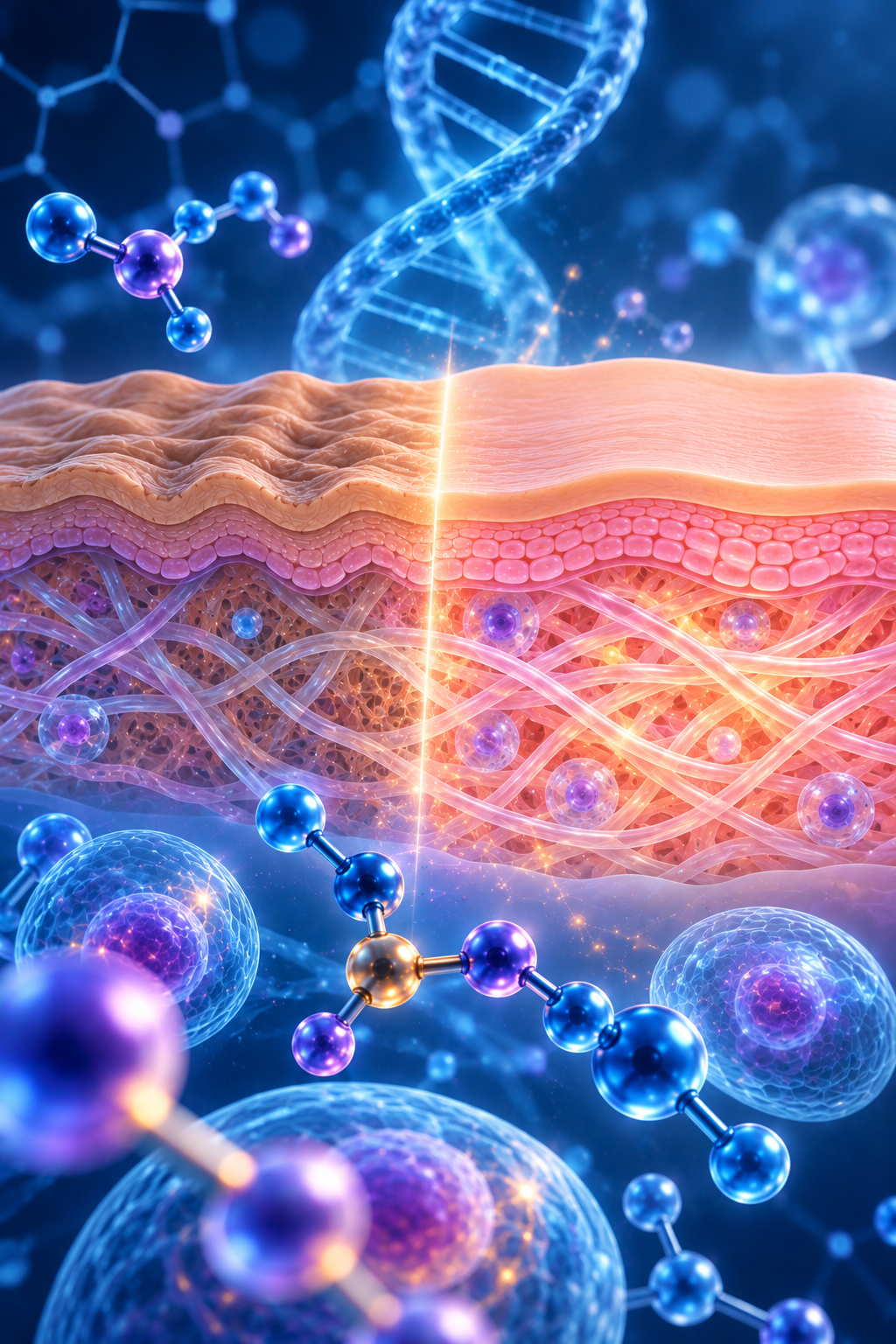
One of the most widely investigated properties of GHK-Cu is its potential influence on collagen synthesis, fibroblast activity, and extracellular matrix remodeling.
Collagen is a major structural protein that contributes to the strength, organization, and integrity of skin and connective tissues. Fibroblasts play an important role in producing collagen and other components of the extracellular matrix, including elastin-associated proteins and glycosaminoglycans.
Laboratory research has demonstrated that GHK-Cu can stimulate collagen synthesis in cultured fibroblasts under specific experimental conditions. Additional investigations suggest that copper peptides may influence extracellular matrix regulation and tissue remodeling.
Small human cosmetic studies involving copper peptide-containing formulations have also reported improvements in certain measurements of skin appearance, texture, and firmness. However, these findings depend on the formulation and study conditions and do not establish equivalent effects across all GHK-Cu products.
Research Significance: These findings suggest that GHK-Cu may influence biological pathways associated with collagen production, skin structure, and connective tissue maintenance. Further controlled human studies are necessary to determine the clinical relevance and reproducibility of these effects.
2. Tissue Repair and Wound-Healing Mechanisms
GHK-Cu has been investigated for its potential involvement in tissue repair, wound-associated cellular activity, and extracellular matrix remodeling.
Tissue repair is a complex biological process involving coordinated cellular migration, fibroblast activity, collagen production, and the remodeling of damaged extracellular structures.
Experimental studies have explored how GHK-Cu influences these processes, including its effects on structural protein synthesis and cellular responses associated with tissue repair.
Certain laboratory and animal investigations have reported changes in wound-related outcomes and tissue remodeling following exposure to GHK-Cu or related copper-peptide preparations.
These findings have contributed to scientific interest in copper-binding peptides as experimental tools for studying tissue regeneration and wound biology.
Research Significance: Preclinical findings suggest that GHK-Cu may influence biological mechanisms involved in tissue repair. However, laboratory and animal results do not establish its safety or effectiveness for treating wounds, injuries, or other medical conditions in humans.
3. Hair Follicle Biology and Hair Growth Research
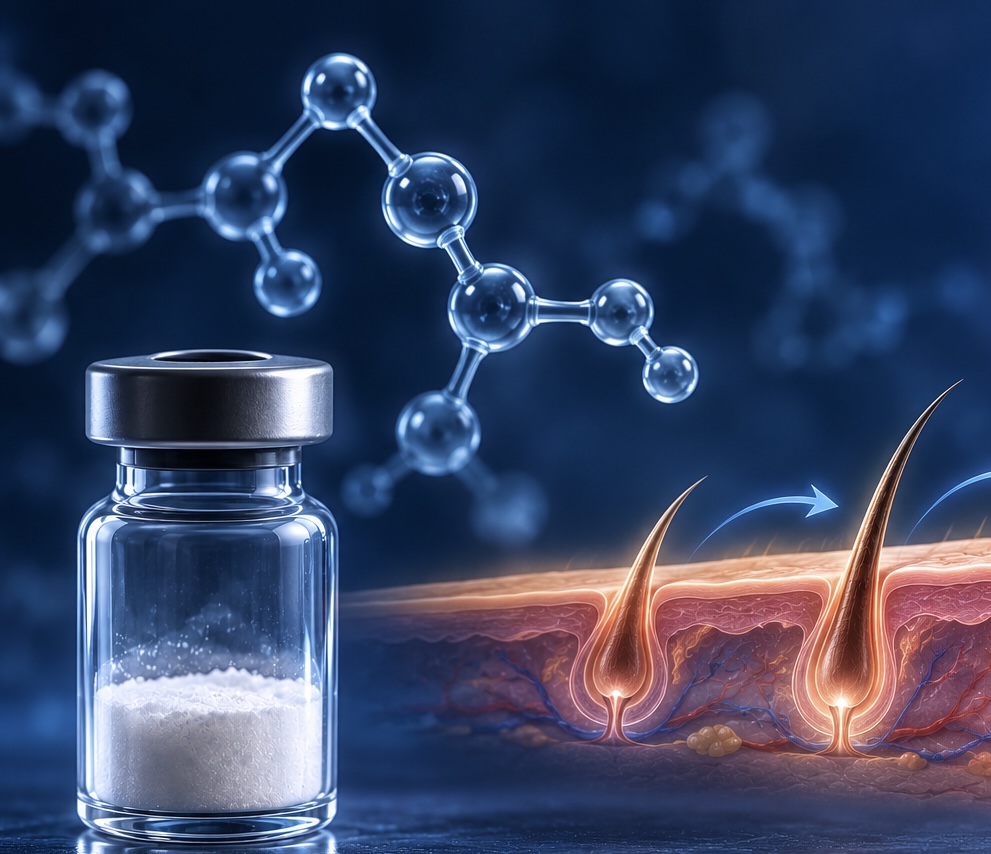
GHK-Cu has also attracted scientific interest for its potential interactions with hair follicle biology, cellular signaling, and hair growth-related mechanisms.
Hair follicles undergo a repeating biological cycle consisting of three primary phases: anagen (growth), catagen (transition), and telogen (rest). These phases are regulated by complex interactions between follicular cells, growth factors, and surrounding tissue structures.
Copper-binding peptides have been investigated for their potential influence on cellular processes relevant to hair follicle activity, including dermal papilla cell behavior and signaling associated with follicular growth.
However, an important distinction exists between different copper peptides. Some experimental findings involving hair follicle elongation and dermal papilla cell proliferation specifically concern AHK-Cu, a related but chemically distinct copper peptide. These findings should not automatically be attributed to GHK-Cu.
Although GHK-Cu has been investigated in skin and tissue biology, direct evidence demonstrating consistent scalp hair regrowth in humans remains limited.
Research Significance: GHK-Cu remains a subject of interest in hair-related peptide research because of its broader biological activity. Additional compound-specific studies and controlled human trials are needed to determine whether these mechanisms translate into measurable hair growth outcomes.
4. Antioxidant Activity and Cellular Protection Research
GHK-Cu has been investigated for its potential interactions with oxidative stress, antioxidant-related pathways, and cellular protection mechanisms.
Oxidative stress occurs when the production of reactive oxygen species exceeds the capacity of cellular antioxidant defense systems. Excessive oxidative stress can affect proteins, lipids, DNA, and other cellular components.
Copper is an essential trace element involved in several biological functions, including the activity of copper-zinc superoxide dismutase (Cu/Zn-SOD), an enzyme that helps regulate superoxide radicals.
Experimental research has explored whether GHK-Cu influences oxidative stress-related signaling and cellular responses associated with oxidative damage.
However, copper-containing compounds can exhibit different biological effects depending on concentration, chemical environment, and experimental conditions. Copper's role in antioxidant enzymes does not independently establish that GHK-Cu provides antioxidant protection in humans.
Research Significance: Laboratory findings suggest that GHK-Cu may interact with pathways associated with oxidative stress regulation. Further research is required to clarify the underlying mechanisms, effective experimental conditions, and relevance to human physiology.
5. Inflammatory Signaling and Tissue Homeostasis
Another area of GHK-Cu research involves its potential influence on inflammatory signaling, gene expression, and tissue homeostasis.
Inflammation is a normal biological response that helps coordinate tissue defense, cellular communication, and repair following injury or environmental stress.
However, inflammatory responses must be carefully regulated to maintain normal tissue function.
Experimental investigations involving GHK and GHK-Cu have explored their potential interactions with molecular pathways associated with inflammation, extracellular matrix regulation, and cellular repair.
Some gene expression studies have identified changes in biological pathways related to inflammatory regulation and tissue remodeling following exposure to GHK-related compounds.
These findings provide possible explanations for certain biological effects observed in experimental systems. However, changes in gene expression do not necessarily demonstrate meaningful anti-inflammatory outcomes in living organisms.
Research Significance: GHK-Cu may influence certain molecular pathways associated with inflammatory responses and tissue regulation. Additional mechanistic studies and controlled human research are needed to determine whether these experimental observations have clinically meaningful effects.
Research Methodology / Context
Scientific investigations of GHK-Cu (copper tripeptide-1) have used several experimental approaches to examine its biological activity, molecular interactions, and potential influence on cellular processes associated with skin biology, tissue remodeling, and repair.
These research methods help scientists investigate how copper-binding peptides interact with biological systems while identifying the limitations of current experimental findings.
Cell Culture Studies
Laboratory investigations have examined the effects of GHK-Cu on cultured cells, particularly fibroblasts, which play an important role in collagen synthesis and extracellular matrix maintenance.
Under controlled experimental conditions, researchers expose cells to specified concentrations of GHK-Cu and evaluate changes in cellular activity and biological responses.
Common research measurements include:
Collagen synthesis and extracellular matrix protein production.
Fibroblast activity, proliferation, and cellular migration.
Changes in gene expression and cellular signaling.
Production and regulation of extracellular matrix components.
These experiments provide insight into potential biological mechanisms but cannot fully reproduce the complexity of living tissues or establish clinical effectiveness in humans.
Animal Research Models
Preclinical investigations have examined GHK-Cu and related copper-peptide preparations in animal models involving wound healing, tissue remodeling, and cellular repair.
These studies allow researchers to evaluate biological responses within living systems, including interactions between different cell types and surrounding tissue structures.
Researchers may assess wound closure, collagen organization, tissue structure, and other indicators of repair-related activity.
Although animal studies can provide valuable information about biological mechanisms, differences between species, experimental conditions, and methods of administration limit the direct application of these findings to humans.
Human Cosmetic Research
A limited number of human cosmetic studies have investigated topical formulations containing GHK-Cu or other copper peptides for their potential effects on skin appearance and structural characteristics.
Depending on the study design, researchers may evaluate:
Skin texture and surface appearance.
Skin firmness and elasticity.
The appearance of fine lines and wrinkles.
Changes in selected skin-related measurements over time.
Some studies have reported favorable cosmetic outcomes. However, interpretation requires careful consideration of sample size, formulation composition, treatment duration, control groups, and measurement methods.
Importantly, findings involving topical cosmetic formulations do not establish the safety or effectiveness of injectable or systemic GHK-Cu applications.
Molecular and Gene Expression Research
Additional investigations have explored how GHK and GHK-Cu may influence gene expression and molecular pathways associated with tissue remodeling, oxidative stress, inflammatory signaling, and cellular regulation.
These studies may use gene expression profiling and other molecular analysis techniques to identify changes in cellular activity following experimental exposure.
Such findings help researchers generate hypotheses about possible mechanisms of action.
However, changes in gene expression do not necessarily correspond to measurable improvements in tissue function or clinical outcomes. Furthermore, findings involving GHK alone should not automatically be considered equivalent to those involving the copper-bound GHK-Cu complex.
Research Context and Interpretation
Together, these experimental approaches provide a foundation for understanding the biological activity of GHK-Cu.
Cell culture and molecular studies help identify potential mechanisms, while animal investigations and limited human cosmetic research provide additional information about biological responses under different conditions.
Nevertheless, larger, well-controlled human studies are necessary to determine which experimental findings are reproducible, clinically meaningful, and relevant to specific applications.
Current Research Limitations
Although experimental investigations have identified potentially significant biological activities associated with GHK-Cu (copper tripeptide-1), several important limitations remain in the current scientific literature.
Understanding these limitations is essential for accurately interpreting research findings and distinguishing laboratory observations from established clinical outcomes.
Limited Large-Scale Human Clinical Studies
Much of the available evidence surrounding GHK-Cu originates from cell culture experiments, animal models, and relatively small human cosmetic studies.
While these investigations provide valuable insight into biological mechanisms, large, independently replicated, well-controlled human clinical trials remain limited.
Additional research is needed to determine whether experimental findings translate into consistent, measurable outcomes in humans.
Differences in Peptide Formulations and Experimental Conditions
GHK, GHK-Cu, and other copper-binding peptides have distinct chemical properties and should not automatically be considered interchangeable.
Research outcomes may vary depending on peptide concentration, copper-binding characteristics, formulation stability, experimental conditions, and route of exposure.
Additionally, finished cosmetic formulations may contain other active ingredients that influence observed results, making it difficult to isolate the specific contribution of GHK-Cu.
Standardized research protocols are necessary to improve the reliability and comparability of findings across studies.
Uncertain Long-Term Safety and Exposure Effects
Although copper is an essential trace element involved in normal biological processes, excessive copper exposure or altered copper regulation can produce adverse biological effects.
The long-term safety profile of GHK-Cu remains insufficiently characterized for many exposure routes, particularly injectable and systemic administration.
Additional toxicological and pharmacokinetic research is needed to better understand its absorption, distribution, metabolism, elimination, and potential effects under different experimental conditions.
Limited Clinical Evidence for Hair Growth and Tissue Repair
Laboratory investigations have explored copper peptides in relation to hair follicle activity, collagen synthesis, and tissue remodeling.
However, findings involving related peptides, such as AHK-Cu, cannot automatically be attributed to GHK-Cu.
Current evidence does not establish GHK-Cu as an effective treatment for human hair loss, wound healing, or tissue injuries.
Larger, compound-specific clinical investigations are necessary to determine whether the observed biological mechanisms translate into meaningful human outcomes.
Need for Standardized and Reproducible Research
Future GHK-Cu investigations would benefit from improved standardization of research materials, experimental methods, and outcome measurements.
Important considerations include peptide identity, purity, copper-complex characterization, material stability, and consistency between experimental batches.
Independent replication and clearly documented analytical methods can help researchers evaluate the reliability of reported findings.
Research Significance: Addressing these limitations will help establish a more comprehensive understanding of GHK-Cu's biological activity, safety characteristics, and potential research applications.
Discussion
GHK-Cu (copper tripeptide-1) continues to attract scientific interest because of its potential interactions with copper-dependent biological processes, extracellular matrix regulation, and cellular signaling pathways.
Experimental investigations suggest that GHK-Cu may influence several biological mechanisms, including collagen synthesis, fibroblast activity, tissue remodeling, oxidative stress-related responses, and inflammatory signaling.
Among these research areas, skin biology and extracellular matrix remodeling have received substantial scientific attention, supported by laboratory investigations examining collagen production and connective tissue-associated cellular activity.
Research involving hair follicle biology and broader tissue regeneration remains an area of ongoing investigation. However, the available evidence is insufficient to establish consistent clinical benefits for hair growth, wound healing, or other therapeutic applications in humans.
An important consideration in interpreting GHK-Cu research is the distinction between measurable biological activity under controlled experimental conditions and demonstrated clinical effectiveness.
Future studies may help clarify the peptide's molecular mechanisms, formulation-dependent effects, long-term safety characteristics, and reproducibility across different experimental models.
For researchers, GHK-Cu represents a valuable subject for investigating the relationship between copper-binding peptides, cellular regulation, and the biological processes involved in tissue maintenance and remodeling.
Regulatory and Safety Considerations
GHK-Cu is not FDA-approved as an injectable treatment for skin rejuvenation, hair loss, wound healing, or other medical conditions.
Although copper peptides have been investigated in topical cosmetic formulations, findings involving cosmetic applications should not be interpreted as evidence of safety or effectiveness for injectable, systemic, or other medical uses.
The biological effects and potential safety considerations associated with GHK-Cu may vary depending on peptide concentration, copper content, formulation characteristics, route of exposure, and experimental conditions.
Additionally, comprehensive long-term human safety data remain limited, particularly for systemic administration. Available scientific evidence does not establish validated human dosing protocols or an adequately characterized safety profile for investigational GHK-Cu administration.
Researchers should also distinguish between experimental peptide materials and products specifically evaluated or authorized for clinical use. Analytical purity and identity testing, while important for laboratory research, do not independently establish that a material is safe for human administration.
Research findings involving GHK-Cu should not be interpreted as medical advice, treatment recommendations, or evidence of established therapeutic effectiveness.
Research Use Only Disclaimer
All GHK-Cu materials offered by Peptide Purity USA are intended strictly for laboratory research purposes.
Not for human or veterinary consumption. Not intended for injection, diagnostic procedures, or therapeutic applications.
Conclusion
GHK-Cu (copper tripeptide-1) remains an important subject of scientific investigation due to its potential involvement in collagen synthesis, skin biology, tissue remodeling, and cellular signaling.
Laboratory and preclinical studies have demonstrated that GHK-Cu can influence biological processes associated with extracellular matrix regulation, fibroblast activity, and tissue maintenance. Additional research has explored its potential interactions with hair follicle biology, oxidative stress responses, and inflammatory signaling.
While these findings provide valuable insight into the biological activity of copper-binding peptides, current evidence remains insufficient to establish consistent clinical benefits or long-term safety across different applications. Further well-controlled human studies are necessary to clarify the significance of these experimental observations.
Continued research using standardized materials, reliable analytical methods, and reproducible experimental conditions will be essential for advancing the scientific understanding of GHK-Cu.
At Peptide Purity USA, we emphasize research material quality, analytical transparency, and responsible laboratory practices to support reliable scientific investigation.
Research Use Only: All peptides offered by Peptide Purity USA are intended strictly for laboratory research purposes. Not for human or veterinary consumption. Not intended for injection, diagnostic procedures, or therapeutic applications.
References
- Pickart L. The human tri-peptide GHK and tissue remodeling. Journal of Biomaterials Science, Polymer Edition. 2008;19(8):969–988.
- Pickart L, Margolina A. Regenerative and protective actions of the GHK-Cu peptide in the light of the new gene data. International Journal of Molecular Sciences. 2018;19(7):1987. DOI: 10.3390/ijms19071987.
- Maquart FX, Pickart L, Laurent M, Gillery P, Monboisse JC, Borel JP. Stimulation of collagen synthesis in fibroblast cultures by the tripeptide-copper complex glycyl-L-histidyl-L-lysine-Cu²⁺. FEBS Letters. 1988;238(2):343–346.
- Pickart L, Vasquez-Soltero JM, Margolina A. GHK peptide as a natural modulator of multiple cellular pathways in skin regeneration. BioMed Research International. 2015;2015:648108. DOI: 10.1155/2015/648108.
- Pickart L, Margolina A. GHK-Cu may prevent oxidative stress in skin by regulating copper and iron levels and stimulating antioxidant systems. Discussed in International Journal of Molecular Sciences. 2018;19(7):1987.