Introduction
Copper-binding peptides have attracted growing scientific interest because of their potential roles in cellular signaling, tissue remodeling, and skin and hair follicle biology.
Among these compounds, GHK-Cu and AHK-Cu are two structurally similar tripeptide-copper complexes investigated for their interactions with biological processes associated with tissue maintenance and repair.
GHK-Cu (glycyl-L-histidyl-L-lysine copper complex) has been studied extensively in laboratory research involving collagen production, extracellular matrix remodeling, wound-associated biological processes, and skin aging.
AHK-Cu (L-alanyl-L-histidyl-L-lysine copper complex) has received considerably less scientific attention, with research focusing primarily on hair follicle activity, dermal papilla cell proliferation, and cellular signaling associated with hair growth.
Despite their similarities, GHK-Cu and AHK-Cu differ in molecular structure, research history, and the biological processes most extensively investigated.
These differences raise an important scientific question: Do these closely related copper-binding peptides produce similar biological effects, or does their molecular composition influence how they interact with cells and tissues?
Although experimental findings suggest potential biological activity for both compounds, their clinical significance remains uncertain, particularly for AHK-Cu.
This article compares the molecular structures, proposed mechanisms of action, laboratory findings, and current research limitations of GHK-Cu and AHK-Cu to provide a clearer understanding of what scientific evidence currently supports.
Research Background
Understanding Copper-Binding Peptides
Copper-binding peptides are short chains of amino acids capable of forming complexes with copper ions, which play important roles in numerous biological processes.
Copper is an essential trace element involved in enzyme activity, connective tissue formation, antioxidant defense, and cellular metabolism. Its biological functions depend on carefully regulated transport, availability, and interactions with proteins and other molecules.
Certain peptides can bind copper ions, forming molecular complexes that may influence their chemical properties and interactions with biological systems.
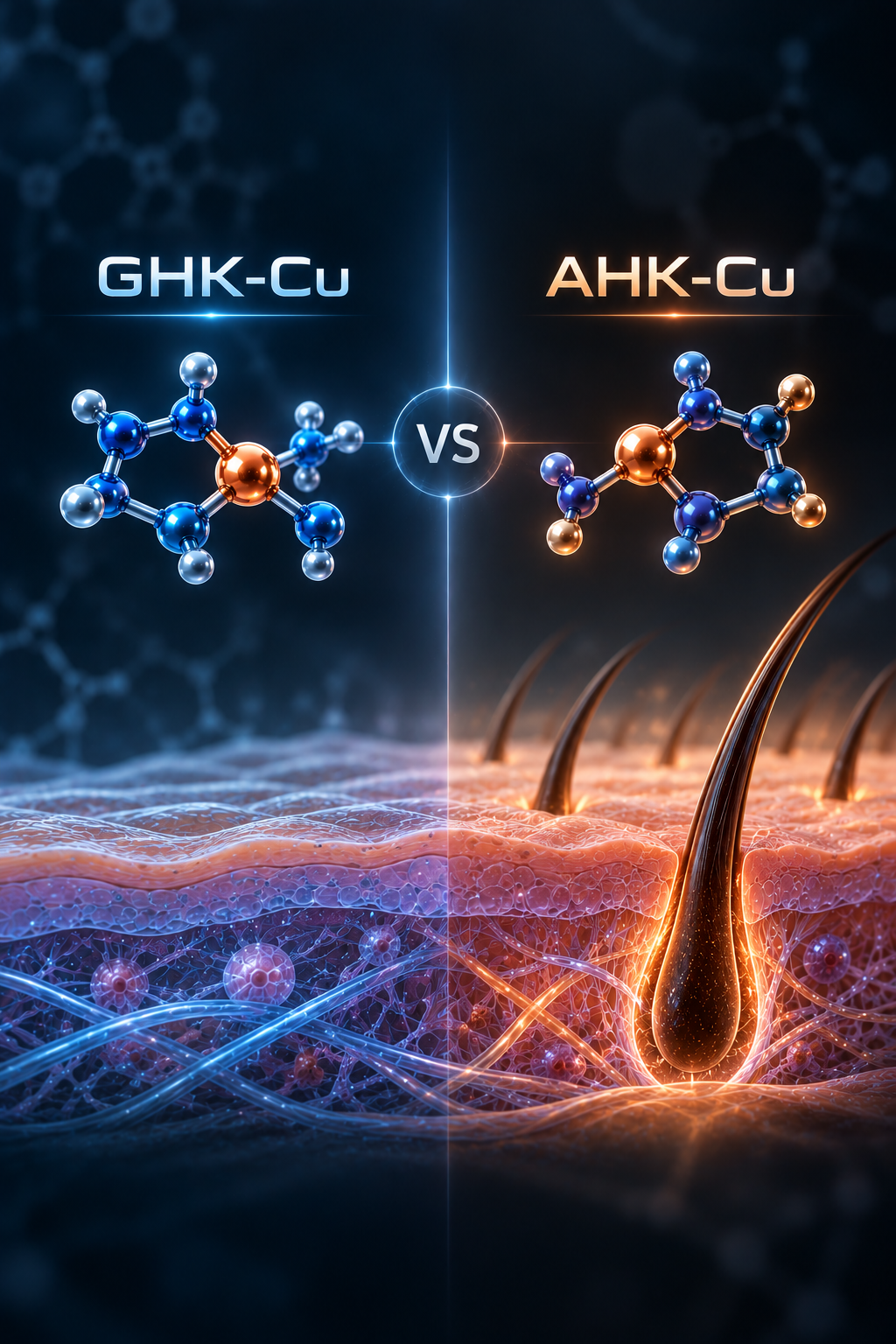
Among these compounds, GHK-Cu and AHK-Cu share a similar three-amino-acid structure but differ in their first amino acid.
GHK contains glycine, histidine, and lysine, while AHK contains alanine, histidine, and lysine.
Although this difference appears minor, changes in amino acid composition can influence molecular structure, copper coordination, and biological interactions.
Understanding these structural differences provides a foundation for examining why the two compounds have attracted scientific interest in different areas of research.
GHK-Cu: Structure and Scientific Background
GHK-Cu is a copper-binding complex formed from the naturally occurring tripeptide glycyl-L-histidyl-L-lysine (GHK) and a copper ion.
GHK was originally identified in human plasma and has subsequently been investigated for its potential involvement in cellular signaling, tissue maintenance, and repair-associated biological processes.
Scientific investigations have explored GHK-Cu in relation to collagen synthesis, extracellular matrix remodeling, fibroblast activity, and skin aging.
Researchers have also examined its interactions with gene expression, oxidative stress responses, and inflammatory signaling pathways.
These investigations suggest that GHK-Cu may influence multiple biological processes associated with cellular maintenance and tissue organization.
GHK-Cu has a relatively extensive scientific research history, particularly in skin biology, connective tissue regulation, and extracellular matrix remodeling.
However, much of the available evidence comes from laboratory and preclinical investigations, and the clinical significance of these findings remains dependent on the specific application being studied.
AHK-Cu: Structure and Scientific Background
AHK-Cu is a copper-binding complex formed from the tripeptide L-alanyl-L-histidyl-L-lysine (AHK) and a copper ion.
Its molecular structure closely resembles GHK-Cu, with alanine replacing glycine at the first amino acid position.
Despite this similarity, AHK-Cu is a chemically distinct compound, and its biological effects cannot automatically be assumed to match those of GHK-Cu.
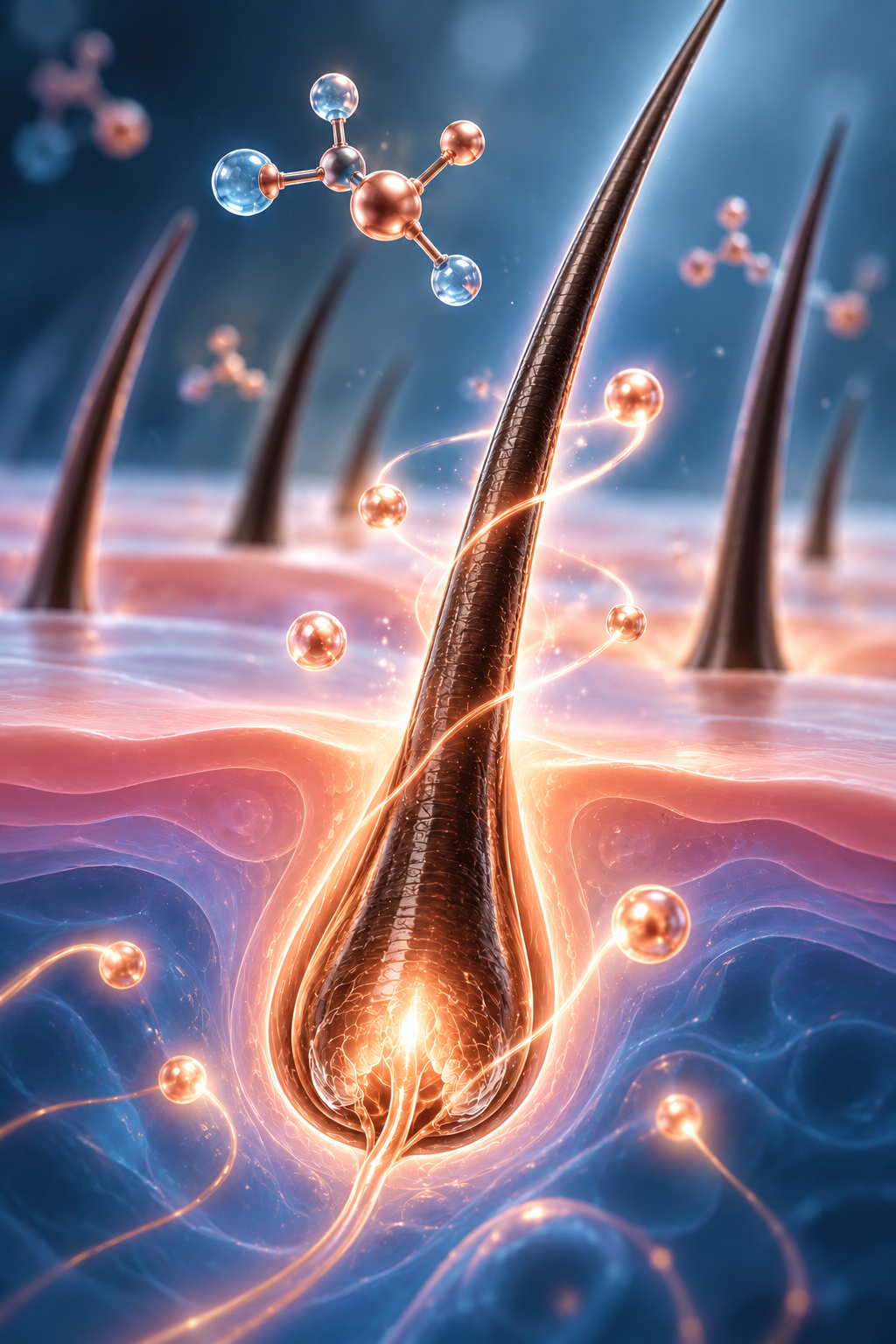
Scientific investigations involving AHK-Cu have focused primarily on hair follicle biology, particularly its interactions with human dermal papilla cells.
Dermal papilla cells are specialized cells located at the base of hair follicles that help regulate follicle development, growth-cycle activity, and communication with surrounding tissues.
Laboratory research has reported that AHK-Cu can influence hair follicle elongation, dermal papilla cell proliferation, and selected signaling pathways associated with cellular survival.
These findings have contributed to scientific interest in AHK-Cu as a subject of hair follicle research.
However, AHK-Cu has a substantially smaller published evidence base than GHK-Cu, and its reported biological effects remain supported primarily by laboratory observations.
Controlled human clinical evidence has not established that AHK-Cu effectively treats hair loss or promotes hair regrowth.
Why Researchers Compare GHK-Cu and AHK-Cu
The structural similarities between GHK-Cu and AHK-Cu make them relevant subjects for comparative peptide research.
Both compounds contain histidine and lysine residues and can form complexes with copper ions, but their differing amino acid composition may influence molecular interactions and biological activity.
The available scientific literature also reflects different research priorities.
GHK-Cu has been investigated more extensively in skin biology, collagen-associated processes, and tissue remodeling, while AHK-Cu has received more focused attention in laboratory studies involving hair follicles and dermal papilla cells.
However, these differences in research focus do not establish that either compound is biologically superior or limited to a particular tissue.
The existing evidence also does not determine which peptide is more effective for hair growth, skin regeneration, or other proposed applications.
Direct comparative investigations using standardized experimental conditions would be necessary to determine whether their structural differences produce meaningful differences in biological activity.
Together, these findings establish the scientific background for examining the mechanisms and experimental results associated with each copper-binding peptide.
Main Research Findings
GHK-Cu and Collagen-Related Research
GHK-Cu has been investigated for its interactions with collagen synthesis, extracellular matrix regulation, and cellular processes associated with skin structure and connective tissue maintenance.
Collagen is a major structural protein found in skin, tendons, ligaments, and other connective tissues. Its production and remodeling are essential for maintaining tissue integrity and organization.
Laboratory investigations have reported that GHK-Cu can influence fibroblast activity and the production of extracellular matrix components, including collagen and certain glycosaminoglycans.
Researchers have also observed changes in enzymes involved in extracellular matrix remodeling, suggesting that GHK-Cu may influence both the formation and breakdown of structural tissue components.
These findings have contributed to scientific interest in GHK-Cu for skin aging, connective tissue biology, and tissue-remodeling research.
Some small human studies involving topical copper-peptide formulations have reported improvements in selected skin measurements, including firmness, texture, and wrinkle appearance.
However, differences in formulation, study design, and sample size limit the conclusions that can be drawn from these observations.
GHK-Cu has a stronger foundation of experimental evidence for collagen-associated activity and skin biology than AHK-Cu, although additional controlled human investigations are needed to establish the clinical significance of these findings.
AHK-Cu and Hair Follicle Research
AHK-Cu has attracted scientific interest primarily through laboratory investigations involving human hair follicles and dermal papilla cells.
Dermal papilla cells play an important role in regulating hair follicle development, growth-cycle activity, and communication with surrounding tissues.
In a 2007 study published in Archives of Pharmacal Research, researchers investigated the effects of AHK-Cu on isolated human hair follicles and cultured dermal papilla cells.
The investigators reported that AHK-Cu stimulated hair follicle elongation in an ex vivo experimental model and increased dermal papilla cell proliferation under controlled laboratory conditions.
These observations suggest that AHK-Cu may influence cellular processes associated with hair follicle growth and maintenance.
The study also examined molecular markers associated with apoptosis, a regulated process of programmed cell death.
Researchers reported an increased Bcl-2/Bax ratio and reduced cleavage of caspase-3 and PARP, findings consistent with changes in selected cellular survival-related signaling pathways.
Although the proportion of apoptotic cells decreased, that particular measurement did not reach statistical significance.
These results suggest potential interactions between AHK-Cu and cellular proliferation or survival mechanisms, but they do not establish a clinically meaningful hair-growth effect.
The available findings support continued investigation of AHK-Cu in hair follicle biology, but do not demonstrate that the compound effectively prevents hair loss or restores hair growth in humans.
GHK-Cu and Hair Growth Research
Although GHK-Cu is most extensively studied for skin biology and tissue remodeling, researchers have also explored its potential relationship with hair follicle activity.
Hair follicles depend on coordinated interactions between epithelial cells, dermal papilla cells, extracellular matrix components, and local signaling molecules.
Experimental investigations involving GHK and GHK-Cu have identified biological activities that may be relevant to this environment, including effects on fibroblast function, extracellular matrix regulation, and selected growth-factor-associated pathways.
Published scientific reviews have also discussed experimental observations involving hair follicle enlargement and other hair-associated tissue responses.
However, the evidence directly demonstrating improved human scalp hair growth following GHK-Cu exposure remains limited.
It is also important to distinguish findings involving the unbound GHK peptide from those involving its copper-bound complex, as these are not necessarily biologically interchangeable.
GHK-Cu has a broader foundation of tissue-remodeling research, while AHK-Cu has a directly relevant laboratory investigation involving isolated human hair follicle elongation.
Neither body of evidence establishes that one compound is clinically superior for hair growth.
Skin Regeneration and Tissue Remodeling
GHK-Cu has been investigated for its potential involvement in several biological processes associated with tissue maintenance and repair.
Experimental studies have reported changes in fibroblast activity, collagen-related signaling, extracellular matrix organization, and selected inflammatory pathways.
Animal investigations involving wound-related models have also reported changes in tissue organization, collagen deposition, and other healing-associated measurements under specific experimental conditions.
These observations suggest that GHK-Cu may influence multiple biological processes involved in tissue remodeling rather than acting through a single mechanism.
In contrast, published AHK-Cu research has focused more narrowly on hair follicle activity and cultured cell behavior.
Although AHK-Cu shares structural similarities with GHK-Cu, there is insufficient evidence to conclude that it produces comparable effects on collagen synthesis, wound-associated processes, or skin regeneration.
This distinction is important because small differences in peptide structure can influence molecular interactions and biological responses.
GHK-Cu currently has substantially more published research involving skin and connective tissue biology, while the potential tissue-remodeling activity of AHK-Cu remains less clearly characterized.
Cellular Signaling and Potential Mechanisms
The biological activities of GHK-Cu and AHK-Cu may involve interactions with cellular signaling pathways associated with tissue maintenance, proliferation, and extracellular matrix regulation.
GHK-Cu research has identified potential effects on fibroblast behavior, collagen-associated processes, inflammatory signaling, and selected growth-factor-related pathways.
Some investigations have also reported changes in gene-expression patterns associated with tissue remodeling and cellular maintenance.
AHK-Cu research has emphasized dermal papilla cell proliferation and molecular markers associated with programmed cell death.
These findings suggest that the two compounds may influence some related biological processes, although their specific mechanisms and relative activities remain incompletely understood.
Importantly, structural similarity does not establish that GHK-Cu and AHK-Cu activate identical signaling pathways or produce equivalent biological effects.
Further investigation is necessary to clarify how differences in amino acid composition, copper coordination, cellular interactions, and experimental conditions influence their observed activities.
GHK-Cu vs. AHK-Cu: Which Has Stronger Scientific Evidence?
The scientific evidence surrounding GHK-Cu and AHK-Cu differs considerably in quantity, scope, and experimental context.
GHK-Cu has been investigated across a broader range of biological processes, including collagen synthesis, extracellular matrix remodeling, skin aging, and wound-associated tissue responses.
Its research includes laboratory experiments, animal investigations, and limited human studies involving topical formulations.
AHK-Cu has a smaller and more specialized evidence base, with a notable laboratory investigation demonstrating effects on isolated human hair follicles and cultured dermal papilla cells.
For skin biology and collagen-associated research, GHK-Cu has stronger supporting evidence because these processes have been examined in a greater number of experimental investigations.
For hair follicle research, AHK-Cu has demonstrated directly relevant laboratory activity, but the available findings are insufficient to establish clinical effectiveness or superiority over GHK-Cu.
Importantly, a larger number of studies does not necessarily indicate greater biological potency or effectiveness.
No established body of direct comparative clinical evidence demonstrates that either peptide is superior for hair growth, skin regeneration, or other proposed applications.
Overall, GHK-Cu remains the more extensively studied copper-binding peptide, while AHK-Cu represents a narrower but scientifically relevant area of hair follicle investigation.
Further well-controlled research is necessary to determine whether their molecular differences produce meaningful differences in biological activity and clinical outcomes.
Research Methodology / Context
Laboratory Research Involving GHK-Cu
Scientific investigations involving GHK-Cu have used several experimental approaches to examine its biological activity and interactions with cellular processes.
A common method involves in vitro cell culture studies, where isolated cells are exposed to controlled concentrations of the peptide-copper complex.
These investigations frequently involve fibroblasts, specialized connective tissue cells responsible for producing collagen and other extracellular matrix components.
Researchers evaluate changes in cellular proliferation, collagen synthesis, gene expression, and enzymes associated with tissue remodeling.
Other experimental models have examined keratinocytes, endothelial cells, and additional cell populations involved in skin biology and tissue maintenance.
These approaches allow researchers to investigate specific molecular interactions while controlling variables such as peptide concentration, exposure duration, and environmental conditions.
However, isolated cell cultures cannot fully reproduce the complex interactions between tissues, signaling molecules, and physiological systems found in living organisms.
Animal Models and Tissue Remodeling Studies
GHK-Cu has also been investigated in animal models designed to examine wound-associated biological processes and tissue remodeling.
Unlike isolated cell cultures, animal models allow researchers to evaluate interactions between multiple cell types, extracellular matrix components, and physiological signaling pathways within living biological systems.
Experimental measurements may include wound closure, collagen organization, blood vessel formation, and changes in selected inflammatory or antioxidant markers.
These investigations provide additional context for understanding how GHK-Cu may interact with tissue-associated biological processes.
However, differences in skin structure, metabolism, immune responses, and tissue repair mechanisms can influence how findings translate between species.
Consequently, results observed in animal models cannot automatically establish equivalent biological effects or clinical effectiveness in humans.
Laboratory Research Involving AHK-Cu
Research involving AHK-Cu has used more specialized experimental approaches focused primarily on hair follicle biology.
A notable investigation published in 2007 examined AHK-Cu using isolated human hair follicles and cultured dermal papilla cells.
The researchers employed an ex vivo hair follicle model, in which follicles obtained from human tissue were maintained outside the body under controlled laboratory conditions.
This method allows investigators to measure hair shaft elongation while preserving some of the structural organization and cellular interactions of the follicle.
The study also used cultured human dermal papilla cells to evaluate cellular proliferation and molecular markers associated with apoptosis, or programmed cell death.
Researchers examined proteins including Bcl-2, Bax, caspase-3, and PARP to investigate potential interactions with cellular survival-related signaling.
These experimental methods provide useful information about AHK-Cu activity in hair follicle-associated biological systems.
However, isolated follicles and cultured cells do not fully reproduce the hormonal, vascular, immune, and metabolic conditions present in the human scalp.
Therefore, hair follicle elongation observed under laboratory conditions cannot establish that AHK-Cu increases hair density or reverses hair loss in living humans.
Human Clinical Research and Evidence Quality
Human clinical investigations are essential for determining whether biological effects observed in laboratory and animal studies translate into meaningful outcomes.
GHK-Cu has been evaluated in a limited number of human investigations, primarily involving topical cosmetic formulations and measurements associated with skin appearance.
These studies have examined outcomes such as skin texture, firmness, and wrinkle appearance.
However, differences in sample size, study duration, formulation, and measurement methods can affect the reliability and interpretation of reported findings.
Some formulations also contain additional ingredients, making it difficult to isolate the specific contribution of GHK-Cu.
For AHK-Cu, published human clinical evidence remains considerably more limited.
Although laboratory investigations have used isolated human hair follicles, these experiments do not constitute clinical trials demonstrating hair regrowth in living participants.
Current controlled human evidence is insufficient to establish the clinical effectiveness of AHK-Cu for hair loss or determine whether it performs better than GHK-Cu.
Important Variables in Copper Peptide Research
Several experimental factors can influence findings involving copper-binding peptides.
These include peptide identity, copper-binding characteristics, material purity, concentration, formulation, exposure duration, and the biological model being investigated.
An important distinction is whether researchers are examining the unbound peptide or its copper-bound complex.
For example, findings involving GHK alone should not automatically be attributed to GHK-Cu, because copper complexation can influence molecular properties and biological interactions.
Similarly, findings involving GHK-Cu cannot be assumed to apply directly to AHK-Cu.
Differences in formulation and delivery methods may also affect peptide stability, tissue exposure, and the interpretation of experimental results.
For these reasons, standardized material characterization, appropriate experimental controls, and reproducible testing methods are essential for reliable copper peptide research.
Why Direct Comparative Studies Matter
Although GHK-Cu and AHK-Cu share structural similarities, most published investigations have examined them independently.
GHK-Cu studies have frequently focused on fibroblast activity, extracellular matrix regulation, and skin-associated biological processes.
AHK-Cu investigations have emphasized isolated hair follicles, dermal papilla cells, and cellular survival-related signaling.
Because these studies often use different experimental systems, concentrations, and outcome measurements, their findings cannot be directly compared to determine which compound is more effective.
A meaningful comparison would require both peptides to be investigated under equivalent experimental conditions, using standardized methods and clearly defined biological endpoints.
Such investigations could help determine whether differences in amino acid composition influence copper interactions, cellular signaling, hair follicle activity, or tissue-remodeling processes.
Until more direct comparative evidence becomes available, GHK-Cu and AHK-Cu should be evaluated as distinct research compounds with different levels and areas of scientific investigation.
Current Research Limitations
Limited Human Clinical Evidence
One of the most significant limitations in research involving GHK-Cu and AHK-Cu is the lack of extensive, high-quality human clinical evidence.
Although GHK-Cu has been investigated through laboratory experiments, animal models, and selected human studies, much of the available evidence remains preclinical.
Some human investigations involving topical copper-peptide formulations have reported improvements in skin-related measurements, while others have produced mixed or inconclusive findings.
Differences in study design, formulation, sample size, and observation periods make it difficult to establish consistent clinical outcomes.
For AHK-Cu, the evidence is considerably more limited.
Published laboratory investigations have reported changes in isolated human hair follicle elongation and dermal papilla cell activity, but these findings have not been established through large, well-controlled human clinical trials.
Neither GHK-Cu nor AHK-Cu currently has sufficient clinical evidence to establish reliable effectiveness for treating hair loss or promoting tissue regeneration in humans.
Differences Between Laboratory Findings and Human Outcomes
Laboratory models provide valuable information about molecular mechanisms and cellular responses, but they cannot fully reproduce the complexity of living biological systems.
Human hair growth is influenced by numerous interacting factors, including genetics, hormones, immune activity, vascular function, and the natural hair growth cycle.
A compound that stimulates follicle-associated cellular activity under controlled laboratory conditions may not produce equivalent effects in the human scalp.
Similarly, increased collagen synthesis in cultured fibroblasts does not necessarily establish improvements in skin firmness, wrinkle appearance, or tissue repair in humans.
These distinctions are particularly important when interpreting research involving copper-binding peptides.
Biological activity observed in experimental models should not be confused with demonstrated clinical effectiveness.
Lack of Direct Comparative Studies
Another important limitation is the absence of sufficient direct comparative research examining GHK-Cu and AHK-Cu under equivalent experimental conditions.
Although both compounds share structural similarities and copper-binding characteristics, most published investigations have studied them independently.
GHK-Cu research has emphasized collagen-associated processes, extracellular matrix remodeling, and skin biology, while AHK-Cu investigations have focused primarily on hair follicle activity and dermal papilla cells.
Because these studies frequently involve different experimental models, concentrations, and outcome measurements, their results cannot reliably establish which compound is more biologically active or effective.
For example, increased hair follicle elongation following AHK-Cu exposure does not demonstrate superiority over GHK-Cu.
Likewise, the larger body of GHK-Cu research does not establish greater biological potency in every experimental setting.
Direct comparative investigations are necessary to determine whether their molecular differences produce meaningful differences in biological activity.
Uncertainty Surrounding Experimental Conditions
The biological activity of copper-binding peptides may be influenced by several experimental variables.
These include peptide concentration, copper-binding state, exposure duration, formulation, material stability, and the biological system being investigated.
Differences in these conditions can affect cellular responses and complicate comparisons between studies.
The distinction between unbound peptides and their copper-bound complexes is particularly important because copper coordination may influence molecular properties and biological interactions.
Additionally, the stability and biological availability of peptide-copper complexes may vary depending on environmental conditions and formulation characteristics.
Further research is needed to identify which experimental variables most strongly influence observed biological activity and to establish standardized methods for evaluating these compounds.
Long-Term Safety and Biological Effects
The long-term safety profiles of GHK-Cu and AHK-Cu remain incompletely characterized, particularly for systemic exposure and non-topical routes of administration.
Although copper is an essential trace element, its biological activity depends on carefully regulated concentrations and interactions with cellular proteins.
Excessive or improperly regulated copper exposure can contribute to oxidative stress and cellular dysfunction.
However, the risks associated with free copper or excessive copper exposure cannot automatically be assumed to be identical to those of a specific copper-peptide complex.
Potential safety considerations include concentration, formulation, route of exposure, impurities, immune responses, and interactions with endogenous copper-regulation pathways.
GHK-Cu has received greater scientific attention than AHK-Cu, but additional controlled investigations are necessary to clarify its long-term safety under different exposure conditions.
For AHK-Cu, the smaller evidence base creates additional uncertainty regarding its broader biological effects and toxicological profile.
The absence of extensive adverse-effect reports should not be interpreted as evidence of established safety when controlled human exposure data remain limited.
Limitations in Research Quality and Reproducibility
The available scientific literature also contains methodological limitations that can affect the reliability of reported findings.
Some investigations involve small sample sizes, limited experimental replication, short observation periods, or insufficiently characterized peptide formulations.
Differences in analytical methods and biological outcome measurements may further complicate comparisons across studies.
Additionally, positive experimental findings may receive greater attention than investigations reporting limited or no measurable effects, creating the possibility of publication bias.
Independent replication, transparent reporting, and standardized experimental procedures are therefore essential for strengthening the evidence base.
Future investigations would benefit from clearly defined biological endpoints, appropriate control groups, reproducible analytical methods, and adequately powered study designs.
For human research, larger participant populations and longer observation periods would provide more reliable information about potential biological effects and safety.
Areas Requiring Further Investigation
Several important questions remain unanswered regarding GHK-Cu and AHK-Cu.
Researchers have not yet established whether their structural differences produce consistent changes in copper interactions, cellular signaling, or tissue-specific biological activity.
The relative effects of the two compounds on human hair follicles also remain uncertain.
Additional investigations are needed to determine whether laboratory findings involving dermal papilla cells translate into measurable changes in hair density, follicle cycling, or other clinically relevant outcomes.
For GHK-Cu, further controlled studies could help clarify the relationship between experimentally observed collagen-associated activity and meaningful changes in human skin or tissue repair.
For AHK-Cu, independent replication of existing hair follicle findings, broader mechanistic investigations, and additional toxicological research would be particularly valuable.
Ultimately, the current evidence supports continued scientific investigation of both copper-binding peptides, but does not establish that either compound is clinically superior or reliably effective for hair restoration, skin regeneration, or other proposed therapeutic applications.
Discussion
Understanding the Differences Between GHK-Cu and AHK-Cu
GHK-Cu and AHK-Cu are structurally related copper-binding peptides that have attracted scientific interest for their potential interactions with cellular signaling, tissue maintenance, and hair follicle biology.
Although both compounds share a similar tripeptide structure, their available research differs considerably in scope and depth.
GHK-Cu has a broader scientific foundation, with investigations examining collagen-associated activity, extracellular matrix remodeling, fibroblast function, and skin-related biological processes.
AHK-Cu has received more specialized scientific attention, particularly through laboratory investigations involving human hair follicles and dermal papilla cells.
These differences reflect the areas in which each compound has been investigated rather than establishing that either peptide is biologically superior.
Importantly, their structural similarities do not guarantee identical molecular interactions or biological effects.
Which Peptide Has More Relevant Hair Growth Research?
Hair follicle biology is an area of scientific interest for both compounds, although their supporting evidence differs.
AHK-Cu has demonstrated activity in laboratory experiments involving isolated human hair follicles and cultured dermal papilla cells.
These findings suggest potential interactions with cellular proliferation and survival-related signaling pathways associated with hair follicle function.
However, the available evidence does not establish that AHK-Cu increases hair density, prevents hair loss, or restores hair growth in living humans.
GHK-Cu has a broader research history involving tissue remodeling and cellular signaling, including biological processes potentially relevant to hair follicle maintenance.
Nevertheless, direct clinical evidence demonstrating improved human scalp hair growth from GHK-Cu remains limited.
Current scientific evidence does not establish which peptide is more effective for hair growth.
Well-controlled comparative investigations would be necessary to determine whether either compound produces meaningful differences in hair follicle activity or clinically relevant outcomes.
Which Peptide Has Stronger Skin and Collagen Research?
For skin biology and collagen-associated processes, GHK-Cu has a more extensive scientific foundation.
Laboratory investigations have identified potential roles in fibroblast activity, extracellular matrix regulation, and selected tissue-remodeling pathways.
Limited human studies involving topical copper-peptide formulations have also reported changes in certain skin-related measurements, although findings have varied across investigations.
AHK-Cu has not been studied to the same extent in these areas.
While its structural similarity to GHK-Cu provides a scientific basis for further investigation, this similarity does not establish comparable effects on collagen synthesis or skin regeneration.
GHK-Cu currently has stronger supporting evidence for skin and extracellular matrix biology, while AHK-Cu remains less extensively characterized outside hair follicle research.
Interpreting the Scientific Evidence
The comparison between GHK-Cu and AHK-Cu illustrates an important principle in peptide research: biological activity observed in controlled experiments does not necessarily translate into clinically meaningful outcomes.
Laboratory investigations can identify molecular interactions, cellular responses, and potential mechanisms of action.
However, establishing clinical effectiveness requires reproducible findings, appropriate experimental controls, and well-designed human studies.
The broader research history of GHK-Cu provides a stronger foundation for understanding its biological activity, but does not eliminate uncertainty regarding clinical outcomes.
Similarly, AHK-Cu's laboratory findings involving human hair follicles support continued investigation without establishing therapeutic effectiveness.
Future research should prioritize direct comparative studies, standardized peptide characterization, independent replication, and clinically relevant outcome measurements.
These approaches may help clarify whether the structural differences between GHK-Cu and AHK-Cu produce meaningful differences in biological activity.
Regulatory and Safety Considerations
GHK-Cu and AHK-Cu are not FDA-approved drug treatments for hair loss, skin regeneration, wound healing, or other medical conditions.
Although copper peptides may be included in topical cosmetic formulations, cosmetic availability should not be confused with FDA approval for therapeutic applications.
In the United States, a product's regulatory classification depends on factors including its intended use and associated claims.
A cosmetic formulation containing a copper peptide is not equivalent to an approved injectable or systemic medication.
The long-term safety profiles of GHK-Cu and AHK-Cu remain incompletely characterized, particularly for systemic exposure and non-topical routes of administration.
Potential safety considerations include peptide concentration, copper-related biological activity, formulation characteristics, impurities, route of exposure, and individual biological responses.
Copper is essential for normal cellular function, but excessive or improperly regulated copper exposure can contribute to oxidative stress and cellular dysfunction.
However, the biological risks associated with excessive copper exposure should not automatically be assumed to be identical to those of a specific copper-peptide complex.
Furthermore, safety findings involving GHK-Cu cannot automatically be generalized to AHK-Cu, as differences in molecular composition may influence biological interactions.
The limited human research involving AHK-Cu creates additional uncertainty regarding its long-term safety and broader physiological effects.
For researchers, appropriate laboratory controls, material characterization, analytical documentation, and responsible experimental practices remain important when investigating either compound.
Conclusion
GHK-Cu and AHK-Cu represent two structurally related copper-binding peptides investigated for their potential roles in cellular signaling, tissue maintenance, and hair follicle biology.
Although both compounds share molecular similarities, their scientific evidence differs considerably in scope and depth.
GHK-Cu has a broader research foundation, with experimental investigations identifying potential roles in collagen-associated activity, extracellular matrix remodeling, fibroblast function, and skin-related biological processes.
AHK-Cu has received more specialized scientific attention, particularly through laboratory studies involving human hair follicles, dermal papilla cell proliferation, and cellular survival-related signaling.
These findings highlight distinct areas of scientific investigation but do not establish that either compound is biologically or clinically superior.
While GHK-Cu has been studied more extensively, much of the supporting evidence for both peptides remains preclinical, and controlled human research is limited, particularly for AHK-Cu.
Current scientific evidence does not establish that either peptide is reliably effective for hair restoration, skin regeneration, or other proposed therapeutic applications.
Further research involving direct comparative studies, standardized experimental methods, and controlled human investigations will be necessary to clarify their biological differences, long-term safety, and potential clinical significance.
At Peptide Purity USA, we emphasize research material quality, analytical transparency, and responsible laboratory practices to support scientific investigation.
Research Use Only: All research materials offered by Peptide Purity USA are intended strictly for laboratory research purposes. Not for human or veterinary consumption. Not intended for diagnostic or therapeutic applications.
References
- 1. HK, Yoo HG, Won CH, et al. The effect of tripeptide-copper complex on human hair growth in vitro. Archives of Pharmacal Research. 2007;30(7):834–839. DOI: 10.1007/BF02978833.
- 2. FX, Pickart L, Laurent M, Gillery P, Monboisse JC, Borel JP. Stimulation of collagen synthesis in fibroblast cultures by the tripeptide-copper complex glycyl-L-histidyl-L-lysine-Cu2+. FEBS Letters. 1988;238(2):343–346. DOI: 10.1016/0014-5793(88)80509-X.
- 3. Pickart L, Vasquez-Soltero JM, Margolina A. GHK peptide as a natural modulator of multiple cellular pathways in skin regeneration. BioMed Research International. 2015;2015:648108. DOI: 10.1155/2015/648108.
- 4. Pickart L, Margolina A. Regenerative and protective actions of the GHK-Cu peptide in the light of the new gene data. International Journal of Molecular Sciences. 2018;19(7):1987. DOI: 10.3390/ijms19071987.
- 5. Pickart L, Margolina A. Skin regenerative and anti-cancer actions of copper peptides. Cosmetics. 2018;5(2):29. DOI: 10.3390/cosmetics5020029.