
Introduction
GHRP-6 and Ipamorelin are two peptides commonly studied for their ability to stimulate natural growth hormone release. Both have attracted interest in research involving muscle growth, recovery, and metabolism, but they don't work in exactly the same way.
One of the biggest differences between GHRP-6 and Ipamorelin is how they affect hunger and other hormones.
GHRP-6 is known for its connection to appetite signaling, making it particularly interesting in research involving hunger, nutrition, and growth hormone. Ipamorelin, on the other hand, has gained attention for its more selective approach to stimulating growth hormone release.
But when comparing GHRP-6 vs. Ipamorelin for muscle growth, does one actually have an advantage?
Both peptides can increase growth hormone levels, a hormone involved in muscle metabolism, tissue maintenance, and recovery-related processes. However, an increase in growth hormone doesn't automatically mean greater muscle growth, and researchers are still investigating what these effects mean over time.
In this article, we'll break down how GHRP-6 and Ipamorelin work, their differences in growth hormone release and hunger, and what current research tells us about their potential roles in muscle development.
The goal is simple: understand what makes these two peptides different and why each continues to attract attention in growth hormone research.
Research Background
What Is GHRP-6 and How Does It Work?
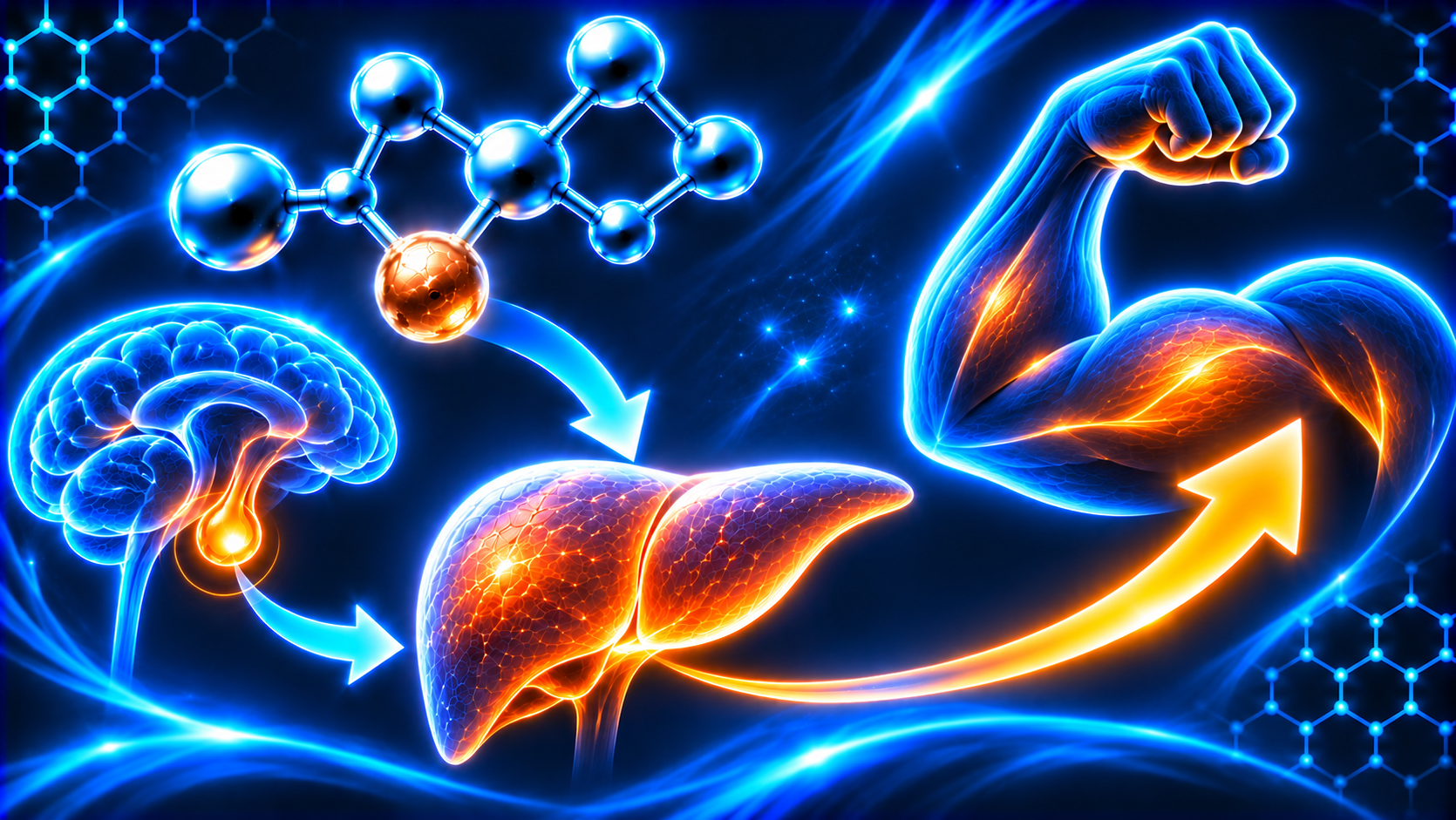
GHRP-6, short for Growth Hormone-Releasing Peptide-6, is a synthetic peptide studied for its ability to stimulate the body's natural production of growth hormone.
It belongs to a group of compounds called growth hormone secretagogues, which signal the pituitary gland to release growth hormone into the bloodstream.
What makes GHRP-6 especially interesting is its connection to ghrelin, often called the hunger hormone.
Ghrelin helps regulate appetite while also playing a role in growth hormone release. GHRP-6 activates the same receptor, allowing researchers to study how these two processes are connected.
Research has shown that GHRP-6 can produce noticeable increases in growth hormone levels. Its relationship with hunger signaling has also made it an interesting compound in studies involving nutrition, metabolism, and muscle development.
Because of these effects, GHRP-6 research often focuses on three areas: growth hormone release, appetite regulation, and muscle-related metabolism.
What Is Ipamorelin and How Does It Work?
Ipamorelin is another synthetic peptide studied for its ability to stimulate natural growth hormone release.
Like GHRP-6, Ipamorelin activates the ghrelin receptor, signaling the pituitary gland to release growth hormone.
However, Ipamorelin is known for being more selective in its hormonal effects.
Early research found that Ipamorelin could stimulate growth hormone without producing the same increases in certain other hormones, particularly cortisol, that were observed with GHRP-6 in animal studies.
This difference has made Ipamorelin an important compound in research involving growth hormone regulation and hormonal selectivity.
Researchers have also explored how Ipamorelin's effects on growth hormone may relate to muscle metabolism, tissue maintenance, and other growth-related processes.
What Do GHRP-6 and Ipamorelin Have in Common?
Although they have different characteristics, GHRP-6 and Ipamorelin share one important feature: both stimulate the body's own growth hormone release rather than supplying growth hormone directly.
Growth hormone plays a role in several important functions, including muscle metabolism, tissue maintenance, and the regulation of IGF-1, another hormone involved in growth and development.
This shared mechanism explains why both peptides continue to attract interest in muscle growth and recovery research.
The biggest differences come down to how they influence hunger, how selectively they stimulate growth hormone, and what researchers have observed in studies comparing their hormonal effects.
Main Research Findings
GHRP-6 vs. Ipamorelin: What Are the Main Differences?
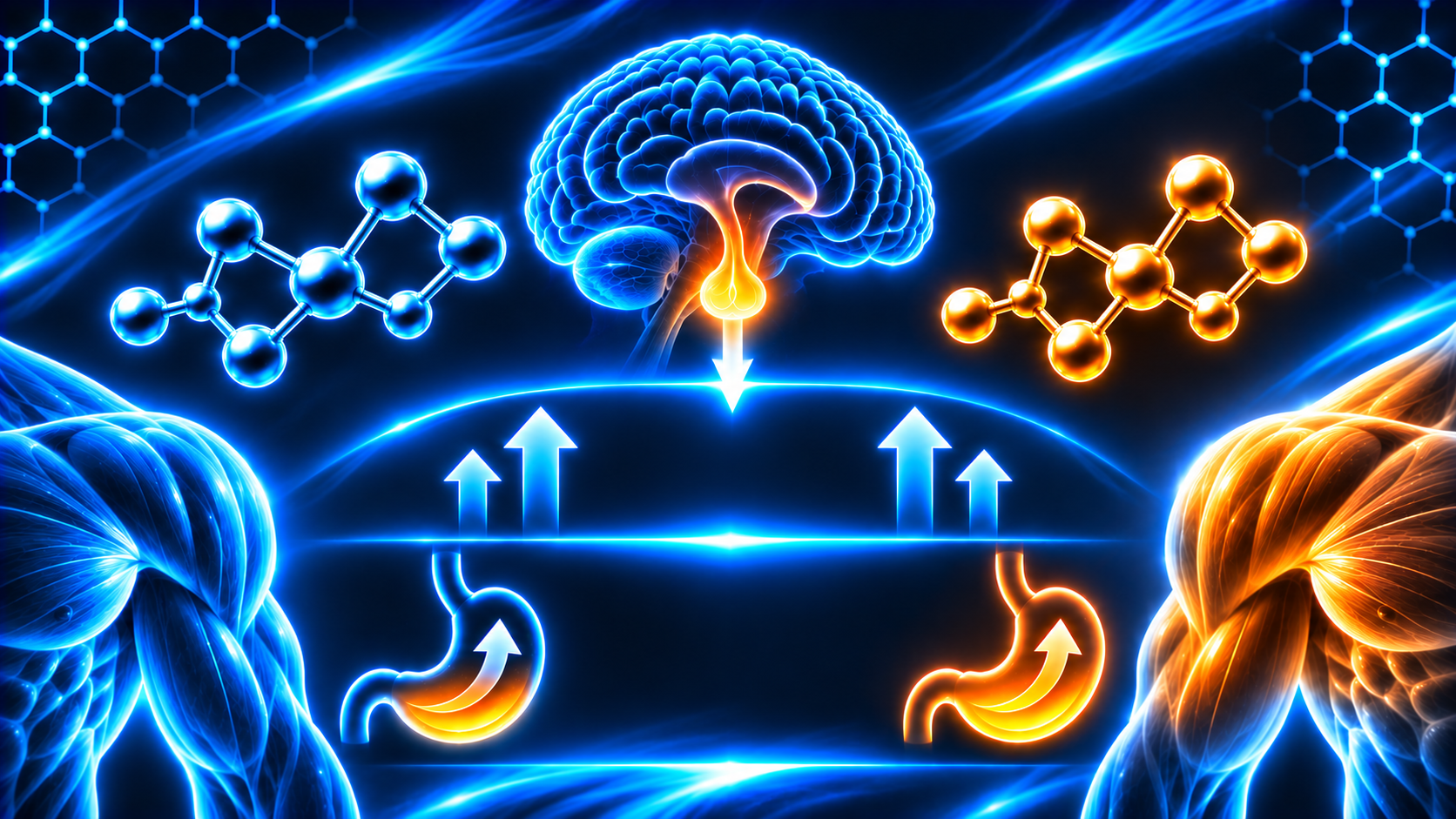
GHRP-6 and Ipamorelin both stimulate natural growth hormone release, but they differ in how they influence appetite and other hormones.
Here is a simple breakdown of what researchers have discovered.
| Research Area | GHRP-6 | Ipamorelin |
|---|---|---|
| Growth hormone release | Demonstrated in human studies | Demonstrated in human studies |
| Hunger and appetite | Closely linked to hunger signaling | Appetite effects less understood |
| Hormonal selectivity | Can stimulate additional hormones | More selective in early research |
| Cortisol response | Increases observed in some studies | Less stimulation in early comparisons |
| Muscle growth | Potential under investigation | Potential under investigation |
| Main research interest | Growth hormone, hunger, and metabolism | Selective growth hormone release |
1. Which Releases More Growth Hormone: GHRP-6 or Ipamorelin?
One of the biggest questions in the GHRP-6 vs. Ipamorelin comparison is whether one peptide produces a stronger growth hormone response.
Research has shown that both compounds can stimulate the pituitary gland to release growth hormone.
GHRP-6 has been studied in humans, with researchers observing significant short-term increases in growth hormone levels.
Ipamorelin has also demonstrated growth hormone-releasing activity in human studies. Early animal research found that its growth hormone response could be comparable to GHRP-6 under certain experimental conditions.
However, there isn't enough direct human research to say that one consistently releases more growth hormone than the other.
The key takeaway: Both peptides can stimulate growth hormone release. The biggest difference isn't necessarily how much growth hormone they release, but how they affect other hormonal pathways.
2. GHRP-6 vs. Ipamorelin: Which Affects Hunger More?
Hunger is one of the most interesting differences between these two peptides.
GHRP-6 is more closely associated with increased appetite because it activates the ghrelin receptor, which plays an important role in hunger signaling.
Ghrelin helps tell the brain when the body needs food. Because GHRP-6 activates this same signaling system, researchers have investigated its potential effects on appetite and food intake.
This connection is particularly interesting in muscle research.
Building muscle requires more than growth hormone. Adequate nutrition, protein intake, and sufficient calories also play important roles in supporting muscle development.
GHRP-6 therefore offers researchers an opportunity to investigate both growth hormone release and appetite-related signaling.
Ipamorelin also activates the ghrelin receptor, but its effects on hunger have received less attention in human research.
While Ipamorelin is often described as having a smaller effect on appetite, there isn't enough direct human evidence to confirm how much the two compounds differ.
The key takeaway: GHRP-6 has a stronger research association with hunger and appetite signaling, while Ipamorelin's effects on appetite remain less established.
3. GHRP-6 vs. Ipamorelin for Muscle Growth
Muscle growth is another major reason researchers are interested in GHRP-6 and Ipamorelin.
Both peptides stimulate growth hormone release, and growth hormone plays an important role in muscle metabolism, tissue maintenance, and the regulation of IGF-1.
IGF-1, or insulin-like growth factor 1, is involved in cellular growth and helps regulate processes connected to muscle development.
Because of this relationship, scientists are interested in whether growth hormone-releasing peptides could influence muscle-related processes.
GHRP-6 is especially interesting because it connects growth hormone stimulation with appetite signaling. This creates opportunities to study how hormonal activity and nutrition interact during muscle development.
Ipamorelin offers a different approach. Its more selective hormonal activity allows researchers to investigate growth hormone signaling with fewer effects on certain other hormones in early experimental models.
However, stimulating growth hormone does not automatically mean building more muscle.
Although both peptides increase growth hormone levels, there is not enough controlled human research showing that either produces meaningful increases in muscle size or strength.
The key takeaway: Both GHRP-6 and Ipamorelin are relevant to muscle growth research, but neither has been proven superior for increasing muscle mass.
4. How Do GHRP-6 and Ipamorelin Affect Cortisol?
Another difference between GHRP-6 and Ipamorelin involves cortisol, a hormone associated with the body's stress response.
Early research found that GHRP-6 could stimulate additional hormones, including ACTH and cortisol.
Ipamorelin showed greater selectivity, stimulating growth hormone with less activity involving these additional hormones in experimental comparisons.
This finding is one reason Ipamorelin has attracted attention in growth hormone research.
However, these early results do not establish that Ipamorelin is safer or more effective in humans.
The difference simply gives researchers another way to study how growth hormone release can be influenced without producing the same hormonal responses.
What Does This Mean for Researchers?
When comparing GHRP-6 and Ipamorelin, neither peptide has a clear advantage across every area.
GHRP-6 stands out for its relationship with growth hormone and hunger signaling.
Ipamorelin stands out for its greater hormonal selectivity in early research.
Both remain important compounds for understanding how growth hormone release connects to metabolism, appetite, and muscle development.
Research Methodology / Context
How Are GHRP-6 and Ipamorelin Studied?
Most research involving GHRP-6 and Ipamorelin focuses on how these peptides stimulate growth hormone release and influence other hormonal pathways.
In human studies, researchers measure growth hormone levels before and after exposure to a peptide. This allows them to see how much growth hormone is released and how long the response lasts.
Scientists also study how these compounds interact with the ghrelin receptor, which helps regulate both growth hormone secretion and appetite signaling.
For GHRP-6, human research has demonstrated measurable increases in growth hormone. Additional studies have explored its effects on other hormones and its relationship with hunger-related pathways.
Ipamorelin research has focused heavily on its ability to stimulate growth hormone while showing greater selectivity toward certain hormonal pathways. Early animal studies and human investigations have helped researchers better understand these effects.
Why Does This Matter for Muscle Growth Research?
Growth hormone plays a role in muscle metabolism, tissue maintenance, and IGF-1 signaling. These connections explain why researchers continue to investigate growth hormone-releasing peptides.
However, there is an important difference between measuring growth hormone levels and measuring actual muscle development.
A short-term increase in growth hormone does not necessarily lead to greater muscle size, strength, or faster recovery.
To determine whether GHRP-6 or Ipamorelin supports muscle growth, researchers would need longer-term controlled studies measuring changes in muscle mass, strength, and body composition.
For now, the strongest evidence for both peptides involves their ability to stimulate growth hormone release, rather than proven improvements in muscle development.
Current Research Limitations
Although GHRP-6 and Ipamorelin have shown promising activity in growth hormone research, several important questions remain unanswered.
Both peptides have demonstrated the ability to stimulate growth hormone release. However, much of the available research focuses on short-term hormonal changes rather than long-term effects on muscle development, recovery, or body composition.
Limited Human Muscle Growth Studies
One of the biggest limitations is the lack of controlled human studies measuring actual muscle growth.
Growth hormone plays an important role in muscle metabolism and tissue maintenance, but increasing growth hormone levels does not automatically lead to larger or stronger muscles.
More research is needed to determine whether GHRP-6 or Ipamorelin can meaningfully influence muscle mass, strength, or exercise recovery.
More Research Is Needed on Hunger
GHRP-6 is closely connected to ghrelin signaling, which helps regulate appetite. However, its effects on hunger and food intake have not been fully established in large human studies.
Ipamorelin's effects on appetite are even less understood, making it difficult to determine exactly how the two peptides compare.
Long-Term Effects Remain Unclear
Most studies involving GHRP-6 and Ipamorelin have examined relatively short-term responses.
Larger, longer-term human studies are needed to better understand their effects on hormone regulation, metabolism, and overall safety.
Neither peptide is FDA-approved for human therapeutic use, and their long-term safety has not been established.
Despite these limitations, both compounds remain useful subjects for investigating how growth hormone release interacts with appetite, metabolism, and muscle-related biological processes.
Discussion
GHRP-6 vs. Ipamorelin: Which Is Better for Muscle Growth Research?
When comparing GHRP-6 vs. Ipamorelin for muscle growth, the biggest difference comes down to what researchers want to investigate.
Both peptides stimulate natural growth hormone release, but each offers a different area of research interest.
GHRP-6 stands out for its connection to both growth hormone and hunger signaling. Because muscle development depends on adequate nutrition as well as hormonal activity, this combination makes GHRP-6 particularly interesting for studying the relationship between appetite, metabolism, and muscle growth.
Ipamorelin offers a different approach. Its more selective growth hormone activity makes it useful for researchers investigating growth hormone signaling while limiting stimulation of certain other hormones in early experimental models.
Neither peptide has been proven to produce greater muscle growth in humans, but both provide opportunities to explore how growth hormone influences muscle-related processes.
Why Growth Hormone Matters for Muscle Development
Growth hormone plays an important role in how the body maintains and regulates muscle tissue.
It also influences the production of IGF-1, a hormone involved in cellular growth and tissue development.
This connection is one reason growth hormone-releasing peptides like GHRP-6 and Ipamorelin continue to attract research interest.
By stimulating the body's natural growth hormone release, these compounds allow scientists to study how changes in hormone signaling may affect muscle metabolism, tissue maintenance, and recovery-related processes.
However, muscle development involves much more than growth hormone alone. Nutrition, physical activity, protein intake, and other hormonal pathways all contribute to muscle growth.
Which Peptide Has the More Interesting Research Profile?
GHRP-6 may be particularly useful for research focused on the connection between growth hormone release, hunger, and metabolism.
Ipamorelin may be more useful for investigating selective growth hormone stimulation and how it differs from broader hormonal responses.
The choice ultimately depends on the specific research question rather than one peptide being universally better than the other.
As scientists continue investigating growth hormone secretagogues, both GHRP-6 and Ipamorelin remain relevant to understanding how growth hormone signaling interacts with appetite and muscle physiology.
Conclusion
When comparing GHRP-6 vs. Ipamorelin, both peptides have demonstrated the ability to stimulate the body's natural growth hormone release. However, their differences in hunger signaling and hormonal selectivity make each interesting for different areas of research.
GHRP-6 stands out for its connection to growth hormone release and appetite signaling. Its interaction with the ghrelin receptor makes it particularly interesting for researchers studying hunger, metabolism, and the relationship between nutrition and muscle development.
Ipamorelin stands out for its more selective growth hormone activity. Early research suggests it can stimulate growth hormone with less influence on certain additional hormones, making it useful for investigating growth hormone regulation.
For muscle growth research, both peptides offer interesting possibilities. Growth hormone plays an important role in muscle metabolism, tissue maintenance, and IGF-1 signaling, but more human studies are needed to determine whether either peptide can meaningfully increase muscle mass or strength.
Ultimately, neither GHRP-6 nor Ipamorelin has been proven superior for muscle growth. Their greatest value in current research lies in helping scientists better understand how growth hormone, appetite, and muscle-related processes work together.
At Peptide Purity USA, we emphasize high-quality research materials, analytical transparency, and responsible scientific investigation.
Research Use Only: All research materials offered by Peptide Purity USA are intended strictly for laboratory research purposes. Not for human or veterinary consumption. Not intended for diagnostic or therapeutic applications.
References
- 1. Raun K, Hansen BS, Johansen NL, Thøgersen H, Madsen K, Ankersen M, Andersen PH. Ipamorelin, the first selective growth hormone secretagogue. *European Journal of Endocrinology*. 1998;139(5):552–561.
- 2. Frieboes RM, Murck H, Maier P, Schier T, Holsboer F, Steiger A. Growth hormone-releasing peptide-6 stimulates sleep, growth hormone, ACTH and cortisol release in normal man. *Neuroendocrinology*. 1995;61(5):584–589.
- 3. Frieboes RM, Murck H, Antonijevic IA, Steiger A. Effects of growth hormone-releasing peptide-6 on the nocturnal secretion of GH, ACTH and cortisol and on the sleep EEG in man: role of routes of administration. *Journal of Neuroendocrinology*. 1999;11(6):473–478.
- 4. Ankersen M, Johansen NL, Madsen K, Hansen BS, Raun K, Nielsen KK, et al. A new series of highly potent growth hormone-releasing peptides derived from ipamorelin. *Journal of Medicinal Chemistry*. 1998;41(19):3699–3704.
- 5. Arvat E, di Vito L, Maccagno B, Broglio F, Boghen MF, Deghenghi R, et al. Effects of GHRP-2 and hexarelin, two synthetic GH-releasing peptides, on GH, prolactin, ACTH and cortisol levels in man. Comparison with the effects of GHRH, TRH and hCRH. *Peptides*. 1997;18(6):885–891.