
Introduction
Can HCG really boost testosterone levels in men?
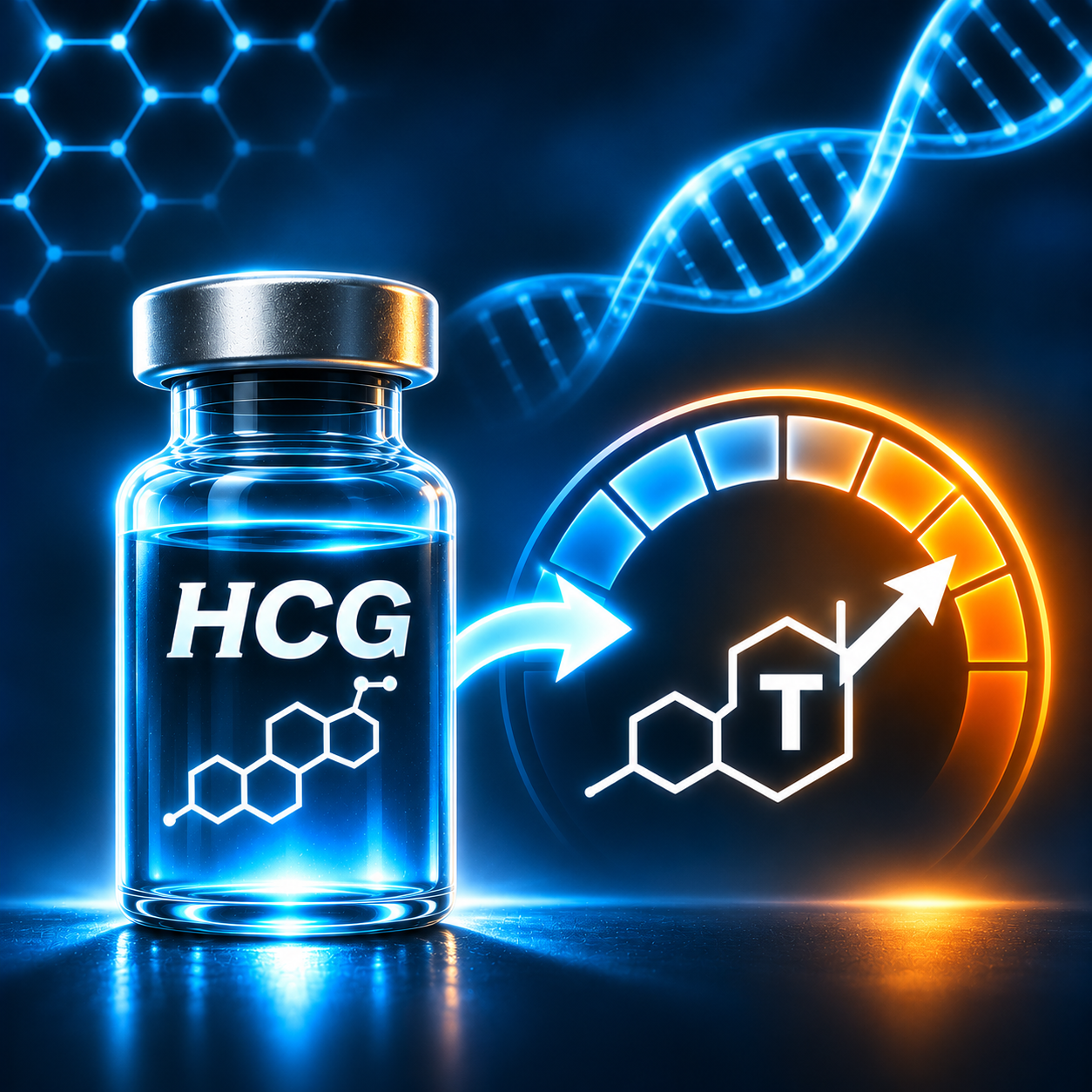
Research shows that it can. Human chorionic gonadotropin (HCG) has been shown in clinical studies to stimulate testosterone production, with some investigations documenting increases of more than 100%.
Unlike testosterone replacement therapy (TRT), which introduces testosterone directly into the body, HCG works by stimulating the testes to produce more testosterone themselves.
This makes HCG particularly interesting in research involving low testosterone, male hormone regulation, and reproductive health.
The science behind HCG is well established. It acts similarly to luteinizing hormone (LH), the hormone responsible for signaling the testes to produce testosterone.
When HCG activates these same hormonal pathways, testosterone production can increase.
And the results have been measured in human clinical studies.
Researchers have documented substantial increases in testosterone levels following HCG administration, particularly in men whose bodies are not producing enough natural hormonal stimulation.
Some studies have even demonstrated that HCG can raise severely deficient testosterone levels into the normal adult male range.
However, results depend on the underlying cause of low testosterone and how well the testes respond to stimulation.
So how effective is HCG for boosting testosterone, how quickly does it work, and what does the research actually show?
This article examines the clinical evidence behind HCG and testosterone production, including how it works, the results observed in human studies, and how it compares with traditional testosterone replacement therapy.
Research Background
What Is HCG?
Human chorionic gonadotropin (HCG) is a hormone best known for its role during pregnancy. However, it also has an important ability in men: stimulating the testes to produce testosterone.
To understand how HCG boosts testosterone, it helps to understand how the body normally produces this hormone.
In men, testosterone production is controlled partly by signals from the brain.
The pituitary gland releases a hormone called luteinizing hormone (LH), which travels through the bloodstream to the testes.
Once there, LH activates specialized cells called Leydig cells. These cells are responsible for producing most of the testosterone found in the male body.
HCG works in a very similar way.
Because HCG can activate the same receptors as LH, it can stimulate Leydig cells to increase testosterone production.
In simple terms, HCG acts like the body's natural signal telling the testes to produce more testosterone.
This mechanism is one reason HCG has been studied and used in certain men with testosterone deficiency, particularly when their bodies are not producing enough LH.
How Does HCG Increase Testosterone Levels?
HCG increases testosterone by stimulating the body's existing testosterone-producing system.
The process involves four main steps:
HCG activates LH receptors located on Leydig cells in the testes.
The Leydig cells receive the hormonal signal to increase testosterone synthesis.
Testosterone production increases as the cells respond to stimulation.
Testosterone enters the bloodstream, potentially raising circulating testosterone levels.
This process is supported by decades of hormone research and human clinical studies.
Unlike testosterone replacement therapy (TRT), which supplies testosterone from an outside source, HCG stimulates the testes to produce testosterone internally.
That difference is particularly important when studying men with low testosterone.
If the testes are still capable of producing testosterone but are not receiving enough hormonal stimulation, HCG can help restore that missing signal.
However, HCG may be less effective when the testes themselves have lost the ability to respond normally.
This explains why HCG can produce substantial testosterone increases in some men while producing smaller changes in others.
The important takeaway is that HCG does not simply replace testosterone. It activates the biological process responsible for producing it.
And as human clinical studies have demonstrated, that stimulation can lead to significant increases in measured testosterone levels.
Main Research Findings
Does HCG Really Boost Testosterone? What Human Studies Show
The strongest evidence for HCG's ability to increase testosterone comes from human clinical studies.
Researchers have measured testosterone levels before and after HCG administration, allowing them to see exactly how the body responds.
The results show that HCG can significantly increase testosterone production, sometimes more than doubling circulating testosterone levels.
Several studies help demonstrate just how effective this hormonal stimulation can be.
Study 1: HCG Increased Testosterone by 126%
A 2001 study published in the International Journal of Andrology examined the effects of HCG in 10 healthy adult men.
Researchers measured testosterone levels before treatment and at several points afterward.
The results showed a substantial increase in circulating testosterone.
Testosterone results:
Before HCG: 22.2 nmol/L
After HCG: 50.1 nmol/L
Total increase: Approximately 126%
Peak response: Around 72 hours
Testosterone concentrations more than doubled, demonstrating that HCG could stimulate testosterone production even in men with normal reproductive hormone function.
The increase was statistically significant, meaning the results were unlikely to be explained by random variation alone.
Key finding: HCG increased average testosterone levels by approximately 126% in this small controlled study.
Study 2: Testosterone Increased From 65 to 438 ng/dL
A 2017 clinical trial examined HCG treatment in adult men with hypogonadotropic hypogonadism, a condition in which inadequate hormonal signaling contributes to low testosterone production.
During the first 16 weeks, participants received HCG without additional fertility hormones.
Researchers recorded a substantial increase in average testosterone concentrations.
Testosterone results:
Before HCG: 65.2 ng/dL
After 16 weeks: 437.6 ng/dL
Total increase: Approximately 571%
These findings are especially important because the participants began with severely deficient testosterone levels.
Following HCG treatment, their average testosterone concentrations increased into a range commonly seen in adult men.
Key finding: HCG produced a substantial increase in testosterone among men with a specific form of hormonal deficiency.
The percentage increase was particularly large because the starting testosterone levels were extremely low. It should not be considered a typical response for all men.
Study 3: HCG Stimulated Testosterone Production Inside the Testes
A 2010 study published in The Journal of Clinical Endocrinology & Metabolism investigated how HCG affects testosterone production directly within the testes.
Researchers studied 37 healthy men whose natural reproductive hormone signaling had been temporarily suppressed.
The goal was to determine whether HCG could stimulate testosterone production when the body's usual hormonal signals were reduced.
The researchers found a clear relationship between HCG exposure and intratesticular testosterone concentrations.
Men receiving higher amounts of HCG generally maintained higher testosterone concentrations within the testes than men receiving no HCG.
Key finding: HCG stimulated testosterone production inside the testes in a dose-dependent manner.
This matters because testosterone produced within the testes is essential for normal sperm development.
It also provides direct evidence supporting HCG's ability to activate the body's testosterone-producing cells.
However, intratesticular testosterone is different from the testosterone measured in a standard blood test, so these results should not be interpreted as equivalent increases in circulating testosterone.
What Do These Studies Tell Us About HCG and Testosterone?
Across these clinical investigations, the findings point toward the same conclusion.
HCG can stimulate the testes to increase testosterone production, and the effects have been directly measured in humans.
Research has demonstrated that:
HCG can more than double circulating testosterone levels in some healthy men under controlled experimental conditions.
HCG can substantially increase testosterone in men with certain forms of hormone deficiency.
HCG stimulates testosterone production directly within the testes.
Testosterone responses depend on the individual's underlying hormonal condition and testicular function.
The evidence is particularly strong for HCG's ability to activate Leydig cells, which are responsible for testosterone production.
Although the size of the increase varies, the biological effect is well established.
The main takeaway: HCG's ability to boost testosterone is supported by measurable results from human clinical research, not simply theory.
Research Methodology / Context
Why HCG Can Be Effective for Low Testosterone
Not all men experience low testosterone for the same reason.
In some cases, the testes are capable of producing testosterone but aren't receiving enough hormonal stimulation from the brain.
This is known as secondary hypogonadism, a condition in which the body produces insufficient signals to maintain normal testosterone production.
Because HCG acts similarly to luteinizing hormone (LH), it can provide the stimulation needed to activate testosterone-producing cells.
When the testes are still functioning but aren't receiving enough LH stimulation, HCG can significantly increase testosterone production.
This helps explain why clinical studies involving men with secondary hypogonadism have reported substantial increases in testosterone levels.
However, some men have a different condition called primary hypogonadism, where the testes themselves have difficulty producing testosterone.
In these cases, HCG may produce a smaller response because the testosterone-producing cells cannot respond normally.
The important distinction is that HCG works by stimulating existing testicular function rather than replacing testosterone directly.
HCG vs. TRT: What's the Difference?
HCG and testosterone replacement therapy (TRT) can both increase testosterone levels, but they work in different ways.
HCG encourages the testes to produce testosterone, while TRT supplies testosterone from an external source.
| HCG | Testosterone Replacement Therapy (TRT) |
|---|---|
| Stimulates testosterone production in the testes | Introduces testosterone into the body |
| Activates LH receptors | Bypasses natural testosterone production |
| Can help maintain testosterone inside the testes | Often suppresses natural testicular testosterone production |
| May support fertility-related treatment | Can reduce sperm production |
| Requires functioning Leydig cells | Can increase testosterone even when testicular production is impaired |
One important advantage of HCG in certain clinical situations is its ability to stimulate testosterone production within the testes.
This matters because intratesticular testosterone plays an essential role in sperm development.
TRT, on the other hand, can suppress the body's natural LH and FSH signals, potentially reducing sperm production.
For this reason, HCG has an established role in treating selected men with hormone deficiencies, particularly when fertility preservation is an important consideration.
The key difference: HCG stimulates the body's own testosterone production, while TRT replaces testosterone from an outside source.
Neither treatment is automatically better for everyone. The appropriate approach depends on the cause of low testosterone, reproductive goals, and medical evaluation.
How Quickly Can HCG Increase Testosterone?
Human research shows that HCG can begin increasing testosterone levels within days.
In a 2001 clinical study involving 10 healthy men, researchers observed a significant testosterone increase within 24 hours, with peak concentrations occurring around 72 hours.
Other studies have documented substantial testosterone increases over several weeks of treatment.
However, the timeline depends on several factors, including baseline testosterone levels, the cause of testosterone deficiency, and how effectively the testes respond to stimulation.
The important finding is that HCG can produce measurable testosterone increases relatively quickly, although individual responses vary.
A rise in testosterone on a blood test does not necessarily mean someone will immediately notice improvements in energy, sexual function, muscle development, or other symptoms.
Those outcomes depend on additional factors and require separate clinical evaluation.
Current Research Limitations
What Does the Research Still Need to Establish?
Although human clinical studies have demonstrated that HCG can increase testosterone levels, there are still important questions researchers continue to investigate.
One limitation is that several studies involved relatively small groups of participants. While their findings provide direct evidence of HCG's testosterone-stimulating effects, larger studies would help establish how consistently these results occur across different populations.
Another consideration is that some of the largest testosterone increases have been observed in men with significant hormonal deficiencies.
Men with secondary hypogonadism may respond particularly well because their testes can still produce testosterone but lack sufficient hormonal stimulation.
These results do not necessarily represent what healthy men with normal testosterone levels would experience.
Researchers must also distinguish between increasing testosterone on a blood test and improving symptoms associated with testosterone deficiency.
Higher testosterone levels do not automatically guarantee improvements in energy, muscle growth, sexual function, or overall well-being.
Long-term outcomes, individual responses, and the most appropriate clinical applications also require continued investigation.
HCG can cause adverse effects, including fluid retention, breast tenderness or enlargement, and changes in estradiol levels. Its medical use requires appropriate evaluation and monitoring.
Despite these limitations, the central finding remains well supported.
HCG can stimulate testosterone production in men whose testes retain the ability to respond, and this effect has been demonstrated in human clinical research.
Discussion
Why HCG Is Important in Testosterone Research
HCG has become an important hormone in testosterone research because it offers a different approach to increasing testosterone levels.
Rather than introducing testosterone from an external source, HCG stimulates the testes to produce testosterone through their existing hormonal pathways.
This difference is particularly important when studying men with low testosterone caused by insufficient hormonal signaling.
Human clinical studies have consistently demonstrated that HCG can activate testosterone-producing Leyig cells, resulting in measurable increases in testosterone concentrations.
Some investigations have documented testosterone levels more than doubling following HCG stimulation, while others have shown substantial improvements in men with severe hormonal deficiencies.
These findings help explain why HCG has an established medical role in selected cases of male hypogonadism.
Why Stimulating Testosterone Production Matters
One of HCG's most important characteristics is its ability to support testosterone production within the testes.
This is significant because testosterone serves more than one purpose in the male body.
While circulating testosterone contributes to normal sexual function, muscle maintenance, bone health, and other physiological processes, testosterone produced inside the testes is also essential for sperm development.
By activating LH receptors, HCG can increase testosterone production while helping maintain the hormonal environment needed for normal reproductive function.
This makes HCG particularly relevant in research involving testosterone deficiency and male fertility.
It also highlights an important distinction between HCG and traditional testosterone replacement therapy, which can suppress the body's natural reproductive hormone signals.
What the Evidence Tells Us
The strongest conclusion from decades of research is straightforward: HCG can increase testosterone production, and the effect has been repeatedly demonstrated in human studies.
Researchers have documented increases in circulating testosterone, direct stimulation of testosterone synthesis within the testes, and substantial hormonal responses in men with certain forms of hypogonadism.
However, the degree of testosterone increase depends on the individual's underlying hormonal condition and how well the testes respond.
The research does not establish that every man will experience the same results or that higher testosterone automatically translates into improvements in physical performance or overall health.
What it does establish is that HCG is an effective stimulant of testicular testosterone production under appropriate physiological conditions.
That proven mechanism, supported by measurable results in human studies, is what makes HCG an important subject in testosterone and male hormone research.
Conclusion
Does HCG Really Boost Testosterone?
Yes. Human clinical studies have demonstrated that HCG can significantly increase testosterone production in men.
Research has shown that human chorionic gonadotropin (HCG) stimulates the testes by activating the same receptors used by luteinizing hormone (LH), one of the body's natural signals for testosterone production.
Unlike testosterone replacement therapy (TRT), which introduces testosterone from an external source, HCG encourages the testes to produce testosterone themselves.
This difference makes HCG particularly important in research involving low testosterone, male hormone regulation, and reproductive health.
Clinical studies have documented substantial increases in testosterone following HCG administration, including results showing testosterone concentrations more than doubling under controlled conditions.
Other investigations have demonstrated that HCG can raise severely deficient testosterone levels into the normal adult male range in men with certain forms of hypogonadism.
These findings provide direct scientific evidence that HCG can boost testosterone levels when the testes remain capable of responding to hormonal stimulation.
However, the degree of increase depends on the underlying cause of low testosterone, individual hormonal function, and testicular responsiveness.
While further research is needed to clarify long-term outcomes and broader clinical benefits, HCG's ability to stimulate testosterone production is well established.
The bottom line: HCG is a proven stimulant of testicular testosterone production, supported by decades of hormonal research and measurable results from human clinical studies.
At Peptide Purity USA, we focus on scientifically grounded education, research material quality, and analytical transparency to support responsible scientific investigation.
Research Use Only: All research materials offered by Peptide Purity USA are intended strictly for laboratory research purposes. Not for human or veterinary consumption. Not intended for diagnostic or therapeutic applications.
References
- 1. Differential patterns of inhibin secretion in response to gonadotrophin stimulation in normal men. International Journal of Andrology. 2001;24(2):95–101. DOI: 10.1046/j.1365-2605.2001.00276.x.
- 2. An open-label clinical trial to investigate the efficacy and safety of corifollitropin alfa combined with hCG in adult men with hypogonadotropic hypogonadism. Reproductive Biology and Endocrinology. 2017.
- 3. Roth MY, Page ST, Lin K, et al. Dose-dependent increase in intratesticular testosterone by very low-dose human chorionic gonadotropin in normal men with experimental gonadotropin deficiency. The Journal of Clinical Endocrinology & Metabolism. 2010;95(8):3806–3813. DOI: 10.1210/jc.2010-0360.
- 4. Weinstein RL, Reitz RE. Pituitary-testicular responsiveness in male hypogonadotropic hypogonadism. The Journal of Clinical Investigation. 1974;53(2):408–415. DOI: 10.1172/JCI107574.