Introduction
What causes peptides to break down, and how long can they remain stable?
These are important questions in peptide research, especially when it comes to maintaining purity, quality, and reliable laboratory results.
Peptides are made from chains of amino acids, and while some can remain stable for extended periods, others are more sensitive to their environment.
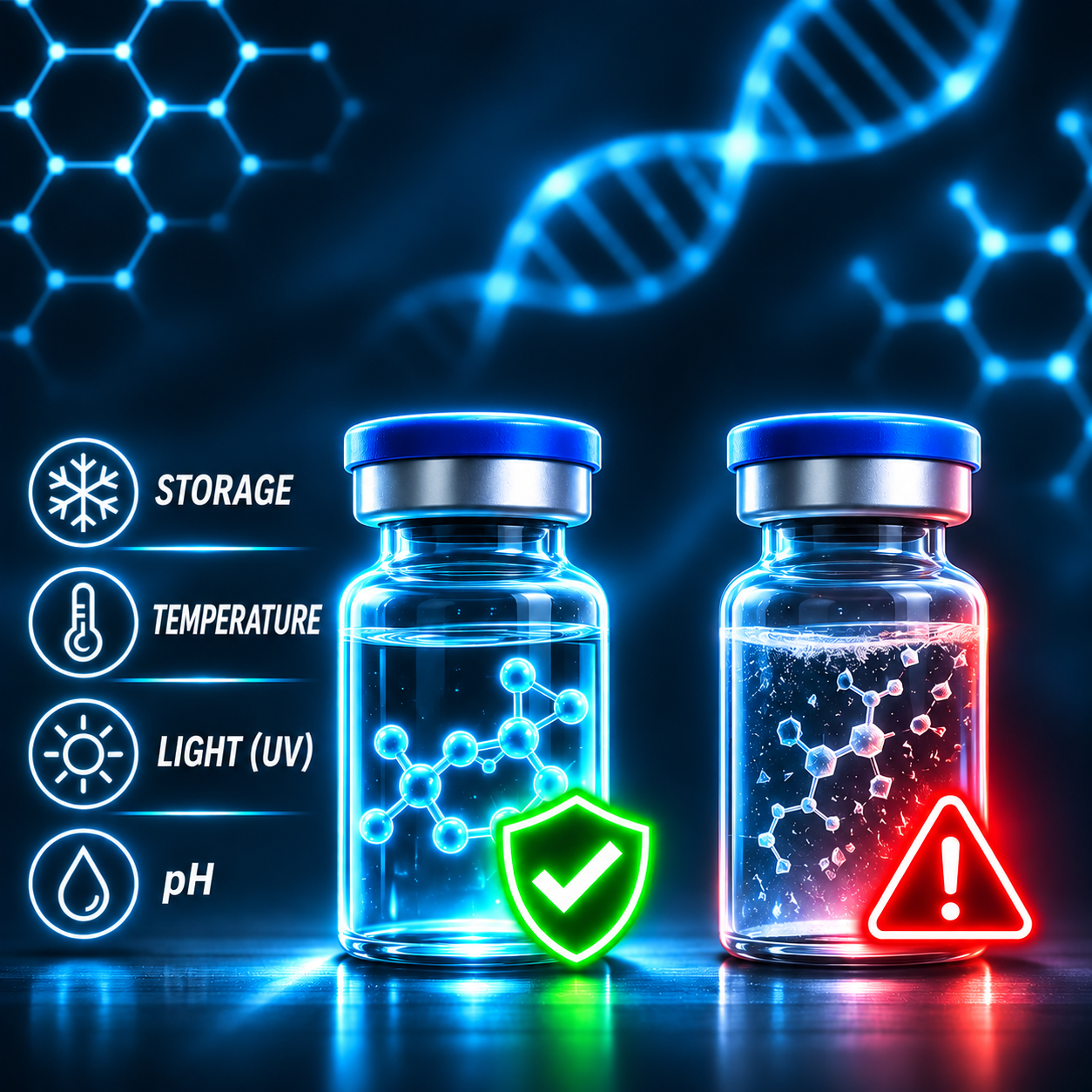
Heat, moisture, oxygen, and light can all contribute to peptide degradation, potentially changing a peptide's chemical structure and affecting its reliability in research.
This process is known as peptide degradation, and understanding how it happens is an important part of maintaining peptide stability.
But not all peptides break down at the same rate.
A peptide's stability depends on its molecular structure, formulation, storage conditions, and whether it is in freeze-dried powder or liquid form.
Even a peptide with 99% purity can gradually degrade under unfavorable conditions.
So how long do peptides last, what causes them to degrade, and how can researchers tell if a peptide is still stable?
In this guide, we'll explain the most common causes of peptide degradation, the factors that influence peptide shelf life, and how researchers evaluate peptide stability through laboratory testing.
Research Background
What Is Peptide Stability?
Peptide stability refers to how well a peptide maintains its original chemical structure and integrity over time.
Peptides are made of amino acids linked together in specific sequences. These sequences help determine how a peptide behaves and interacts with other molecules during research.
When a peptide remains stable, its chemical structure stays largely unchanged. However, certain environmental conditions can trigger reactions that gradually alter that structure.
The more resistant a peptide is to these changes, the greater its chemical stability under those conditions.
Not every peptide has the same stability. Some are naturally more resistant to degradation, while others contain amino acids or chemical structures that make them more sensitive.
This is why peptide shelf life can vary significantly between compounds.
What Is Peptide Degradation?
Peptide degradation occurs when a peptide undergoes chemical changes that alter its original structure.
These changes can happen in several ways:
Hydrolysis: Water contributes to the breakdown of susceptible chemical bonds.
Oxidation: Reactions involving oxygen or other oxidizing substances modify certain amino acids.
Deamidation: Specific amino acids undergo chemical changes that can affect peptide structure.
Aggregation: Peptide molecules cluster together, potentially affecting their physical stability and behavior.
Some of these processes develop slowly, while others can accelerate depending on temperature, moisture, pH, and other environmental factors.
One important detail is that peptide degradation is not always visible.
A peptide may look completely normal while chemical changes are taking place. Even a clear solution or an unchanged freeze-dried powder does not guarantee that the peptide has maintained its original purity.
This is why laboratory testing is important when evaluating peptide stability and determining whether a research sample has undergone degradation.
Main Research Findings
1. Temperature Can Accelerate Peptide Degradation
Temperature is one of the biggest factors influencing peptide stability.
When temperatures rise, chemical reactions often happen faster. For some peptides, this can accelerate degradation and reduce how long they maintain their original structure.
Heat can increase the rate of reactions such as oxidation, hydrolysis, and other chemical changes.
However, not all peptides respond to temperature the same way. Some remain relatively stable under certain conditions, while others are much more sensitive.
Higher temperatures can accelerate peptide degradation, but the actual rate depends on the peptide and its formulation.
2. Moisture Can Affect Peptide Stability
Water plays an important role in several peptide degradation processes.
One example is hydrolysis, a chemical reaction in which water contributes to breaking susceptible chemical bonds.
This is one reason many research peptides are supplied as lyophilized, or freeze-dried, powders.
Removing much of the water can help slow certain degradation reactions and improve stability during storage.
However, freeze-drying does not make peptides permanently stable. Residual moisture, oxygen, and temperature can still influence their chemical integrity.
3. Oxidation Can Change a Peptide's Structure
Oxidation is another common cause of peptide degradation.
Certain amino acids, including methionine, cysteine, and tryptophan, can be particularly sensitive to oxidative reactions.
These reactions may change a peptide's chemical structure and potentially affect its activity in laboratory experiments.
Oxygen exposure, light, and certain trace metals can contribute to oxidation under specific conditions.
Even small chemical changes can matter when researchers need consistent, reliable results.
4. Light Exposure Can Contribute to Degradation
Some peptides are sensitive to light, particularly ultraviolet (UV) radiation.
Light can trigger chemical reactions that modify certain amino acids or contribute to oxidation.
The degree of sensitivity depends on the peptide's structure and the conditions of exposure.
While some peptides are more resistant, others may require protection from light to maintain their chemical integrity.
5. Peptide Stability Can Change After Reconstitution
A peptide's stability may change once it is dissolved into a liquid solution.
In its freeze-dried form, a peptide contains relatively little water. After reconstitution, it interacts with water, dissolved oxygen, and other components of the solution.
These interactions can increase the possibility of hydrolysis, oxidation, or aggregation, depending on the compound.
Factors such as pH, solvent composition, concentration, and temperature also influence stability.
A peptide that remains stable as a dry powder may have a very different shelf life after reconstitution.
This is why researchers evaluate dry and liquid peptide preparations separately rather than assuming they remain stable for the same amount of time.
6. Different Peptides Have Different Degradation Rates
One of the most important findings in peptide stability research is that there is no universal degradation timeline.
A peptide's chemical structure, amino acid sequence, formulation, and environmental conditions all influence how quickly it may degrade.
Two peptides exposed to the same temperature and storage conditions can behave very differently.
Some may maintain their chemical integrity for extended periods, while others undergo measurable changes much sooner.
There is no single shelf life that applies to every research peptide.
Understanding these differences is essential when evaluating peptide quality and interpreting laboratory stability data.
Research Methodology / Context
How Do Researchers Test Peptide Stability?
Researchers use specialized laboratory testing to determine whether a peptide maintains its original chemical structure over time.
Two commonly used methods are high-performance liquid chromatography (HPLC) and mass spectrometry (MS).
HPLC testing helps separate and measure different components within a peptide sample. This allows researchers to monitor peptide purity and detect certain impurities or degradation products.
Mass spectrometry helps identify molecules based on their mass-to-charge ratios, providing valuable information about peptide identity and chemical changes.
When used together, these methods can help researchers determine whether a peptide has remained chemically intact or undergone degradation.
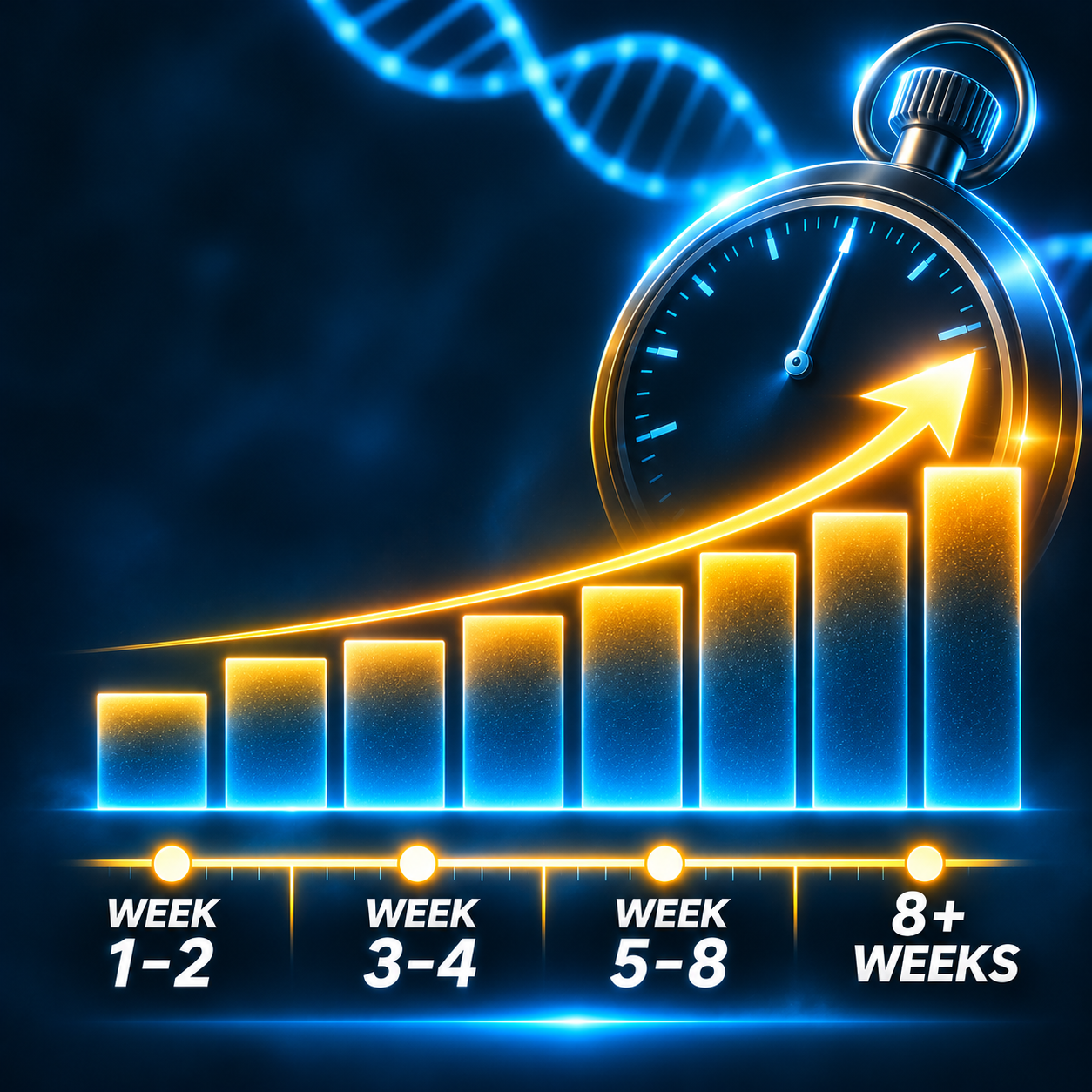
How Is Peptide Shelf Life Determined?
Peptide shelf life is evaluated through stability studies.
During these studies, researchers store peptide samples under controlled conditions and test them at different intervals.
By comparing results over time, they can identify changes in purity, chemical structure, and other important quality measurements.
Some studies also use elevated temperatures to investigate how quickly degradation may occur under more stressful conditions.
However, accelerated testing alone cannot always predict long-term stability.
A reliable peptide shelf life should be supported by stability data specific to the compound, formulation, packaging, and storage conditions.
This is why laboratory testing is more dependable than estimating peptide stability based on appearance or general storage guidelines.
Current Research Limitations
Although researchers understand many of the chemical reactions responsible for peptide degradation, predicting exactly how long every peptide will remain stable is still challenging.
One major limitation is that stability results from one peptide cannot automatically be applied to another.
Even peptides with similar structures may respond differently to temperature, moisture, oxygen, and other environmental conditions.
Research findings can also vary depending on the peptide's formulation, concentration, packaging, and testing methods.
Another challenge is that not all research peptides have extensive long-term stability data available.
Without compound-specific testing, researchers cannot reliably determine an exact degradation timeline or shelf life.
The key takeaway is that peptide stability must be evaluated individually rather than relying on general assumptions about how long peptides last.
Discussion
How Long Do Peptides Last Before They Degrade?
There is no universal shelf life for research peptides.
Some peptides can remain chemically stable for extended periods under suitable conditions, while others may begin to degrade much sooner.
Peptide shelf life depends on the compound, its formulation, and the conditions under which it is stored.
Freeze-dried peptides may offer improved stability compared with certain liquid preparations because much of the water has been removed. However, this does not mean every freeze-dried peptide will remain stable for the same amount of time.
The most reliable way to determine how long a peptide lasts is through stability testing specific to that compound.
Can You Tell If a Peptide Has Degraded?
Not always.
In some cases, visible changes such as discoloration, cloudiness, or particles forming in a solution may indicate a problem.
However, peptide degradation can occur without any noticeable change in appearance.
A peptide may look completely normal while chemical reactions gradually alter its structure.
This is why visual inspection alone cannot confirm peptide purity or stability.
Analytical methods such as HPLC and mass spectrometry provide more reliable information about chemical integrity.
Does 99% Peptide Purity Mean a Peptide Is Stable?
Not necessarily.
Peptide purity and peptide stability are related, but they measure different things.
Peptide purity describes how much of the measured sample consists of the intended peptide, according to a particular analytical method.
Peptide stability describes how well that peptide maintains its chemical integrity over time.
For example, a peptide may test at 99% purity when manufactured but gradually undergo degradation when exposed to unfavorable conditions.
A high initial purity result is an important quality indicator, but it does not guarantee long-term stability or establish an exact shelf life.
Why Does Peptide Quality Matter in Research?
Reliable scientific research depends on using materials with consistent and well-characterized properties.
Peptide identity, purity, and chemical stability can all influence the accuracy and reproducibility of laboratory experiments.
When a peptide degrades, its chemical composition may change, potentially affecting how it behaves during research.
This is why high-purity research peptides, appropriate analytical testing, and careful handling all play important roles in research quality.
At Peptide Purity USA, we emphasize high-purity research materials, analytical transparency, and third-party testing where available to support reliable laboratory investigation.
Conclusion
Peptide stability is an important part of maintaining the quality, purity, and reliability of research peptides.
Although some peptides can remain stable for extended periods, others are more sensitive to environmental conditions that may accelerate degradation.
Heat, moisture, oxygen, light, and chemical reactions can all contribute to peptide degradation, potentially changing a peptide's structure and affecting its performance in laboratory research.
Understanding these factors helps explain why peptide shelf life varies between compounds and why proper handling and stability testing matter.
Freeze-drying can help improve stability for many peptides, but it does not prevent every form of degradation. Likewise, a high initial purity result does not guarantee that a peptide will maintain that purity indefinitely.
The most important takeaway is that peptide purity reflects a sample's quality at the time of testing, while peptide stability describes how well that quality is maintained over time.
At Peptide Purity USA, we emphasize high-purity research materials, analytical transparency, and responsible laboratory practices to support reliable scientific investigation.
Research Use Only: All research materials offered by Peptide Purity USA are intended strictly for laboratory research purposes. Not for human or veterinary consumption. Not intended for diagnostic or therapeutic applications.
References
- 1. Manning, M. C., Chou, D. K., Murphy, B. M., Payne, R. W., & Katayama, D. S. (2010). Stability of protein pharmaceuticals: An update. Pharmaceutical Research, 27(4), 544–575.
- 2. Reubsaet, J. L. E., Beijnen, J. H., Bult, A., van Maanen, R. J., Marchal, J. A. D., & Underberg, W. J. M. (1998). Analytical techniques used to study the degradation of proteins and peptides: Chemical instability. Journal of Pharmaceutical and Biomedical Analysis, 17(6–7), 955–978.
- 3. Lai, M. C., & Topp, E. M. (1999). Solid-state chemical stability of proteins and peptides. Journal of Pharmaceutical Sciences, 88(5), 489–500.
- 4. Manning, M. C., Patel, K., & Borchardt, R. T. (1989). Stability of protein pharmaceuticals. Pharmaceutical Research, 6(11), 903–918.
- 5. Designing Formulation Strategies for Enhanced Stability of Therapeutic Peptides in Aqueous Solutions: A Review. (2023). Pharmaceutics, 15(3), Article 935.
- 6. Factors Affecting the Physical Stability (Aggregation) of Peptide Therapeutics. (2017). Review article on peptide aggregation and formulation stability.
- 7. Regulatory Guidelines for the Analysis of Therapeutic Peptides and Proteins. (2025). Journal of Peptide Science. Review of analytical methods, degradation pathways, and stability assessment.