Introduction
Have you ever wondered why people taking GLP-1 medications can suddenly feel full after eating just a fraction of their usual meal?
Someone who normally finishes an entire plate of food might feel satisfied after eating only half. Others notice they're less hungry throughout the day, snack less often, or simply don't think about food as much.
One of the biggest effects of GLP-1 medications is how they change hunger, appetite, and the feeling of fullness.
Compounds such as semaglutide, tirzepatide, and the investigational drug retatrutide have gained attention for their ability to influence appetite and support weight loss.
Although these compounds work through different hormonal pathways, they share an important effect: they can help people feel full sooner and stay satisfied with less food.
But why does this happen?
The answer comes down to how GLP-based compounds influence communication between your stomach and your brain.
Understanding that connection helps explain why smaller meals can suddenly feel like enough.
Research Background
How Do GLP-1s Make You Feel Full Faster?
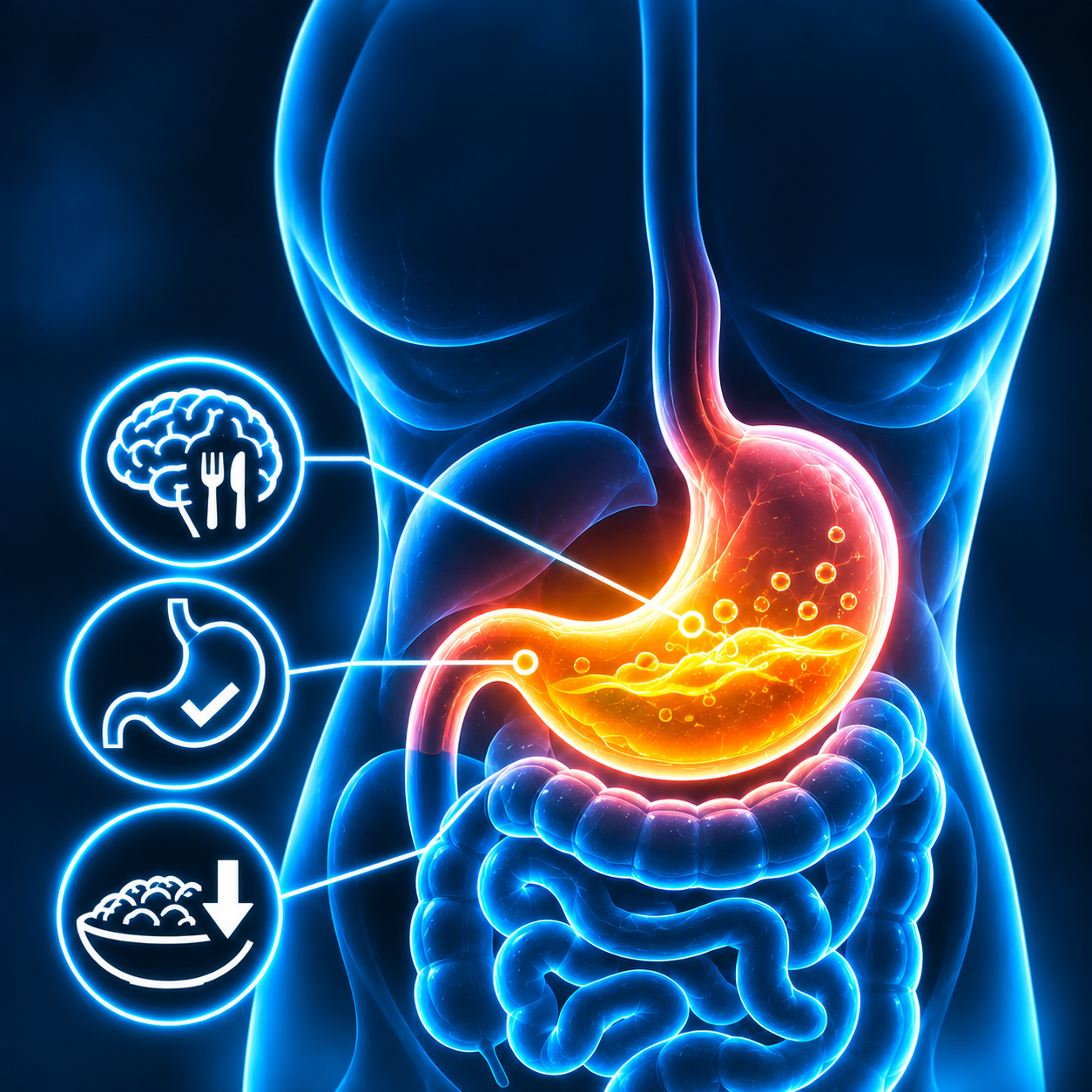
Your stomach and brain are constantly communicating, especially when you eat.
As food enters your digestive system, your body releases natural hormones that help tell your brain when you've had enough.
Think of these hormones as your body's built-in "I'm full" signals.
GLP-1 is one of those hormones. It helps regulate appetite, digestion, and the feeling of fullness after eating.
GLP-1 medications work by activating some of the same pathways your body naturally uses to control hunger.
This can make those fullness signals stronger and help reduce the desire to keep eating.
The result? You may feel satisfied after eating much less food than you normally would.
Why Does Food Stay in Your Stomach Longer?
Another reason GLP-1 medications can make you feel full is that they can slow down how quickly food leaves your stomach.
Normally, your stomach gradually moves food into your intestines after a meal.
GLP-based compounds can slow this process, especially during the early stages of treatment.
When food moves through your stomach more slowly, the feeling of fullness may last longer.
This helps explain why some people feel satisfied with smaller portions and aren't hungry again as quickly.
However, this slowing effect can become less noticeable over time, particularly with longer-acting medications.
Together, changes in appetite signals and digestion help explain why GLP-1s can make you feel full faster and stay satisfied longer.
Main Research Findings
Why Do You Eat Less on GLP-1 Medications?
One of the most noticeable changes people experience with GLP-1 medications is how much food they want to eat.
A meal that once seemed like a normal portion may suddenly feel like more than enough.
For example, someone who normally finishes an entire dinner and still wants dessert might find themselves satisfied after eating a smaller portion, without the same urge to keep eating.
This happens because GLP-based compounds can reduce hunger and help the brain recognize fullness sooner.
Research involving semaglutide, tirzepatide, and investigational retatrutide has demonstrated significant effects on body weight, with appetite regulation playing an important role.
Rather than constantly feeling the need to eat more, people may find that smaller meals are enough to leave them satisfied.
Why Do GLP-1s Help You Stay Full Longer?
Feeling full faster is only part of the benefit.
Many people also notice that hunger doesn't return as quickly after eating.
GLP-based medications can influence the signals that control appetite, helping reduce the desire to eat between meals.
This may lead to:
Smaller portions at mealtime.
Less hunger throughout the day.
Fewer urges to snack between meals.
Feeling satisfied for longer after eating.
The biggest difference is that eating less may start to feel more natural, rather than something that requires constant effort or willpower.
These appetite-related changes help explain why GLP-based medications have become an important area of research for weight management.
Why Do GLP-1s Reduce Food Noise and Cravings?
Another interesting effect of GLP-based medications is how they can change the way people think about food.
You may have heard the term "food noise." It describes those constant thoughts about eating, even when you're not physically hungry.
For example, you might finish lunch and immediately start thinking about dinner, or find yourself reaching for snacks simply because they're nearby.
GLP-based compounds can influence areas of the brain involved in appetite and food-related cravings.
For some people, this means fewer thoughts about food, less interest in unnecessary snacking, and a reduced urge to keep eating after they're satisfied.
Food doesn't necessarily become less enjoyable. It simply may not occupy as much of your attention throughout the day.
Research is continuing to explore how GLP-based treatments affect food cravings and reward-related behavior, particularly with newer dual- and triple-receptor compounds.
Together with changes in hunger and fullness, reduced food noise may help explain why some people find it easier to eat smaller portions.
Do All GLP Peptides Make You Feel Full?
Although GLP-based compounds share similar effects on hunger and fullness, they don't all work exactly the same way.
Some target a single hormone pathway, while others influence two or three.
Semaglutide (Single-Receptor): Works through GLP-1 receptors to help regulate appetite, reduce hunger, and increase feelings of fullness.
Tirzepatide (Dual-Receptor): Targets both GLP-1 and GIP receptors, helping regulate appetite and food intake through two hormonal pathways.
Retatrutide (Triple-Receptor): An investigational compound that targets GLP-1, GIP, and glucagon receptors. Research has shown promising effects on body weight, while scientists continue studying its influence on appetite and metabolism.
Despite these differences, all three compounds influence pathways involved in hunger, fullness, and weight regulation.
The main takeaway is that GLP-based compounds can help people feel satisfied with less food, even though their mechanisms differ.
How strongly someone experiences these effects can vary depending on the compound and their individual response.
Current Research Limitations
Does Everyone Feel Full Faster on GLP-1 Medications?
Although GLP-based medications have demonstrated significant effects on appetite and fullness, not everyone experiences the same results.
Some people notice a major reduction in hunger, while others experience more gradual changes.
The response can depend on the specific compound, dose, treatment duration, and individual biology.
It's also important to understand that feeling comfortably satisfied after eating is different from feeling nauseated or uncomfortably full.
GLP-based medications can cause digestive side effects, including nausea, constipation, and stomach discomfort. These effects shouldn't be confused with normal appetite regulation.
Researchers are continuing to study how these compounds influence hunger over time, particularly newer dual- and triple-receptor treatments.
While the evidence supporting appetite reduction is strong for established GLP-based medications, individual experiences can vary.
Conclusion
GLP-based medications can make you feel full faster by changing how your stomach and brain communicate about hunger.
By influencing appetite signals and slowing stomach emptying, these compounds can help people feel satisfied with smaller meals and stay full longer.
This helps explain why many people taking GLP-1 medications notice reduced hunger, smaller portions, fewer cravings, and less food noise throughout the day.
The biggest takeaway is simple: GLP-1s don't just change how much you eat. They can change how hungry you feel in the first place.
Although semaglutide, tirzepatide, and retatrutide work through different hormonal pathways, research continues to highlight the important role these compounds play in appetite regulation and weight management.
At Peptide Purity USA, we believe understanding how GLP-based compounds work makes the science behind hunger, fullness, and metabolism easier to understand.
Research Use Only: All research materials offered by Peptide Purity USA are intended strictly for laboratory research purposes. Not for human or veterinary consumption. Not intended for diagnostic or therapeutic applications.
References
- 1. Blundell, J., Finlayson, G., Axelsen, M., et al. (2017). Effects of once-weekly semaglutide on appetite, energy intake, control of eating, food preference and body weight in subjects with obesity. Diabetes, Obesity and Metabolism, 19(9), 1242–1251.
- 2. Wilding, J. P. H., Batterham, R. L., Calanna, S., et al. (2021). Once-Weekly Semaglutide in Adults with Overweight or Obesity. The New England Journal of Medicine, 384(11), 989–1002.
- 3. Jastreboff, A. M., Aronne, L. J., Ahmad, N. N., et al. (2022). Tirzepatide Once Weekly for the Treatment of Obesity. The New England Journal of Medicine, 387(3), 205–216.
- 4. Jastreboff, A. M., Kaplan, L. M., Frías, J. P., et al. (2023). Triple–Hormone-Receptor Agonist Retatrutide for Obesity — A Phase 2 Trial. The New England Journal of Medicine, 389(6), 514–526.
- 5. Jastreboff, A. M., Kaplan, L. M., Davies, M. J., et al. (2026). Retatrutide, a Triple Hormone Receptor Agonist, for Treatment of Obesity. The New England Journal of Medicine. Advance online publication.
- 6. Blundell, J., Finlayson, G., Axelsen, M., et al. (2017). Effects of once-weekly semaglutide on appetite, energy intake, control of eating, food preference and body weight in subjects with obesity. Diabetes, Obesity and Metabolism, 19(9), 1242–1251.