Introduction
BPC-157 Research: Mechanisms, Preclinical Findings & What the Studies Show
BPC-157 has become an increasingly discussed experimental peptide in scientific research involving tissue repair, musculoskeletal injuries, gastrointestinal biology, inflammation, and vascular signaling.
However, scientific interest in BPC-157 has developed considerably faster than the available human clinical evidence.
Much of the published research on BPC-157 comes from laboratory and animal studies. A 2025 systematic review focused on musculoskeletal applications identified 36 eligible studies, including 35 preclinical studies and one clinical study. The authors also highlighted the lack of adequate clinical safety data. PubMed
Although these findings have generated scientific interest, results from laboratory and animal models cannot establish that BPC-157 produces equivalent effects in humans.
What Is BPC-157?
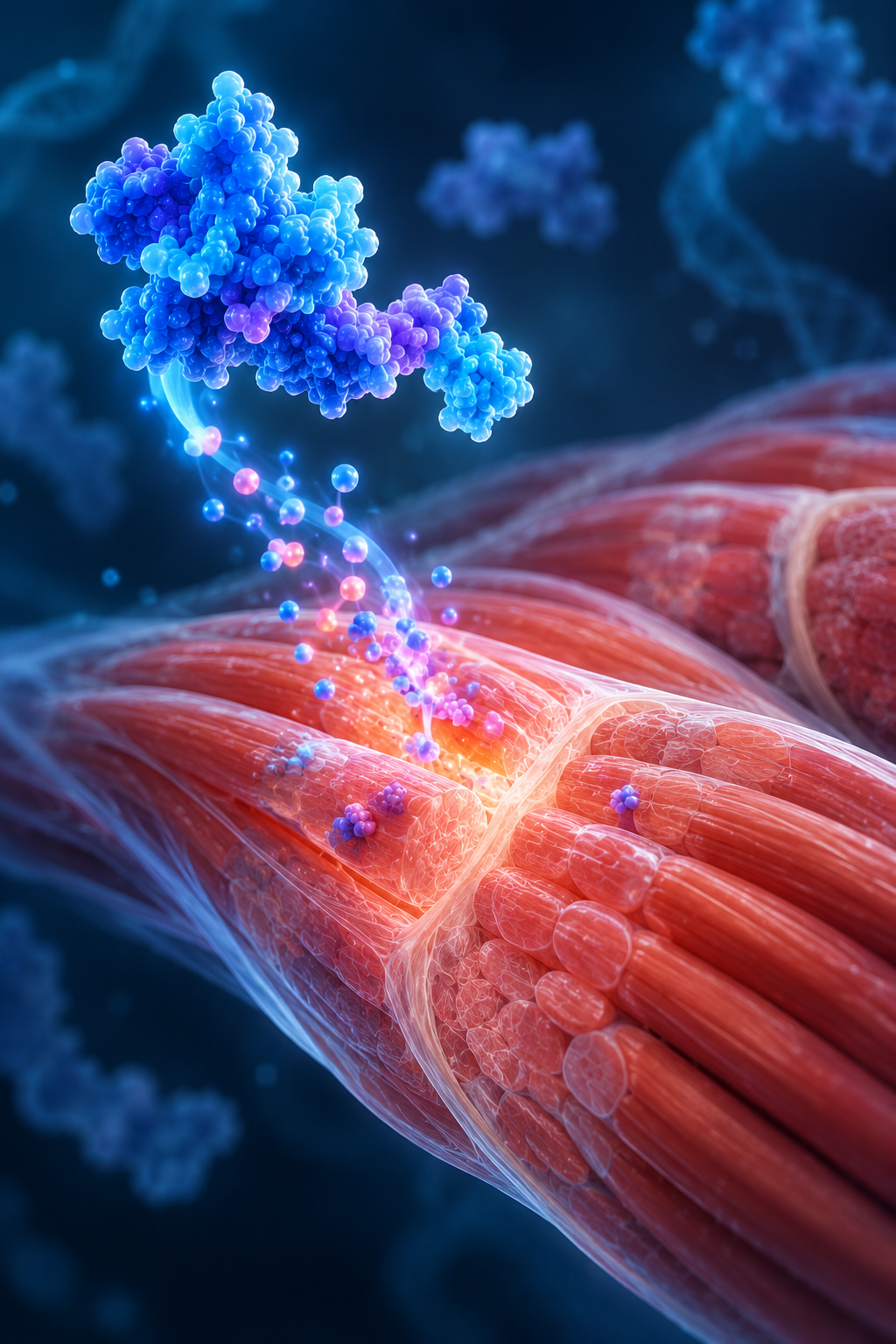
BPC-157 is a synthetic peptide composed of 15 amino acids that has been investigated experimentally across multiple biological systems.
Preclinical researchers have explored its potential interactions with biological processes associated with tissue repair, angiogenesis (the formation of new blood vessels), fibroblast activity, cellular migration, inflammatory signaling, and gastrointestinal tissue responses. PubMed
These research findings have contributed to growing interest in BPC-157, particularly in experimental models of musculoskeletal tissue repair and gastrointestinal biology.
However, BPC-157 remains an investigational compound. Its safety and effectiveness for human therapeutic use have not been established through adequate clinical trials. Findings should therefore be interpreted within the limitations of their respective experimental models.
Main Research Findings
BPC-157 and Tendon Research
Tendon repair is one of the most extensively investigated areas of BPC-157 musculoskeletal research.
In a rat Achilles tendon transection model, researchers reported improvements in functional, biomechanical, microscopic, and macroscopic measurements following experimental BPC-157 administration.
The study identified increased load-to-failure measurements, a measure of the force a tendon can withstand before rupture, alongside changes in fibroblast formation and collagen-related tissue responses. PubMed
A separate laboratory study investigated potential cellular mechanisms associated with these observations, examining tendon fibroblast outgrowth, survival, and migration. Fibroblasts are cells involved in producing and maintaining connective-tissue components, including collagen. PubMed
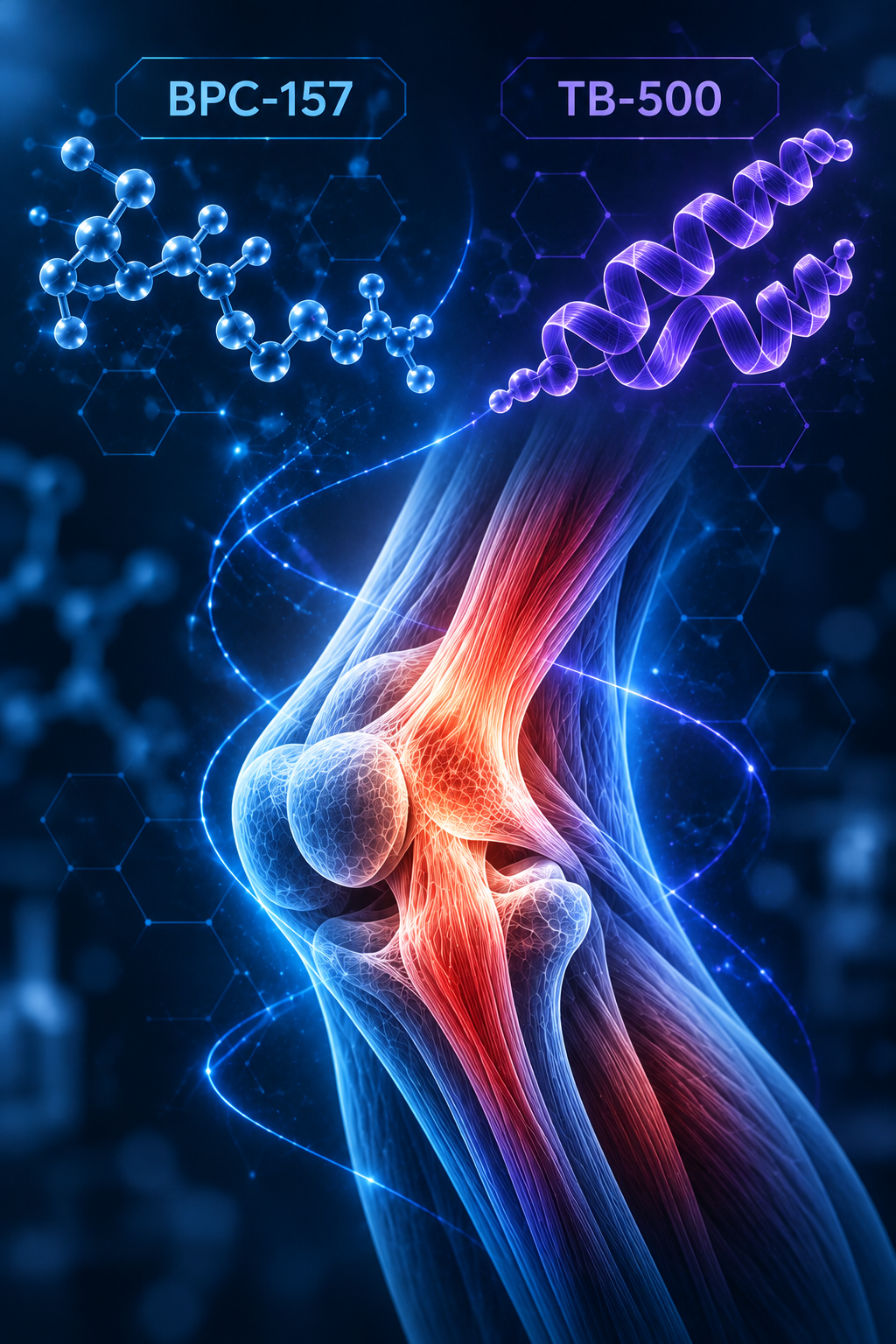
More recently, a 2026 study examined BPC-157, TB-500, and their combination in a rat Achilles tendon repair model.
Researchers observed some favorable tissue-level findings, although several differences in the BPC-157 group did not reach statistical significance. TB-500 demonstrated a statistically significant improvement in biomechanical strength, and combination treatment did not provide additional benefits over the individual compounds. PubMed
Together, these investigations illustrate continued scientific interest in BPC-157 and tendon-repair mechanisms. However, animal and laboratory findings cannot establish effectiveness in human tendon injuries.
Ligament Research
BPC-157 has also been investigated in experimental models of ligament injury.
A study involving surgically transected medial collateral ligaments in rats reported improvements in functional recovery, biomechanical strength, and microscopic tissue characteristics following experimental BPC-157 administration. PubMed
These findings contributed to broader scientific interest in how BPC-157 may interact with biological processes involved in connective-tissue repair.
However, the findings remain preclinical and do not establish therapeutic effectiveness in humans.
Muscle, Bone and Musculoskeletal Research
Research involving BPC-157 extends beyond tendons and ligaments to experimental models of muscle and bone injury.
A 2025 systematic review examined BPC-157 research from an orthopedic sports-medicine perspective. Across the included preclinical studies, researchers identified reports of improved structural, functional, and biomechanical outcomes in experimental models involving muscle, tendon, ligament, and bone injuries. PubMed
Several biological pathways have been proposed to explain these observations, including processes associated with cellular growth, blood-vessel formation, and inflammatory signaling.
Although these findings provide potential directions for future investigation, the available evidence remains insufficient to establish clinical benefits or safety in humans.
Angiogenesis and Blood-Vessel Signaling
Another area of BPC-157 research involves angiogenesis, the biological process through which new blood vessels form from existing vessels.
Angiogenesis contributes to normal tissue repair by supporting oxygen and nutrient delivery to developing or recovering tissues.
Experimental reviews have discussed potential interactions between BPC-157 and angiogenic signaling pathways, including mechanisms associated with vascular responses and tissue remodeling. PubMed
Researchers have investigated whether these interactions could help explain some of the tissue-level changes observed in preclinical injury models.
However, angiogenesis is a complex biological process, and changes in vascular signaling should not automatically be interpreted as beneficial or clinically effective.
Gastrointestinal Research
BPC-157 has also been investigated in experimental models involving gastrointestinal tissue.
Published reviews have examined its reported interactions with gastrointestinal tissue integrity, experimental ulcer models, vascular responses, and cellular processes associated with tissue repair. PubMed
This research is significant because gastrointestinal investigations contributed to broader scientific interest in the peptide's biological activity across different tissue systems.
Some researchers have proposed that biological pathways observed in gastrointestinal models may overlap with mechanisms involved in musculoskeletal tissue responses.
Nevertheless, these findings largely originate from preclinical research and do not establish that BPC-157 is safe or effective for treating gastrointestinal disorders in humans.
Inflammation and Cellular Signaling
Researchers have also explored potential interactions between BPC-157 and biological pathways involved in inflammation and cellular signaling.
A 2025 systematic review identified preclinical research suggesting changes in inflammatory cytokine activity and signaling pathways associated with cellular growth and angiogenesis. PubMed
A 2026 review further discussed experimental findings involving fibroblast activity, collagen synthesis, microvascular integrity, and inflammatory signaling. PubMed
These pathways are relevant to understanding how cells respond to tissue damage, regulate inflammatory processes, and participate in tissue remodeling.
Investigating these mechanisms may help researchers better characterize BPC-157's biological activity in experimental systems.
However, identifying changes in cellular signaling does not demonstrate that these effects translate into safe or effective human treatments.
Research Methodology / Context
Where the Research Stands
BPC-157 remains an area of scientific interest because preclinical studies have investigated its potential interactions with several interconnected biological processes.
Current research areas include:
Tendon and ligament repair mechanisms
Muscle and bone injury models
Fibroblast activity and cellular migration
Angiogenic and vascular signaling
Gastrointestinal tissue responses
Inflammatory signaling
Collagen synthesis and connective-tissue remodeling
The most frequently reported findings come from laboratory and animal models rather than large, controlled human clinical trials. A 2025 systematic review of musculoskeletal research highlighted the predominance of preclinical evidence and the lack of adequate human safety data. PubMed
Although these findings provide directions for future scientific investigation, additional research is needed to determine whether the observed effects are reproducible, whether they translate to humans, and what safety risks may be associated with BPC-157.
Well-designed human clinical trials and comprehensive safety assessments would be necessary before any therapeutic conclusions could be established.
Regulatory and Safety Considerations
BPC-157 remains an investigational peptide, and its safety and effectiveness for human therapeutic use have not been established through adequate clinical trials.
The U.S. Food and Drug Administration (FDA) has identified potential safety concerns associated with BPC-157 in the context of drug compounding, including possible immunogenicity, peptide-related impurities, and insufficient human safety information. FDA
Although preclinical studies have reported findings involving tissue repair, inflammatory signaling, and vascular responses, these observations do not establish a safe dosage, administration method, long-term safety profile, or therapeutic effectiveness in humans.
Additional controlled clinical research and comprehensive safety evaluations are necessary to better understand the potential risks and biological effects of BPC-157.
Research Use Only: BPC-157 products offered by Peptide Purity USA are intended strictly for laboratory research purposes. They are not intended for human or veterinary consumption or for use in the diagnosis, treatment, cure, or prevention of any disease.
Conclusion
BPC-157 continues to attract scientific interest due to findings from laboratory and animal studies involving tendon and ligament repair, cellular migration, vascular signaling, gastrointestinal tissue responses, and inflammatory pathways.
These experimental findings provide potential directions for further investigation into the peptide's biological activity and underlying mechanisms.
However, important limitations remain. Human clinical evidence is limited, and many of the commonly discussed potential benefits of BPC-157 are based primarily on preclinical research rather than well-controlled human clinical trials. PubMed
Further research, including appropriately designed human clinical trials and comprehensive safety evaluations, is necessary to determine whether these experimental observations translate into clinically meaningful outcomes.
Research Use Only: BPC-157 products offered by Peptide Purity USA are intended strictly for laboratory research purposes. They are not intended for human or veterinary consumption or for use in the diagnosis, treatment, cure, or prevention of any disease.
References
- 1. Krivic A, et al. Gastric pentadecapeptide BPC 157 accelerates healing of transected rat Achilles tendon and in vitro stimulates tendocytes growth. Journal of Orthopaedic Research. 2006.
- 2. Chang CH, Tsai WC, Lin MS, Hsu YH, Pang JHS. The promoting effect of pentadecapeptide BPC 157 on tendon healing involves tendon outgrowth, cell survival, and cell migration. Journal of Applied Physiology. 2011;110(3):774-780. DOI: 10.1152/japplphysiol.00945.2010. PubMed
- 3. Cerovecki T, et al. Pentadecapeptide BPC 157 (PL 14736) improves ligament healing in the rat. Journal of Orthopaedic Research. 2010. DOI: 10.1002/jor.21107. PubMed
- 4. Seiwerth S, et al. BPC 157 and Standard Angiogenic Growth Factors: Gastrointestinal Tract Healing, Lessons from Tendon, Ligament, Muscle and Bone Healing. Current Pharmaceutical Design. 2018;24(18):1972-1989. DOI: 10.2174/1381612824666180712110447. PubMed
- 5. Emerging Use of BPC-157 in Orthopaedic Sports Medicine: A Systematic Review. 2025. PMID: 40756949. PubMed
- 6. Regeneration or Risk? A Narrative Review of BPC-157 for Musculoskeletal Healing. 2025. PMID: 40789979. PubMed
- 7. U.S. Food and Drug Administration. Certain Bulk Drug Substances for Use in Compounding that May Present Significant Safety Risks.